
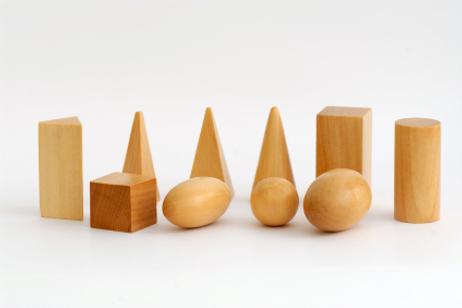
Dr. Maria Montessori founded her Casa de Bambini in a poor neighborhood of Rome, Italy in 1906. She blazed new trails in early education by believing in the innate goodness of children, by encouraging children to be curious and to explore and by creating a teaching environment which followed the child.
Dr. Montessori's experiments and research ultimately produced a worldwide movement. Over 100 years later her findings and research have stood the test of time and have been validated by modern analysis and investigation. In the United States Montessori schools multiplied like rabbits from the 1960's and onwards. Unlike Dr. Montessori's schools which served poor children, most Montessori schools in North America educate children from the middle classes. Indeed the Montessori approach has been used with children in all kinds of situations. It is very adaptable to the needs of a wide range of children.
Dr. Montessori never trademarked the name Montessori nor did she claim any patents on her methodology. The result is that there are many Montessori schools out there claiming to be the real thing. Some schools may include elements of Dr. Montessori's methods and philosophy in their teaching. Other schools quietly sublimate the parts of Dr. Montessori's thinking which aren't perhaps appropriate in their setting. In short, there almost as many flavors of Montessori as there are schools. Not a bad thing in itself, but as always, do your due diligence. Caveat emptor!
Here are five things you should look for when vetting a school which purports to be a Montessori school.
1. Is the learning self-directed?
Montessori teachers do not teach. They guide their students. They help their students. They prepare a learning environment for their students. They are facilitators in the classic sense of that word. Dr. Montessori believed that children are capable of discovery. It is precisely that thrill of discovery which leads to all sorts of creative enterprise and satisfaction.
A Montessori classroom scales furniture and fixtures to the child. The Montessori classroom becomes your child's world, full of exciting things to explore. All the basic learning concepts such as math and reading are included in Montessori. The secret to the Montessori approach is that the child explores each concept at her own pace. Because classes include children from several age groups you will find the older children helping the younger children.
Observe a class. Look for children working on their own and in groups. If you see children sitting at desks while a teacher pours information into their heads, it probably isn't a real Montessori school.
2. Are the children passive or active in their learning?
Montessori children don't watch videos about math. They touch, hold and feel the numbers. They play with them. The numbers take on life and meaning of their own in the child's mind. Maria Montessori applied the same approach to all parts of the curriculum. Language, science, math, culture and a host of subsets within each of these disciplines have their own unique Montessori multi-sensorial materials. For example, math is taught by handling, exploring and ultimately counting beads, rods and all sorts of things. The teacher in a Montessori classroom guide, assist and help each child on an individual basis. The learning is personalized to each child's particular needs and level of ability.
Learning in the Montessori way develops self-confidence. It affirms the child's sense of self-worth. It shows her that she CAN do it. Laying these foundations of self-confidence and affirming a child's innate goodness sets her on the right path for adulthood.
If you see an authoritative teacher teaching and children merely watching, it probably isn't a real Montessori school.
3. Are there several age groups in the classroom?
One of Dr. Montessori's tenets was that younger children learn by following the example of older ones. Consequently you will not find the traditional grade classifications in a Montessori school. Children work at their own pace. If they need to spend more time on a project, they can do so. They do not have to move at a set pace. Montessori encourages each child to learn at its own speed. Multiage classes encourage respect for others. Multiage classes encourage older children to help younger ones. Learning in a Montessori classroom takes place against a backdrop of community, sharing and respect for others.
Shouting, bullying and disrespect for others have no place anywhere in a Montessori school. Children are taught by example. Montessori teachers are paragons of gentleness, patience and kindness. The multiage classroom fosters respect and positive behavior. It encourages mentoring and leadership.
If you are shown a first grade class, it probably isn't a real Montessori school.
4. Is there a strong cultural emphasis?
The cement which binds all of Dr. Montessori's work together is the notion that children must make the world a better place when they become adults. World peace was her cherished goal. Montessori maps should be in evidence as children learn from the earliest age that there is a world outside their school walls.
The cultural component in the Montessori curriculum is not something which is taught in isolation. It is interwoven with math, science, languages, art and music. Your child learns to respect and admire the way other cultures and peoples see things. There is never any suggestion that 'our way' is the only way or the best way. Teaching a child to respect every culture equips her to be a caring, concerned global citizen.
If you don't see a strong cultural emphasis, it probably isn't a real Montessori school.
5. Is the school a member of the American Montessori Society?
Of the approximately 4,000 Montessori schools in the U.S. only 1,100 are members of the AMS. While membership in AMS is no guarantee as to the quality of the education a particular member school offers, it does hold the school accountable to the Society's Code of Ethics and principles of membership which the AMS stands for. Finally be sure to ask if the teachers are credentialed by the American Montessori Society.
Once again it is important to note that Dr. Montessori did not trademark her educational methods, approach or philosophy. As a result you will encounter a wide variety of schools claiming to be Montessori schools. To me the physical attributes of a Montessori school are important. The beautiful clean classroom, the child-sized tables and chairs, the lack of a teacher's desk and chalkboards - all those physical things matter and they should follow Montessori guidelines.
For me the most important thing which matters to you and me as parents is the teacher and the way in which she teaches. It takes a very special kind of teacher to manage a multi-age class. It takes a very special kind of teacher to gently move from one child to another to guide and facilitate the learning which is taking place all the time. The best Montessori teachers are exemplars of intelligence, patience, gentleness and kindness.
If you suspect that the teacher doesn't live up to the standards which I have laid out in the previous paragraph, it is probably not a real Montessori school.
Questions? You can contact me on Twitter. @privateschl