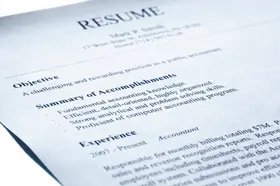

Competitive employment markets mean that you must make the best possible impression at every step of the employment process. All it takes is a couple of common mistakes to quickly move your employment application to the bottom of the pile. You may think that yours is the only application for that math teacher position at Shady Grove Country Day School. Unfortunately, in these very tough economic times, your application will be one of the dozens of applications - perhaps hundreds - for that coveted teaching job. That's why it is so important to make sure that somebody reviews your application, and places it on the short stack of applications marked "Interview".
Put yourself in the place of the person who will be screening job applications. You understand how your students' minds work. Use the same approach here. Think about how an administrator determines who should get interviewed. She has advertised the position in all the usual places. Every business day she receives dozens of envelopes from applicants. Why should your application go on the stack of applications marked "Interview" instead of the one marked "reject"? Because when she scans your application, she sees most of what she is looking for. Remember: she's a very busy person. A lot is riding on her choosing the best candidate for the position which she has to fill.
Depending on how hands-on a person she is, she may delegate the initial scanning process to an assistant. Assistants can be very diligent and do things exactly as their boss specifies. Or perhaps not. For all these reasons that is why you need to avoid the following common errors.
1. Poor Initial Impression
Never fold your cover letter or letter of interest and the required supporting documents. Always insert unfolded materials into a manilla envelope. Use a paper clip to keep documents together. Do not staple documents together. On the bottom of your pile of documents put a piece of cardboard 8.5" x 11 " to stiffen the envelope so that it makes it through the delivery process unscathed. Use printed labels for the address and your return address. You may think that your penmanship is impeccable. Be that as it may, print the labels using a printer. If you follow these simple instructions, you will make a professional initial impression.
This video shows you why it is important to customize your job application.
2. Format Specified Not Used
Nothing gives the wrong impression of you and your abilities quicker than your failure to follow instructions. If the application instructions specify that your cover letter is to printed on pink paper, then print your cover letter on pink paper. You are asking for the opportunity to be part of a team. Members of a team follow the coach's instructions. If you cannot follow the simplest of instructions regarding the application procedure and other applicants can, then why should they consider your application? The application process, which ideally leads to an interview, tells employers many things about applicants. If you have ever wondered why employers ask certain questions, you need to understand that the answers to their questions help them to assess each applicant.
3. Typos, bad grammar, and buzzwords
Nothing makes a worse impression than a typo. It says bluntly that you don't care. It says that you don't pay attention to details. Carelessness and sloppiness are not traits that most administrators want to see in their teachers. If this sounds harsh, consider that dozens of other applicants will have submitted their materials without any typographical errors. Pay attention to the spelling of the school's name, as well as any names of staff members pertinent to the application. Spell these correctly or risk having your application consigned to the trash. Remember that you are not texting when you apply for a job. Write complete sentences. Capitalize and punctuate according to generally accepted rules.
Grammatical errors will also attract the wrong kind of attention. If your modifiers dangle or squint, have a trusted friend, preferably somebody who teaches English, proofread your application before you submit it.
This video offers some suggestions for writing your job application.
Avoid buzzwords. You may think that you sound like an expert by using buzzwords. Unfortunately, using too many of them in your application will give the opposite impression. Write thoughtful, well-considered answers to all the questions. It will be time well spent because when you are being interviewed, chances are that you will be asked to explain some of those answers.
4. Being Familiar
Even if you are a graduate of the school in question, don't presume to be familiar. The school will know that you are an alumnus. Besides that, you will have already spoken with the administration about the position beforehand. Having said that, your formal application must be just that: formal. Follow the instructions and adhere to the protocols which the school sets out just as though you were an unknown candidate.
5. Being Long-winded
Busy school administrators do not have much time to read every word in an application the first time they review it. Most likely they will simply scan your materials. Scanning involves looking at things that catch their eye. Like typos or long, run-on sentences. When you begin writing your answers to questions on the application, always do a rough draft. Then put it away for a day or two. Come back to it with a fresh perspective and revise, revise, revise. Pare your answers to the bone. Clear, informed responses will help prevent your application from being rejected. Moreover, as noted in the previous section, avoid buzzwords. Show your future employer that you know what you are talking about.
My last piece of advice is perhaps the most difficult for an independent, resourceful teacher to follow. Have a trusted friend or family member review your application before you put it in the envelope to mail or before you click Submit if it is an online application. We, teachers, are so accustomed to working on our own that we think we are competent enough to handle anything. However, as I mentioned at the beginning of this article, all it takes is a typo or failure to follow the application instructions to the letter to move your application to the stack of rejected applications. Take all the time and care necessary to submit a perfect job application. Your future may well depend upon doing so.
Questions? Contact us on Facebook. @privateschoolreview