Over the years I have steadfastly maintained that ranks are not important when it comes to choosing the right school for your child. My viewpoint, however, runs counter to what most parents hear and see in the popular media which loves to crow about this top school or that elite school in video clips which usually have more to do with a scandal or tragedy of some sort than they do with the mission of the school and its academics. Amid all the sensationalism comes the subliminal message that 'this is a great school". Then there are various sites that purport to rank private K-12 schools.
Where ranking private K-12 schools comes unglued is the fact that each private school is unique. They are all different. They each approach their educational missions from their own unique perspectives. Yes, in a general sense they have a common mission which is to educate your child. However, because each school has its own approach, its own facilities, and programs, they cannot be compared apples to apples. I used to be a real estate broker back in the 80s. I often fall back on that experience of finding the right house for my clients when it comes to advising parents on the right school for their children. The analogy is apt. For example, the couple who want a 3 bedroom house on 3 acres of land will find dozens of listings for them to look at. Are they all the same? Where are they located? In real estate, we had a saying that the only thing which matters is "Location! Location! Location!" It is possible that many of those listings will have 3 bedrooms on 3 acres. But you will not know if the home is "the one" until you visit it.
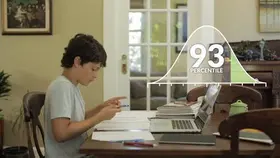
This video offers tips on how to get into a top high school.
So it is with private K-12 schools. Going through the process of surveying the field of potential schools is fun and fairly easy to do online. Let's say that your initial list consists of 30 schools. Most of us won't have time to visit 30 schools. Not to mention the time and cost of visiting 30 schools. So you start eliminating the schools which do not have everything you want. Use basic criteria such as location, size, facilities, academics and programs to eliminate schools
But enough of what I have to say on the subject. Let's look at what schools and their trade associations have to say about ranking private schools.
Here's what a state association of private schools has to say about rankings. I quote it verbatim.
| ADVIS Position Statement on School Rankings The Association of Delaware Valley Independent Schools (ADVIS) is implacably opposed to the rating or ranking of schools in any shape or form. Therefore, we do not cooperate, and advise our member schools not to cooperate, with any publication that seeks to rate or rank schools. A school, or an education, is not a consumer product comparable to a toaster. A great education depends on three key factors: the quality of the faculty, the quality of the student body, and the quality of teaching. These qualities are not quantifiable. Source: ADVIS Statement of School Rankings |
ADVIS goes on to reference the Statement on Ranking Schools by The National Association of Independent Schools (NAIS). Once again I quote this document verbatim.
| ADVIS strongly advocates the following statement from the National Association of Independent Schools (NAIS) as the fundamental position to which we adhere. NAIS Statement: On Ranking Schools By: NAIS Board of Directors Published: June 25, 2004 Updated: June 28, 2007 With this, as with all questions related to elementary and secondary education, we must keep our focus on the children's best interests. The National Association of Independent Schools is and always has been opposed to the ranking of schools. The "best" school — public, parochial, or independent — is the one that uniquely meets the needs of each particular child. In the independent school sector, each institution, in its mission statement, defines its own objectives: the kind of program and campus culture the school provides, and often, the qualities that will help a student to succeed there. These schools were not created from one mold. They have different missions, offer different grade ranges, curricular emphases, pedagogical approaches, and extracurricular programs. Some schools are highly competitive by design, others intentionally create a nurturing atmosphere in which certain students will thrive; some focus on the arts, some on mathematics and science, others on outdoor education. Different schools offer programs for different types of students — bright students with learning differences, gifted, students of average ability, children who face particular challenges. Independent schools are to be judged, through their rigorous accreditation processes, according to what they individually set out to accomplish. Ranking such wonderfully different schools against one another misrepresents the institutions, misleads consumer-minded parents about the factors that should be considered in the complex process of choosing a school, but most importantly, can hurt children. Ranking elementary and secondary schools is a de facto labeling of vulnerable children and adolescents and is inherently wrong. Ranking of schools encourages destructive competitiveness, leading institutions away from offering rich alternatives and toward a stultifying sameness. It is a disservice to the schools, concerned parents, and children, and therefore, to our society. |
Now, What Do You Do?
So after reading what the private school associations have to say about ranking, what are your next steps? After all you really are just trying to find the best school for your child. You thought ranking private schools would help you find that school by identifying schools. So now what? Here is an outline of the process which you should follow. I will give you the headlines. Just remember that within each headline or section of the process that there is a lot of detail. Make sure you delve into the details as necessary.
Start with the category Choosing a Private School on this site. It has a wealth of information and helpful advice.
Read What Do They Teach? to understand the wide range of education options that private schools offer.
Recalibrate your thinking with 5 Reasons You Might Be Looking At The Wrong Schools.
Follow the steps outlined above. Then when you visit schools, confirm that you are comfortable with both what is being taught and how it is being taught. Confirm that the teachers and staff are caring and concerned. Assure yourself that the school is well run and on a sound financial footing. At the end of this process, you should have a list of 2-3 schools that will meet your requirements. One of those is YOUR school. The best one!
This video offers some more tips for finding the right school for your needs and requirements.
One final word of advice: if you can afford it, hire an educational consultant. Yes, it will cost you some money but you need a consultant working for you just like you need a doctor to look after you or a lawyer to write your will. Consultants are professionals. They know their schools. In the long run they will save you time and money. But most of all they will guide you towards the right school for your child. No ranked list of schools will accomplish that.
One of those is YOUR school. The best one!
Questions? Contact us on Facebook. @privateschoolreview