Waldorf Schools

Published
Written by
Waldorf schools offer a well thought out approach to K-12 education. Unlike Montessori schools which focus on the primary grades, Waldorf schools cover all the grades. The Waldorf movement got its start with the writings and philosophy of Rudolph Steiner (1861-1925). Pictured on the right , Steiner was an Austrian born philosopher who founded a movement known as anthropsophy.
 
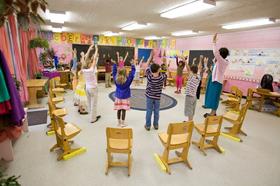
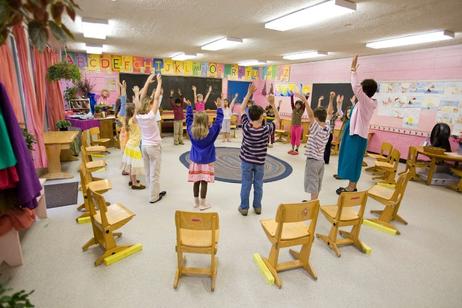
The essence of the Waldorf approach to education is its emphasis on developing a child's imagination and creative side. The Waldorf pedagogues prefer that young children never be exposed to popular entertainment such as television, popular music and computers. Competition is replaced with cooperation. Eurythmy, an expressive music cum dance art form, plays a central role in developing a child's artistic expression. The whole child is engaged at his own pace as opposed to being entertained by media in one form or another.
 
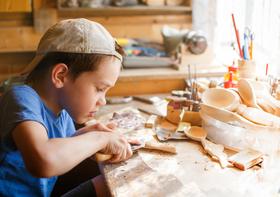
Another unique concept is that a teacher moves with the class over a four year cycle. Waldorf teachers are a highly skilled lot who have the ongoing development of their young charges at heart. Standardized textbooks are rarely used. Students create their own beautifully written and illustrated course books. Bilingualism is encouraged. Specialized teachers are introduced in the high school years to teach advanced math and science as well as languages.

A Waldorf education appeals to parents who embrace their responsibilities as parents for their children's education. Rather than let some government institution do the job, Waldorf parents are an integral part of the education triangle of home, school and child. You can find Waldorf schools in major urban areas throughout the United States and Canada.

Suggested Reading

Additional Resources [+]
{"http://www.privateschoolreview.com/articles/46":{"comments":{"data":[]}}}

Montessori Schools
Montessori schools are popular world-wide with parents of children in the primary grades.

Schools For The Arts
Schools for the artistically gifted child are in short supply.

comments powered by Disqus

Recent Articles:

About Girls' Schools: In Their Words
Published April 15, 2013
Here are a dozen or so girls' schools' public thoughts about themselves and their missions.

Make Summer a Special Time! Make Summer a Special Time!
If you have children in private school, then you are most likely looking at three months, perhaps even longer, which you must fill with activities of one kind or another during the long summer break.

Are You Liable? Are You Liable?
Is your DEL key about to get gaveled? It doesn't matter whether you teach in a public or private school setting. You expose yourself to legal risks every single day on the job.

  • More articles: Why Private School, Getting into Private School, Paying For It, Running a Private School, Opinion
  • RSS/XML Feed RSS

    Why Private School:

    Kinds of Schools

    The various kinds and types of private schools

    • Top Roman Catholic Boarding Schools Top Roman Catholic Boarding Schools
      These Roman Catholic boarding schools offer good value, great educations and a faith-based community experience.
    • For Profit vs Not for Profit Schools For Profit vs Not for Profit Schools
      What are the advantages and/or disadvantages of a for profit versus a not for profit school? Is one kind of school better than the other?
    • Waldorf Schools
      Waldorf schools offer a well thought out approach to K-12 education.
    • Teaching Boys Teaching Boys
      Why teach boys in a single sex setting? The answer to this question and several others here.
    • Schools for Gifted Children Schools for Gifted Children
      Teaching gifted children requires deft handling. These children need intellectual and sensory stimulation. But they also need guidance and careful nurturing so that they grow up handling their special gifts and themselves appropriately.
    • Read more articles (23)

    Most Popular Articles: