Adelphi Academy
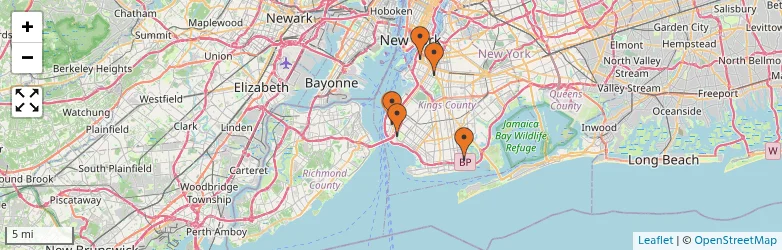
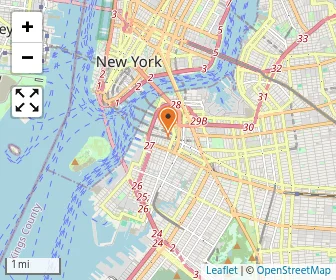
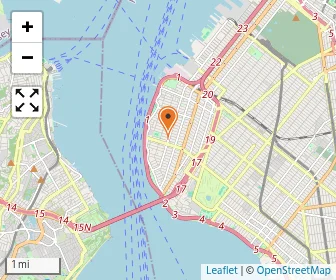
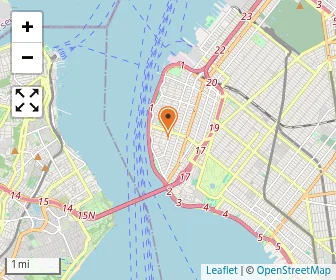
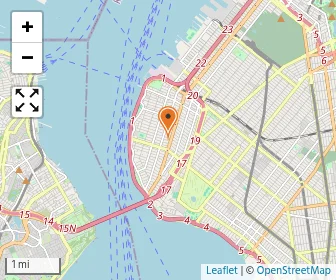
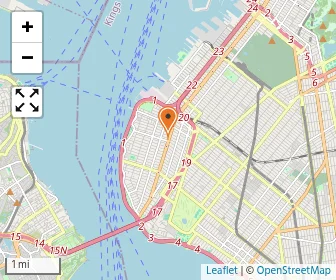
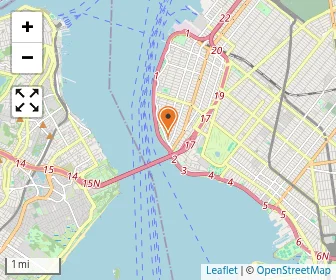
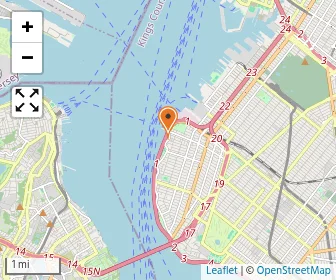
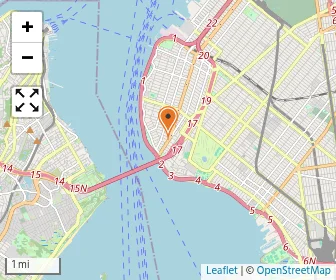
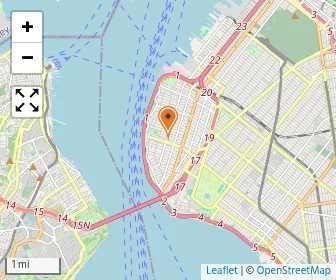
8515 Ridge Boulevard, Brooklyn, NY, 11209-0112 - View a map of this school Map  tel: (718)238-3308
Request Information / Application Request Info / Application
Add this school to your list of favorites Add to My Saved Schools
View this school's website in a new browser Visit School Website
View current housing listings in 11209
Find your graduating class at Classmates.com Find your graduating class!

School Notes Overview:

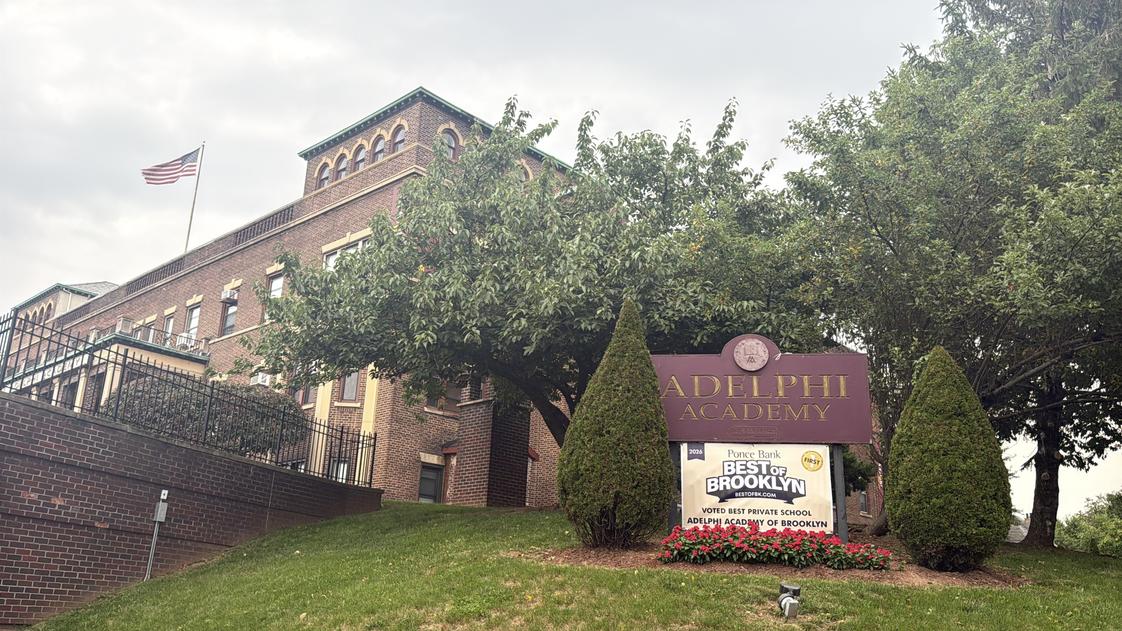
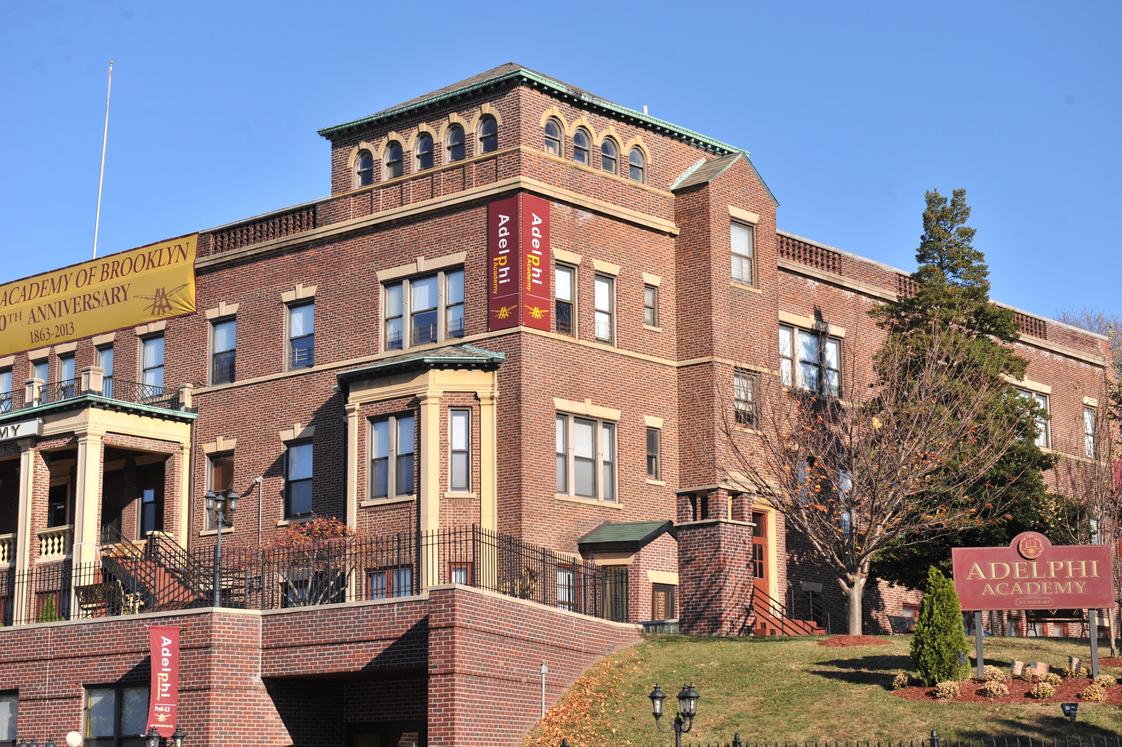
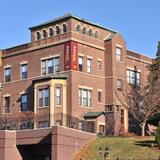
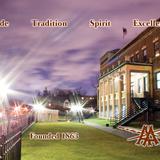
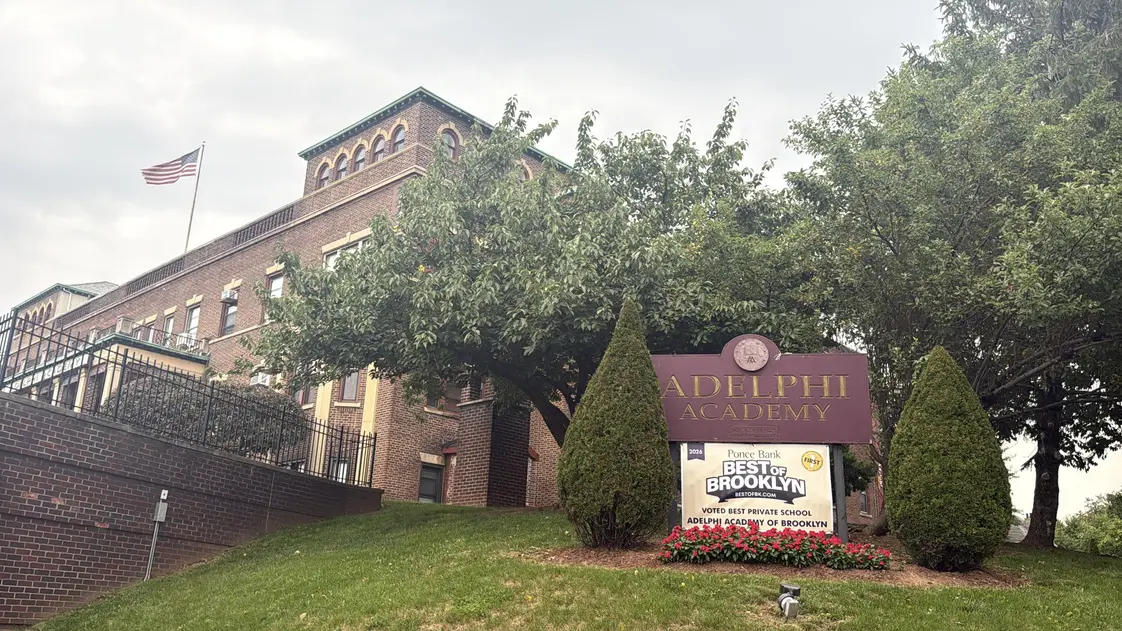
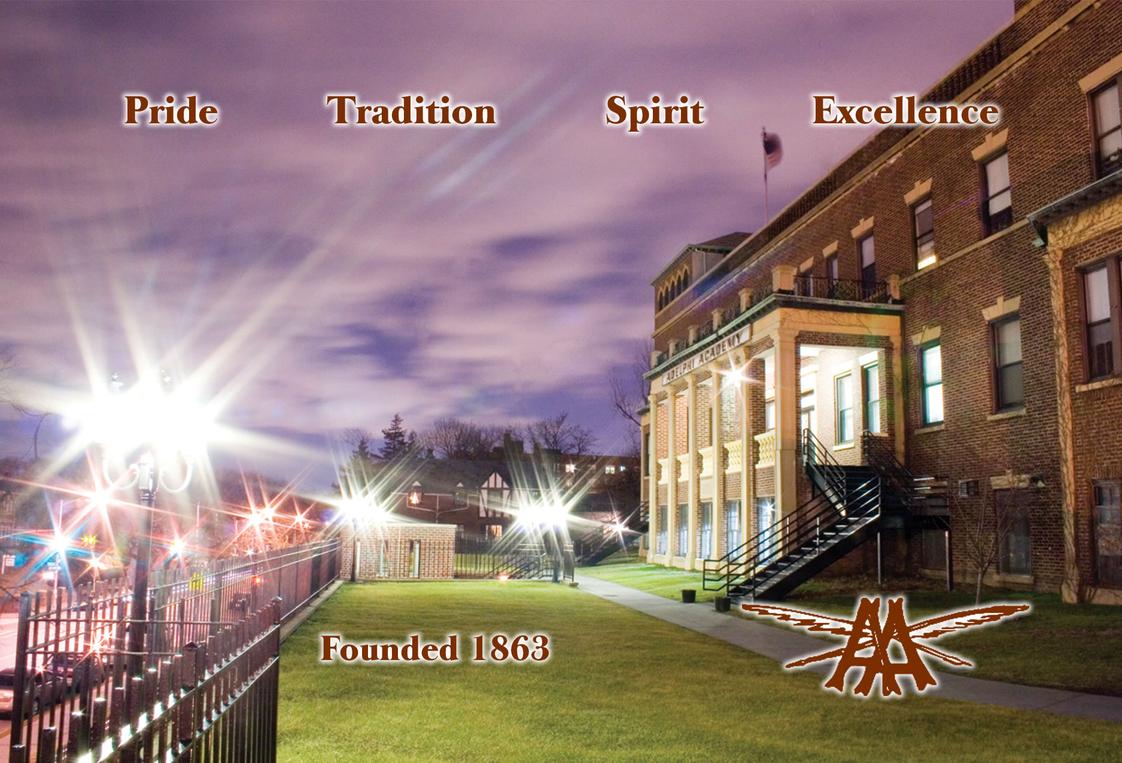
One of the oldest Continuing Co-Educational Schools in the Nation, Adelphi Academy of Brooklyn, nestled on a picturesque site in a tree-lined section of Historical Bay Ridge, has been providing an excellent educational program since its founding in 1863. As a college preparatory day school, Adelphi Academy offers a rich, comprehensive educational program to students from Pre-Kindergarten through Twelfth Year. ...read more  

School Overview:
Adelphi Academy
School Level Elementary and Secondary school
School Membership(s) The Association of Boarding Schools
Grades Offered Grades Prekindergarten - 12
Year Founded 1863
County Kings County, NY
Student Body
Total Students 129 students
Student Body Type Co-ed
This School ( NY ) Elementary and Secondary School Avg.
% Students of Color 41% 22%
Students by Grade
Pre-K - 5 students
Kind - 8 students
Grade 1 - 6 students
Grade 2 - 6 students
Grade 3 - 8 students
Grade 4 - 5 students
Grade 5 - 5 students
Grade 6 - 8 students
Grade 7 - 7 students
Grade 8 - 7 students
Grade 9 - 15 students
Grade 10 - 15 students
Grade 11 - 20 students
Grade 12 - 14 students
Academics and Faculty
Total Classroom Teachers 18 teachers
% Faculty with Advance Degree 65%
Average Class Size 12
Average SAT score 1250
This School ( NY ) Elementary and Secondary School Avg.
Teacher : Student Ratio 1:7 1:8
*Ntl. Public School Avg. » 1:16
School Days in Calendar Year 180 days 180 days
Hours in School Day for Students 7 hours 6 hours
Finances and Admission
Admission Deadline None / Rolling
% on Financial Aid 35%
Acceptance Rate 65%
Headmaster N/A
Admissions Director Peter J. Okeson
Admissions Associate None
 
Sports:    
Total Sports Offered 18

Sports
BaseballBasketball
BowlingCheering
Cross CountryDance
Field HockeyGolf
GymnasticsIndoor Soccer
SoccerSoftball
TennisTrack and Field
Ultimate FrisbeeVolley Ball
WeightliftingWinter Track
 
Extracurricular:    
Total Extracurricular Organizations 24

Extracurriculars
YearbookTrack
TheatreStudio Art
Student GovernmentStage Craft
School NewspaperPublications
PhotographyLiterary Journal
KarateGolf
Girl ScoutsFitness and Weight Training
DramaDance Dance Revolution
Culture ClubCreative Writing
CookingChorus
Chess ClubBowling
BandArts and Crafts
 
School Notes:
  • In 1863, the year Adelphi Academy was founded, the American Civil War was raging. Queen Victoria was on the throne of England, and Alexander III was ?Tsar of all the Russias.? Four years before, Charles Darwin had rocked the foundations of scientific and religious dogma with the publication of ?Origin of the Species,? and four years later Karl Marx would similarly shake the economic order with his publication of volume one of ?Das Kapital.? It was twenty years before the building of the Brooklyn Bridge, and travel to Manhattan was by steam ferry and within Brooklyn, by horse-drawn trolley. On the home front, business was booming and good schools were much in demand for the sons and daughters of the prospering middle class. Two teachers at the Brooklyn Polytechnic Institute, Aaron Chadwick and Edward S. Bunker, decided to resign their jobs and take advantage of this burgeoning market by setting up a school for boys. They opened in February, 1863, under the name Adelphi Academy. (The word ?adelphi? translated roughly from the Greek as ?brotherhood,? but the origin of the name almost certainly comes from the first location of the school at what is now 412 Adelphi Street.) It is not recorded why Chadwick and Bunker became disillusioned with their venture, but toward the end of the first term they decided to return to Polytechnic. They had gathered a student body of sixty boys. Enter John Lockwood. A Columbia graduate, gifted in mathematics and astronomy, Lockwood was also a literary man who had served as editor of the Brooklyn Home Journal and written a well received series of articles on astronomy for the New York Tribune. A Quaker, he nevertheless volunteered for the Union Army and served with the twenty-third Brooklyn Regiment against Robert E. Lee in Pennsylvania. In 1863, Lockwood decided to merge his diverse talents in the role of educator. ?I bought the furniture and took my chances,? he wrote. ?In September following, I opened it with eleven boys- if my memory serves me- some eight of whom were a legacy from the Chadwick and Bunker school, ?The name Adelphi Academy,? I retained.? The school was operated under the joint proprietorship of John Lockwood and Truman J. Ellinwood, a graduate of Dr. Dio Lewis?s Normal School of Physical Culture in Boston, who instituted a program of calisthenics- then unusual- in keeping with Lockwood?s philosophy that education should encourage parallel development of body and mind. These exercises were, according to the 1867 catalogue, ?light, elastic and graceful? and ?no less pleasing than useful.? They were considered vital, along with rigorous academics, to the formation of disciplined, moral values, which was a key goal of Lockwood?s program. As Charlotte Morrill, who wrote a history of the origins of Adelphi Academy, said of Lockwood, ?In his scheme of education, character was the thing placed above everything else. This was the rock on which he built and the great secret of his success as a teacher.? In 1869, Adelphi received a certificate of incorporation from the Board of Regents of New York State. A twenty-four member Board of Trustees was organized and the corporate seal and motto, ?Life Without Learning Is Death? (copied from the Derby School in England) were registered. Despite the acquisition of two more buildings adjacent to the original one on Adelphi Street, the Academy?s rapidly expanding student population required more space. Plans were made for the construction of a new building at Lafayette Avenue and St. James Place, financing to be undertaken by a committee of leading Brooklyn citizens led by Charles Pratt and supported by renowned preacher/orator Henry Ward Beecher and news paper publisher Horace Greeley. The committee began necessary financial and legal proceedings in May 1867, and in February of the next year the new building was ready for occupancy by the academic department. At the laying of the cornerstone, July 23, 1867, Beecher, in his address, took up the then-controversial subject of coeducation. His remarks presaged the admission that year of young women to the Adelphi preparatory department- the first high school in the New York metropolitan area to do so. ?It seems that no man can give any reason why a woman should not be educated as well as, and in the same respect which, a man is educated,? Beecher said. ??I hold that boys and girls instructed together, exercise, even in childhood, that reciprocal and beneficial restraint on each other which God designed that they should exert when they become mature and stand in their places in society.? By 1870, girls were enrolled in all departments of the Academy. Total students enrolled were 497, and the school was prospering. In 1870, John Lockwood left Adelphi and founded Lockwood Academy. Homer B. Sprague was hired to replace him. Adelphi Academy continued to grow. A western wing was added to the Lafayette Street building in 1873 and an eastern wing in 1889. In 1888 a building on Clifton Place, given to the school by Charles Pratt, was completed. This building, which contained the first gymnasium in the city, made possible the enrollment of all classes of the Academy on the same premises. Pratt, later founder of Pratt Institute, also aided the school by endowing a scholarship fund and a number of prizes for academic excellence. After a fire damaged the Lafayette Street Building in 1889, he arranged for Adelphi to temporarily use three apartment buildings while the burned classrooms were being repaired. Colonel Sprague, who is reported to have invented and first put into action at the Academy the system of fire drills now in use worldwide, stepped down in 1875. He was succeeded as Headmaster by Stephan Gale Taylor (1875-1883), Albert Cornelius Perkins (1883-1892), John Samuel Crombie (1892-1893) and Charles H. Levermore, who guided the institution into the twentieth century (1893-1909). In 1884, in cooperation with Pratt Institute, Adelphi Academy opened the first Kindergarten in Brooklyn. Although it was allowed to lapse at various points in the Academy?s history, the Kindergarten reopened in 1975 and is currently flourishing. Adelphi also claimed another first- this time on the national level- with the establishment in 1904 of Kappa Sigma Epsilon, an honorary scholastic society for the secondary school. In 1916, Adelphi was invited to join the national society, Cum Laude, and the local version was dropped. The Cum Laude Society still functions at Adelphi, with new members inducted on a regular basis. In 1891, enrollment at Adelphi reached a peak with 1,291 students. At this time the Academy was sharing it?s building with Adelphi College, which was incorporated as a separate entry by the New York Regents June 24, 1869. Although both institutions retained their separate identities, Levermore served as Headmaster of the Academy and President of the College through his tenure. A single Board of Trustees administered both institutions until 1925, when separate Boards were established. Four years later, Adelphi College (now Adelphi University) moved to its present location in Garden City, New York and the separation was complete. Not unlike the present day, the 1890?s were a time of great unrest in the world of education. Under the rubric of progressivism and experimentation, reform flourished, and Adelphi under Charles Levermore was one of the leaders. Chief among Dr. Levermore?s innovations was the introduction of language study- German, French, Latin and Greek- on a lower grade level. It is worthy of note that these courses emphasized conversation and vocabulary rather than grammar- again a decidedly modern approach. Another innovation was the correlation of studies in English, History, Geography and Natural Science. This sounds remarkably similar to ?The Adelphi Plan,? initiated in 1984 by Dr. Clinton Vickers and strategically refined for the twenty-first century by Dr. Roy J. Blash, the plan is currently in use at the Academy. For instance, under Dr. Levermore?s plan, a student would learn the geography, zoology and botany of Europe and Asia. Then he/she would read, in his/her English classes, historical stories of European and Asian countries. During Dr. Levermore?s tenure, biology was introduced into the collegiate course and textbooks on all grade levels were modernized. A plan was also evolved for broadening the collegiate program to prevent over-specialization in classical or scientific studies unaccompanied by sufficient training in the humanities. With the disbanding of the collegiate department in 1904 came the discontinuance of such advanced subjects as logic, psychology and astronomy. The high school set out to provide a broad college preparatory curriculum, which included studies in English language and literature, ancient and modern languages, mathematics and science. Although there have since been numerous changes in curriculum, this is essentially the philosophy which has been followed to the present day. Demographic and other changes contributed to the declining enrollment at the Lafayette Street location in the late 1950?s and early 1960?s. By 1965, only 300 students were enrolled in facilities designed for 1,000. This was a plant which had been described in Harold Amos?s day as having ??in addition to 63 classrooms, a visual education room, two art studios, three offices, four faculty-student conference rooms, a woodshed, a wardrobe room, a sleeping room, 14 rest rooms, a printing shop, a sewing room, two cooking rooms, four lunch rooms, two student newspaper offices, a student hospital, a rifle range, two out door playgrounds, a large auditorium, a two-story field house and 23 acres of playing field.? In announcing the move away from Lafayette Street in 1965, Headmaster Edward M. Hathaway stated, ??Constantly rising costs of building maintenance as well as steadily increasing payroll expenses demonstrated clearly that we must either be a very large school here (at our present location) taking all comers, regardless of quality, or go to quarters better suited for a limited student body of higher caliber. We have decided to do the latter.? Since 1965, Adelphi has continued its traditions at 8515 Ridge Boulevard in the Bay Ridge section of Brooklyn, New York. Formally the Kallman Home for Children, the three-story building that now houses the school had been used as a clinic by Lutheran Medical Center before being leased and then purchased by the Academy. In addition to four floors of offices, classrooms and labs, a basement floor contains a spacious cafeteria and a library of over 15,000 volumes. A gymnasium with 70x100 feet of playing space was added in 1978. Yet again in 1987, the Adelphi community called for growth and change. At the time demographic trends ? the baby boom of the baby boomers ? made it an ideal time to expand the lower school. Under the leadership of then Board of Trustees Chairman Henry D. Chandler ?37, the new building consisting of five classrooms, office and storage space, bathroom facilities and an art gallery opened in 1990. More recently, over the past three years Adelphi has made some of its most technological advances and upgrades. Including: new computer facilities and a science laboratory, building renovations, upgrades and newly established offices. Also, two of Adelphi?s proudest achievements, in the recent past have been the establishment of the Adelphi Room, dedicated to the honored memory of all Adelphians and the Baldwin-Uhlich Parlor, named after Helen Baldwin, class of 1914 and her cousin Susie Augusta Uhlich, class of 1920. In 2003 Adelphi Academy celebrated her One Hundred and Fortieth Anniversary (1863-2003) and an incredibly pioneering and shared history with her sister institution of higher education Adelphi University (formally Adelphi College). In the fall of 2003 Adelphi Academy opened a new exciting and educationally innovative program: Adelphi?s Project SUCCEED for College Bound Students with Learning Disabilities. This past year Adelphi Academy celebrated its fortieth year of service (1965-2005) as a part of the Bay Ridge Community. Adelphi remains grateful to Lutheran Medical Center for making it possible for the Academy to continue its traditions of educational excellence in Bay Ridge. Almost one and a half of a century after it?s founding, Adelphi Academy is a healthy, superior institution of learning and an exciting place to be. As a charter member of the Coalition of Essential Schools it remains in the forefront of educational reform. Clearly, traditions of excellence are being carried forward. As they have for over 140 years, Adelphians are making their mark on the world.
  • Profile last updated: 10/22/2007
 
School Zip Code:
About This Zip Code ( 11209 )
School Zip ( 11209 ) ( NY ) State Average
Population (Approximate) 69,840 people 18,975,234 people
% (age 25+) w/College Degree 41% 32%
Population Average Age 38 years old 35 years old
Average Household Size 2.2 persons 2.5 persons
Median Household Income $44,518 $44,151
Avg. # of Rooms in Household 3.7 rooms 4.4 rooms
Median Age of Housing Structure 69 years old 58 years old
View current housing listings in 11209
Median Value of Housing Unit
Zipcode (11209)


What's a Zindex?
Subject to Zillow Terms of Use
% Owning / % Renting 27% / 73% 41% / 59%
 
School Map:
Get driving directions Get: driving directions View weather forecasts and averages Weather: 10-day forecast or monthly climate averages.

  Nearby Schools:

1. Bay Ridge Preparatory School - 323 students - view location
2. Xaverian High School - 1352 students - view location
3. Poly Prep Country Day School - 919 students - view location
4. Bais Rachel School - 1565 students - view location
5. Bnos Yaakov - 757 students - view location
View all schools in: Brooklyn Town, Kings County, Zip 11209 
Tip: Zoom in/out using the slider below. View aerial photos using the Satellite or Hybrid buttons.
Note: Data has been gathered from schools, government and commercial data sources.

Quick Links:

 Request: Request Information / Application Info / application from Adelphi Academy
 Go: Add this school to your list of favoritesAdd to My Saved Schools
 View website: View this school's website in a new browser Visit school website
 Find housing: View current housing listings in 11209
 Reconnect: Find your graduating class at Classmates.com Find your graduating class!
 Tools: Search schools by zip, Compare schools side-by-side
 More schools: Boarding schools & military schools
 Return to: Kings County private schools, New York private schools, Home
 Get help: Find an educational consultant & get expert advice

Featured Partners:


Private School Articles
CLINTON HILL Pullover Hooded Sweatshirt
$43.99 $39.99

CLINTON HILL Essential T-Shirt
$19.99

CLINTON HILL Crewneck Sweatshirt
$34.99 $29.99

CLINTON HILL Embroidered Jersey Knit Sport Shirt
$39.99 $34.99

CLINTON HILL Heavy Cotton Long Sleeve T-Shirt
$29.99 $24.99

CLINTON HILL Cotton Ringer T-Shirt
$19.99