Expert School Views

Dive into thought-provoking editorials and commentary, offering expert perspectives on the world of private education.

View the most popular articles in Expert School Views:

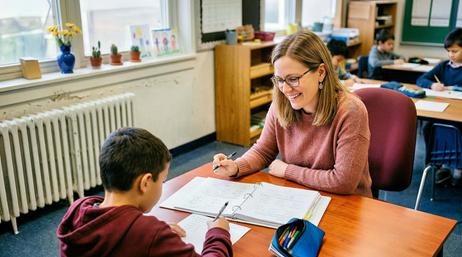
Social Emotional Learning 2025: Policy, Practice and Outcomes

Updated
|
Social Emotional Learning 2025: Policy, Practice and Outcomes
Updated 2025 review of social emotional learning in schools, research outcomes, key trends, challenges and future paths for parents and educators.

Social Emotional Learning 2025: Education’s Hidden Symphony

In 2025, social emotional learning is no longer a fringe concept taught in occasional lessons. It is a central strategy shaping how schools support academic growth, student well-being, and community climate. This updated review examines the reach of social emotional learning, what research currently shows, why social emotional learning matters now more than ever, how independent and boarding schools are responding, key implementation insights, challenges, and what lies ahead for this field.

Social emotional learning is defined as the systematic cultivation of students’ self-awareness, self-management, social awareness, relationship skills, and responsible decision-making. These competencies influence how students engage with peers, manage stress, solve problems, and persist toward goals.

1. The New Reach of Social Emotional Learning

The spread of social emotional learning across U.S. schools has grown substantially in recent years. Social emotional learning programs are now adopted in the vast majority of public and private schools, with 83 percent of principals reporting a structured social emotional learning curriculum or framework in 2024, up from about 73 percent in 2021–22 and far above figures from a decade ago.

The global social emotional learning market continues to expand, though estimates vary by source. One industry analysis places the 2025 market at about USD 2.9 billion, with projected growth to more than USD 3.4 billion in 2026 and long-term expansion expected by 2035. Global Growth Insights Other forecasts estimate larger totals, reflecting

. . .read more

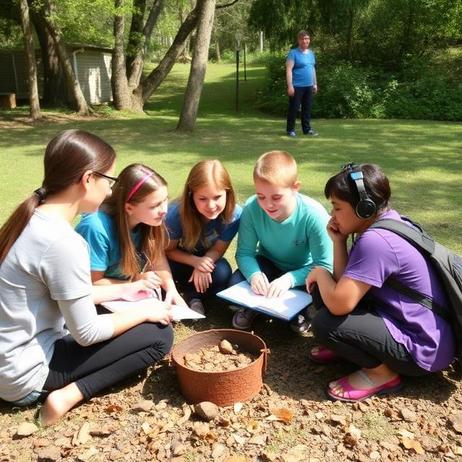
When a Student Is Expelled for Marijuana: What Parents Should Know

Updated
|
When a Student Is Expelled for Marijuana: What Parents Should Know
Expert guidance for parents navigating a child’s expulsion for marijuana in 2025—policy, strategy, rights, and recovery steps.

My Child Has Been Expelled for Smoking Pot: A 2025 Update for Parents, Educators, and Students

Facing an expulsion notice because your child was caught smoking marijuana (pot) is deeply unsettling. In 2025, public expectations, legal frameworks, and school policies have evolved—but the core challenge remains: balancing safety and accountability with care, rehabilitation, and a pathway back to education. This article updates the landscape, offers expert insight, and helps you chart a course forward.

1. The Context in 2025: What the Data Tells Us

Trends in adolescent cannabis use

  • According to the 2024 National Survey on Drug Use and Health, roughly 6 percent of adolescents aged 12–17 reported past-month marijuana use, with no significant change from 2021 levels.

  • In 2024, 25.8 percent of 12th graders reported cannabis use in the past 12 months—down from 29 percent in 2023.National Institute on Drug Abuse

  • Meta-analysis of 63 studies (nearly 440,000 youths) links adolescent cannabis use with lower grades, higher dropout risk, and decreased rates of college attainment.getsmartaboutdrugs.gov

While the downward trend in youth marijuana use continues, administrators and parents cannot shrug off incidents as isolated—they remain serious, especially in school settings.

Legal and policy shifts

  • In 2025, states are beginning to adopt rehabilitative expulsion policies. For example, California’s proposed AB 1230 would require school districts to create individualized

. . .read more

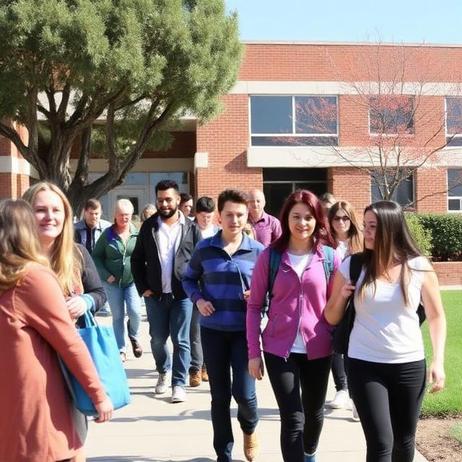
Why Private School in 2025?

Updated
|
Why Private School in 2025?
Learn the key benefits of private school in 2025, from academics to values. Expert insights for parents making the right choice.

Why Private School? (2025 Edition)

The question of how to educate a child remains one of the most consequential decisions a parent can make. In 2025, families continue to weigh the tradeoffs between public and private education—considering factors such as tuition, class size, teaching style, values, and long-term outcomes.

Public schools educate the majority of children in the United States, but for many families, private schools provide unique advantages worth the investment. While tuition for private schools averages $15,000 to $35,000 annually for day schools and $65,000 to $75,000 for boarding schools, according to the National Association of Independent Schools (NAIS), families increasingly see the costs as an investment in future opportunities.

So why private school in 2025? Let’s explore the defining benefits.

A Higher Academic Bar

A defining advantage of private schools is their reputation for academic rigor. Private schools typically set higher graduation requirements than public schools and encourage deeper engagement across core subjects.

For example, many private high schools require four years of math, science, and foreign language, while some public schools mandate only two or three. Community service, arts participation, and capstone projects are also frequently built into graduation requirements.

“Private schools create an environment where learning is expected, not optional,” notes Dr. Sarah Lim, Director of College Counseling at a New England prep school. “That culture of high standards fosters motivation and resilience.”

Recent data supports this. The 2023 National Assessment of

. . .read more

What’s a Private School? 2025 Guide for Parents

Updated
|
What’s a Private School? 2025 Guide for Parents
Explore what defines a private school in 2025—costs, diversity, programs, and admissions insights for families choosing the right education.

What’s a Private School?

A 2025 Parent and Educator Guide

Private schools have long been a cornerstone of American education, offering families choices beyond their local public district. But in 2025, the definition of “private school” is more diverse and dynamic than ever. With nearly 4.7 million students enrolled across more than 30,000 schools nationwide, private education spans independent, religious, boarding, Montessori, Waldorf, STEM-focused, arts-centered, and even hybrid online models.

For parents asking what’s a private school, the answer now includes both traditional institutions with deep histories and innovative schools that harness artificial intelligence and personalized learning. Understanding these differences is essential when evaluating whether private education is the right fit for your child.

Defining a Private School in 2025

At its core, a private school is an institution of learning independently funded through tuition, endowments, and donations rather than taxpayer dollars. Unlike public schools, which must follow state-mandated curricula, private schools enjoy greater flexibility in curriculum design, teacher hiring, and instructional methods.

This autonomy allows schools to specialize—whether in advanced college-prep programs, religious instruction, arts immersion, or individualized learning tracks. According to the National Association of Independent Schools (NAIS), more than 60% of private schools in 2024 adopted a hybrid or personalized learning model, blending in-person instruction with technology-driven tools.

Types of Private Schools

Private education is not monolithic. Parents exploring what a private school is will find a spectrum of options, including:

  • Independent Schools: Fully self-governed, often college-preparatory, and supported by tuition

. . .read more

Educational Podcasts

Updated
|
Educational Podcasts
I've selected some general purpose and some robotics podcasts to enrich your classroom teaching. With over 2 million podcasts available, be careful to review any podcasts you want to use at home or school.

Audio-visual materials have enhanced teaching since the beginning of the last century. As a student in Montreal in the 1950s and 1960s, I recall what a treat it was to listen to a recording or a radio broadcast. Those aids were a welcome change from our very formal, British-style lessons taught by teachers who lectured and expected you to memorize reams of tables and facts. Here's a chronology of when the various devices were introduced into classrooms.

Audiovisual aids, such as recordings and film projectors, have been used in K-12 classrooms for decades. Here's a brief history of their use:

  • Phonographs: In the early 1900s, phonographs were used in classrooms to play recordings of music and speeches.
  • Film projectors: In the 1920s, film projectors became available and were used to show educational films in classrooms.
  • In the 1930s, 16mm films became the standard format for educational films, and schools began to build libraries of educational films.
  • 35mm filmstrips: In the 1940s, 35mm filmstrips were introduced, a series of images printed on a long strip of film accompanied by an audio recording.
  • Slide projectors: In the 1950s, slide projectors gained popularity in classrooms, enabling teachers to display images and information on a screen.
  • Overhead projectors: In the 1960s, overhead projectors gained widespread use in classrooms, enabling teachers to display written and visual materials on a screen in real-time.
  • Video cassette recorders: In the 1970s, video cassette recorders (VCRs) were introduced, allowing teachers to show pre-recorded videos in the classroom.
  • Digital media: In the 1990s, digital media
. . .read more

Recent Articles

Free Private Schools & Voucher Programs in 2025
Updated guide to free private schools and school voucher programs, 2025 policies, costs, equity issues, and how families access tuition support.
Social Emotional Learning 2025: Policy, Practice and Outcomes
Updated 2025 review of social emotional learning in schools, research outcomes, key trends, challenges and future paths for parents and educators.
Private School Admissions for Siblings: Costs and Timing
Learn how private school admissions for siblings affect costs, discounts, and timing strategies for families planning multiple enrollments.

Expert School Views

TEACHING
Editorials and commentary about teaching and related matters.