Financing Basics

There are several ways to finance a private school education, learn more about your options here. We'll explore some of the most expensive schools, explain why tuition is rising and show you how it's all paid for.

View the most popular articles in Financing Basics:

Costs of Private School in 2026

Updated
|
Costs of Private School in 2026
Discover the hidden costs of private school in 2026, including fees, uniforms, and extras parents must budget for beyond tuition.

Hidden Costs of Private School in 2026: Fees, Uniforms, Extras & What to Budget

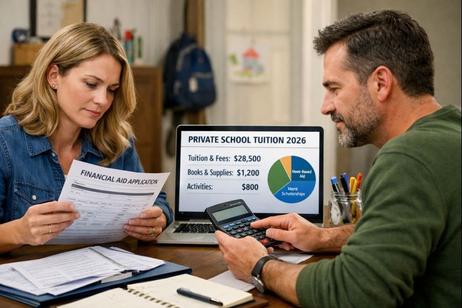
For many families, private school tuition is the most visible and anticipated expense. However, tuition represents only part of the financial commitment. The true cost often includes a wide range of additional fees, required purchases, and optional enrichment opportunities that can significantly increase the total annual investment.

In this guide, we break down the Hidden Costs of Private School in 2026: Fees, Uniforms, Extras & What to Budget, offering updated insights and practical budgeting advice to help families plan with confidence.

The Tuition Baseline in 2026

According to the most recent national data from the National Center for Education Statistics, average private school tuition in the United States varies widely by grade level and region. Independent day schools in urban areas frequently exceed $25,000 per year for elementary grades and $35,000 or more for high school. Boarding schools can surpass $60,000 annually.

In addition, data from the National Association of Independent Schools indicates that tuition increases have continued steadily, reflecting rising operational costs, faculty salaries, and investments in campus infrastructure.

While tuition is the headline figure, families should expect the total cost of attendance to be meaningfully higher once mandatory and optional expenses are included.

Mandatory Fees Beyond Tuition

Nearly every private school assesses additional required fees. These can range from a few hundred dollars to several thousand per year.

Common required fees include:

  • Application and enrollment fees
  • Annual registration or re-enrollment
. . .read more

Private School Fees Increase Mid-Year: A Parent Action Plan

Updated
|
Private School Fees Increase Mid-Year: A Parent Action Plan
A 2026 parent action plan for managing mid-year private school tuition increases, including contracts, negotiation tips, and financial options.

Mid-year tuition increases at private schools can come as an unwelcome surprise, particularly for families who budget carefully and rely on predictable costs. While tuition adjustments are more commonly announced well in advance of a new school year, some schools introduce fee changes after enrollment has already begun. In 2026, with continued inflationary pressure, rising faculty salaries, and higher operational costs, mid-year increases are becoming more common across independent schools nationwide.

This guide, What to Do When Private School Fees Increase Mid-Year: Parents’ Action Plan, offers a practical, step-by-step framework to help families respond thoughtfully, protect their financial interests, and maintain a constructive relationship with their child’s school.

Why Private Schools Raise Fees Mid-Year

Understanding the school’s rationale is the first step toward an effective response. While no parent welcomes unexpected costs, mid-year increases are often driven by factors outside a school’s immediate control.

Common reasons cited by private schools in 2025 and 2026 include:

  • Sharp increases in health insurance premiums for faculty and staff
  • Higher utility and energy costs, particularly in colder regions
  • New state or local compliance requirements
  • Emergency capital repairs or safety upgrades
  • Enrollment shortfalls affecting operating revenue

According to data from the National Association of Independent Schools, operating expenses for many private schools rose between 6 and 10 percent annually from 2023 to 2025, outpacing tuition growth at many institutions. Schools facing budget gaps mid-year may feel compelled to act quickly to remain financially stable.

Step 1: Review Your Enrollment Contract Carefully

Before reacting, review the enrollment agreement

. . .read more

How Global Economic Trends Shape Private School Affordability

Updated
|
How Global Economic Trends Shape Private School Affordability
Explore how global economic trends influence private school affordability and enrollment in 2026, with insights for families and educators.

How Global Economic Trends Impact Private School Affordability & Enrollment

Private education does not exist in a vacuum. Tuition levels, enrollment demand, financial aid availability, and long-term planning at independent schools are increasingly shaped by global economic trends. In 2026, families evaluating private school affordability and enrollment face a complex landscape influenced by inflation cycles, currency volatility, labor market shifts, and geopolitical uncertainty.

For parents, understanding how private school affordability and enrollment respond to global forces can clarify why tuition changes occur and how schools are adapting. For school leaders, these trends are redefining pricing models, recruitment strategies, and sustainability planning. This article examines the major global economic factors affecting private school affordability and enrollment today, with practical insights for families and educators alike.

The Global Economy’s Growing Influence on Private Education

Over the past decade, private school affordability and enrollment have become increasingly sensitive to macroeconomic conditions. International capital flows, global employment trends, and worldwide inflation patterns now shape household finances in ways that directly affect education decisions.

Three structural shifts explain this growing influence:

  • Families are more globally connected through multinational employment and investments.
  • Schools rely on international enrollment and donor support more than ever.
  • Operating costs, including faculty salaries and infrastructure, are tied to global markets.

As a result, private school affordability and enrollment are now linked not only to local economies, but also to worldwide economic performance.

Inflation and Cost Pressures on Private Schools

Global inflation remains one of the most significant drivers of private school

. . .read more

Navigating Private School Finances 2026

Updated
|
Navigating Private School Finances 2026
Essential 2026 guide for parents on private school costs, financial aid, and planning strategies.

Understanding Private School Costs in 2026

Private school tuition continues to rise, with the National Center for Education Statistics (NCES) reporting an average annual tuition of $18,400 for elementary schools and $23,200 for secondary schools in the 2025–26 academic year. These costs vary widely depending on school type, location, and program offerings. Boarding schools generally charge significantly more, with annual tuition ranging from $50,000 to $75,000, including room and board. NCES data shows that the fastest increases are occurring in independent schools with extensive extracurricular programs.

Additional costs often include registration fees, textbooks, uniforms, technology fees, and extracurricular activities. Parents should anticipate an extra $1,000–$3,000 per year for these expenses, depending on the school.

Tuition Payment Options and Policies

Most private schools offer several payment options, including annual, semester, and monthly plans. In 2026, a growing number of schools provide flexible payment software that automates billing and allows parents to manage tuition online. Early payment discounts remain common, typically ranging from 2% to 5%.

Some schools now allow income-based payment arrangements for families demonstrating financial need. Policies can vary, so parents should review the school’s financial agreement carefully and consider the total cost, including hidden fees.

Financial Aid and Scholarships

Financial aid is a critical tool for many families. Approximately 25% of students at independent private schools receive some form of financial assistance, according to the National Association of Independent Schools. Aid packages may cover partial tuition or, in rare cases, full tuition. Application deadlines usually align with

. . .read more

Flexible Payment Plans & Tuition Insurance Explained

Updated
|
Flexible Payment Plans & Tuition Insurance Explained
earn how flexible payment plans and tuition insurance help families manage rising private school fees in 2026.

Flexible Payment Plans & Tuition Insurance: How to Manage Rising Private School Fees

Private school tuition continues to rise in 2026, placing added pressure on families who value small class sizes, academic rigor, and specialized programs. According to data from the National Association of Independent Schools, median private school tuition has increased steadily over the past five years, often outpacing general inflation. As a result, many schools and families are turning to flexible payment plans and tuition insurance as practical tools to make private education more financially manageable.

Flexible payment plans and tuition insurance are no longer optional add-ons. They have become central components of modern tuition management strategies. For parents evaluating private schools, understanding how flexible payment plans and tuition insurance work can be just as important as evaluating curriculum or campus culture.

This article explains how flexible payment plans and tuition insurance help families manage rising private school fees, what options are available in 2026, and how to evaluate these tools when choosing a school.

Why Private School Tuition Is Rising

Several factors are driving higher private school costs nationwide:

  • Competitive teacher salaries and benefits
  • Investments in technology and campus safety
  • Expanded student support services
  • Rising operational and regulatory costs

While many schools offset costs with financial aid, tuition increases remain unavoidable. Flexible payment plans and tuition insurance address different sides of this challenge. Flexible payment plans improve cash flow and budgeting. Tuition insurance protects families from unexpected financial disruption.

Together, flexible payment plans and tuition insurance offer

. . .read more

Recent Articles

Should Your Child Stay at the Same Private School K–12?
Explore whether your child should attend the same private school from kindergarten through graduation, weighing academic continuity, friendships, changing needs, tuition costs, and opportunities at different educational stages.
When Your Child's Closest Friends Leave Private School
Learn how to support your child when close friends leave private school, manage loneliness, maintain friendships, encourage new connections, recognize emotional challenges, and decide when additional school support is needed.
When Your Child Doesn't Connect With Their Teacher
Discover when parents should intervene if their child struggles to connect with a private school teacher, including warning signs, communication strategies, classroom concerns, and practical steps toward improving relationships.

Paying For It