Hidden Costs of Private School in 2026: Fees, Uniforms, Extras & What to Budget
For many families, private school tuition is the most visible and anticipated expense. However, tuition represents only part of the financial commitment. The true cost often includes a wide range of additional fees, required purchases, and optional enrichment opportunities that can significantly increase the total annual investment.
In this guide, we break down the Hidden Costs of Private School in 2026: Fees, Uniforms, Extras & What to Budget, offering updated insights and practical budgeting advice to help families plan with confidence.
The Tuition Baseline in 2026
According to the most recent national data from the National Center for Education Statistics, average private school tuition in the United States varies widely by grade level and region. Independent day schools in urban areas frequently exceed $25,000 per year for elementary grades and $35,000 or more for high school. Boarding schools can surpass $60,000 annually.
In addition, data from the National Association of Independent Schools indicates that tuition increases have continued steadily, reflecting rising operational costs, faculty salaries, and investments in campus infrastructure.
While tuition is the headline figure, families should expect the total cost of attendance to be meaningfully higher once mandatory and optional expenses are included.
Mandatory Fees Beyond Tuition
Nearly every private school assesses additional required fees. These can range from a few hundred dollars to several thousand per year.
Common required fees include:
- Application and enrollment fees
- Annual registration or re-enrollment fees
- Technology fees
- Facility or capital improvement fees
- Activity fees
- Graduation fees for seniors
In 2026, technology fees are particularly common. Many schools operate one-to-one device programs or require families to purchase approved laptops or tablets. Even when devices are school-issued, annual technology assessments of $300 to $800 are typical.
Capital improvement fees are also increasingly prevalent. These support campus upgrades, security improvements, and facility expansions. Families should clarify whether these are one-time or recurring charges.
Estimated Annual Required Add-Ons
| Category | Estimated Annual Cost (2026) |
|---|---|
| Enrollment and registration | $200 to $1,000 |
| Technology fees | $300 to $800 |
| Facility or capital fees | $500 to $2,500 |
| Activity fees | $200 to $1,000 |
These mandatory expenses can easily add $1,500 to $4,000 per year beyond tuition.
Uniforms and Dress Code Expenses
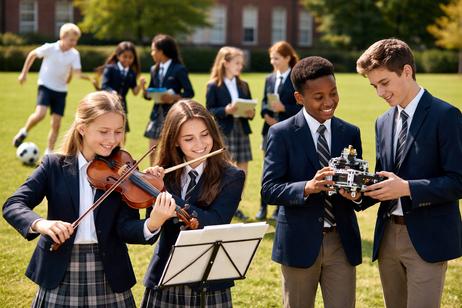
Uniforms remain a defining feature of many private schools, particularly religious and college preparatory institutions. While uniforms can simplify daily routines, they come with initial and ongoing costs.
A typical uniform wardrobe may include:
- Multiple polo or oxford shirts
- Sweaters or blazers
- Dress pants or skirts
- Athletic uniforms
- Outerwear with school branding
- Formal attire for ceremonies
In 2026, many schools require families to purchase from approved vendors. Starter uniform packages often range from $400 to $800 per child. As students grow, replacement items add to annual costs.
Parents should also budget for:
- Dress shoes and athletic shoes
- Winter coats that meet dress code standards
- Special event attire
For families with multiple children enrolled simultaneously, uniform costs can quickly multiply.
Transportation Costs
Transportation is frequently overlooked when calculating the Hidden Costs of Private School in 2026: Fees, Uniforms, Extras & What to Budget.
Private schools may offer bus service, but it is rarely included in tuition. Annual transportation fees typically range from $1,000 to $3,500, depending on distance and region.
In metropolitan areas, some schools charge per zone or mileage bracket. Families who opt out of bus service should factor in fuel, vehicle wear, parking fees, or carpool contributions.
For boarding students, travel expenses add another layer. Flights for school breaks, storage costs, and ground transportation can add several thousand dollars per year.
Extracurricular Activities and Athletics
Private schools often emphasize well-rounded education through athletics, arts, clubs, and experiential learning. While many programs are included at a basic level, competitive or specialized activities frequently carry additional fees.
Examples include:
- Club sports participation fees
- Travel team expenses
- Tournament entry fees
- Musical instrument rental or purchase
- Theater production fees
- Robotics or STEM competition costs
Competitive athletic programs can cost $1,000 to $5,000 annually when factoring in uniforms, equipment, travel, and coaching fees.
Similarly, arts programs may require instrument purchases or private instruction. A quality student violin or trumpet can cost several hundred to several thousand dollars.
Families should request a breakdown of typical extracurricular costs before enrollment, particularly if their child intends to participate at a high level.
Field Trips and Experiential Learning
Experiential education is a hallmark of many private schools. Overnight trips, global exchanges, and service-learning programs are increasingly common in 2026.
These opportunities can include:
- Outdoor education retreats
- Washington, D.C., or state capital trips
- International exchange programs
- STEM immersion camps
Domestic overnight trips often cost $500 to $1,500. International programs may range from $3,000 to $8,000 or more.
While these programs are sometimes optional, social and academic dynamics may make participation feel expected. Parents should clarify whether such trips are required components of the curriculum.
Fundraising Expectations and Donations
Many independent schools rely on philanthropic support to bridge the gap between tuition revenue and operating costs.
Annual fund participation is frequently encouraged and sometimes implicitly expected. While contributions are voluntary, schools often communicate target giving levels.
According to NAIS, charitable giving is a critical component of independent school funding. Families may encounter:
- Annual fund requests
- Gala or auction ticket purchases
- Capital campaign contributions
- Classroom gift collections
While no family is required to donate beyond tuition, it is realistic to anticipate periodic fundraising appeals throughout the year.
Academic Support and Enrichment
If a student requires academic support services, costs may increase. While some schools include limited learning support, specialized tutoring or accommodations may involve additional fees.
Potential expenses include:
- Learning specialist services
- Private tutoring
- Test preparation courses
- College counseling upgrades
College counseling, in particular, has become more comprehensive and competitive in 2026. Families seeking private SAT or ACT preparation may spend $1,000 to $3,000 on structured programs.
Rising inflation, as reported by the U.S. Bureau of Labor Statistics, has also contributed to higher service costs across tutoring and enrichment sectors.
Technology and Digital Learning Costs
Private schools continue to invest heavily in digital infrastructure. In addition to annual technology fees, families may face:
- Required laptop purchases
- Software subscriptions
- Online textbook platforms
- Cybersecurity insurance add-ons
A school-approved laptop can cost $800 to $1,500. Some institutions require device replacement every three to four years.
Digital textbook platforms often replace traditional books, but subscription fees can total several hundred dollars annually.
Health, Insurance, and Miscellaneous Costs
Additional costs may include:
- Required student health insurance for boarding students
- School lunch programs
- Aftercare or extended day programs
- Summer programs linked to the school
Aftercare for younger students can add $2,000 to $5,000 annually. School lunch programs often range from $1,000 to $1,500 per year.
For boarding schools, health insurance requirements and on-campus medical fees may add several thousand dollars more.
A Sample Annual Budget Snapshot
Below is a simplified example for a day student in 2026 attending a private high school with $30,000 tuition:
| Expense Category | Estimated Annual Cost |
|---|---|
| Tuition | $30,000 |
| Required fees | $2,500 |
| Uniforms | $600 |
| Transportation | $2,000 |
| Extracurriculars | $2,000 |
| Field trips | $1,000 |
| Technology and devices | $1,200 |
| Miscellaneous | $1,200 |
| Estimated Total | $40,500 |
In this scenario, non-tuition costs add more than $10,000 to the annual commitment.
How to Budget Strategically in 2026
Understanding the Hidden Costs of Private School in 2026: Fees, Uniforms, Extras & What to Budget allows families to plan more effectively.
Consider these strategies:
- Request a full cost-of-attendance worksheet from the school.
- Ask for historical averages of extracurricular and trip expenses.
- Inquire about multi-child discounts.
- Explore financial aid and flexible payment plans.
- Clarify which activities are required versus optional.
Many families also explore state-level scholarship or tax credit programs. Organizations such as EdChoice provide information about available school choice programs nationwide.
Financial aid policies vary widely among private schools. Some institutions offer need-based aid covering tuition and certain fees, though uniforms and extracurricular expenses are often excluded.
Final Thoughts
Private education offers meaningful benefits, including smaller class sizes, specialized programs, and strong community culture. However, families should look beyond tuition when evaluating affordability.
The Hidden Costs of Private School in 2026: Fees, Uniforms, Extras & What to Budget can add 20 to 35 percent or more to the published tuition rate. Transparent conversations with admissions and finance offices are essential.
By approaching the process with careful research and a comprehensive budget plan, families can make informed decisions that align with both educational goals and financial realities.
Understanding the full picture ensures that private school remains a rewarding investment rather than an unexpected financial strain.