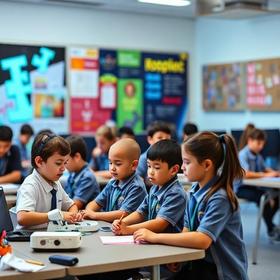
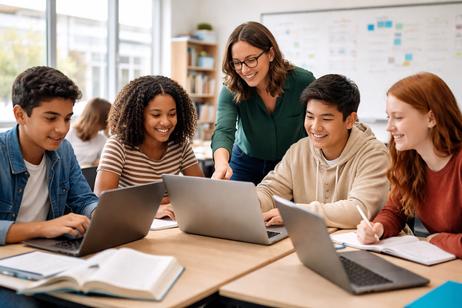
High school classrooms in 2026 look markedly different from those of even five years ago. While core academic standards remain strong, how students learn has evolved. Artificial intelligence tools support research and writing. Teachers design interdisciplinary projects instead of relying solely on lectures. Students demonstrate mastery through presentations, portfolios, and real-world problem solving.
For parents evaluating schools, understanding today’s high school teaching methods is essential. The right instructional approach can foster independence, critical thinking, and college readiness. This guide explains what is shaping instruction in 2026 and what to look for when assessing a private high school.
Why Teaching Methods Matter More Than Ever
Colleges and employers increasingly prioritize adaptable thinkers who can collaborate, analyze information, and communicate effectively. According to the OECD Future of Education and Skills 2030 framework, education systems worldwide are shifting toward competencies such as global awareness, digital literacy, and resilience.
At the same time, organizations like the National Association of Independent Schools highlight innovation as a hallmark of strong private schools. Parents should therefore look beyond course titles and examine how subjects are taught.
If you are beginning your search, you may find it helpful to review How to Choose the Right Private High School, which outlines key evaluation criteria, including curriculum and teaching philosophy.
The Core 2026 High School Teaching Methods
-
Blended and AI-Enhanced Learning
In 2026, most high schools use blended learning models that combine in-person instruction with digital tools. The difference today is the integration of artificial intelligence.
Students may use AI-powered tutoring systems for math practice or writing feedback. Teachers leverage AI analytics to identify learning gaps and personalize instruction. When used responsibly, these tools supplement teacher expertise rather than replace it.
The key questions for parents:
- Does the school have clear policies on responsible AI use?
- Are teachers trained in digital literacy and ethical guidelines?
- Is technology used to deepen understanding, not just deliver content?
Schools that thoughtfully integrate AI often align with guidance from organizations such as the College Board, which continues to emphasize analytical thinking and source evaluation in its Advanced Placement courses.
-
Project-Based Learning and Real-World Application
Project-based learning, often abbreviated as PBL, is no longer experimental. In 2026, it is mainstream in many private high schools.
Instead of completing isolated worksheets, students might:
- Design a sustainable city plan in environmental science.
- Launch a mock startup in economics.
- Conduct primary research for a local history exhibition.
Research from Edutopia supports the benefits of project-based learning for engagement and retention. More importantly, colleges increasingly value applicants who demonstrate initiative and applied learning.
Parents evaluating high school teaching methods should ask:
- Are projects interdisciplinary?
- Do students present their work publicly?
- How is academic rigor maintained alongside creativity?
Strong programs clearly align projects with academic standards and provide structured feedback.
-
Mastery-Based and Competency-Based Assessment
Traditional grading systems are being supplemented, and sometimes replaced, by mastery-based approaches.
In competency-based classrooms:
- Students progress once they demonstrate understanding.
- Feedback is ongoing and detailed.
- Retakes or revisions are encouraged to support growth.
This model reflects a broader shift from seat time to skill mastery. Instead of asking how long a student spent on a unit, teachers ask whether the student can apply the concept independently.
Parents who want to better understand grading practices can explore Understanding Private School Curriculum Standards, which explains how independent schools set and measure expectations.
-
Socratic Seminars and Discussion-Based Learning
Even as technology advances, high-performing schools continue to emphasize face-to-face dialogue.
Socratic seminars, Harkness tables, and discussion-based classes encourage students to:
- Defend their ideas with evidence.
- Listen actively to peers.
- Engage in civil discourse.
These methods build communication skills that standardized tests alone cannot measure. In humanities courses especially, the emphasis is shifting from memorization to interpretation and analysis.
When visiting a school, ask to observe a class. A strong discussion-based classroom will show students speaking as much as, or more than, the teacher.
-
Social-Emotional Learning Integrated Into Academics
Social-emotional learning, often referred to as SEL, has matured in 2026. Rather than standalone advisory sessions, SEL is woven into academic instruction.
Teachers incorporate:
- Reflection journals.
- Collaborative goal-setting.
- Structured peer feedback.
This integration supports resilience and emotional regulation, skills that contribute directly to academic success. Parents can learn more about the broader benefits in The Benefits of a Private High School Education, which discusses how smaller class sizes and close faculty mentorship strengthen student development.
What Has Changed Since 2025
While many of these methods were emerging in 2025, several developments define 2026:
- Clearer AI Policies: Schools now publish transparent AI guidelines in student handbooks, addressing academic integrity and appropriate usage.
- Interdisciplinary Capstone Projects: More private high schools require senior capstone projects that integrate multiple disciplines and involve community partnerships.
- Data-Informed Instruction: Teachers use real-time analytics dashboards to track student progress and intervene earlier.
- Expanded Experiential Learning: Internship programs, global exchanges, and service learning are more common, particularly in independent schools that emphasize global citizenship.
Comparing Traditional vs. 2026 Teaching Approaches
| Traditional Model | 2026 Teaching Methods |
|---|---|
| Lecture-centered instruction | Student-centered collaboration |
| Standardized tests as primary assessment | Portfolios, projects, and mastery checks |
| Limited technology use | AI-enhanced and blended learning |
| Fixed pacing for all students | Flexible, competency-based progression |
| Subject silos | Interdisciplinary integration |
This shift does not mean academic rigor has decreased. In many cases, expectations are higher. Students must synthesize information, defend arguments, and apply knowledge in complex scenarios.
Questions Parents Should Ask During School Visits
When evaluating high school teaching methods in 2026, consider asking:
- How do teachers incorporate technology responsibly?
- What does assessment look like beyond traditional tests?
- Are students encouraged to revise and improve their work?
- How are critical thinking and communication skills developed?
- What professional development do teachers receive?
Schools that invest in ongoing faculty training tend to adapt more effectively to new pedagogical research.
How Teaching Methods Influence College Readiness
Colleges increasingly look for students who can think independently and manage complex projects. Application essays, interviews, and recommendation letters often highlight:
- Intellectual curiosity.
- Initiative.
- Collaboration skills.
High schools that emphasize project-based learning, mastery-based assessment, and discussion-driven classes naturally cultivate these qualities.
Additionally, Advanced Placement and honors programs are evolving. While AP exams remain important, teachers now integrate deeper analytical work aligned with college-level expectations.
Parents should ask how a school balances innovation with preparation for standardized assessments such as the SAT or AP exams. Strong schools manage both effectively.
Potential Challenges to Watch
Innovative teaching methods can also present challenges.
- Overreliance on Technology: If screens dominate the day, meaningful discussion and hands-on learning may suffer.
- Inconsistent Implementation: Not all teachers may adopt new methods uniformly.
- Assessment Confusion: Parents accustomed to traditional grading may initially struggle to interpret competency-based transcripts.
The best schools communicate clearly with families about instructional philosophy and grading practices.
Final Thoughts: Finding the Right Fit
The landscape of high school teaching methods in 2026 reflects a broader transformation in education. Classrooms are more collaborative, technology-enhanced, and skill-focused than ever before. Yet the core mission remains the same: preparing students for meaningful futures.
As a parent, your role is not to master every educational trend. Instead, focus on alignment:
- Does the school’s teaching approach match your child’s learning style?
- Are teachers accessible and engaged?
- Is there evidence of academic rigor alongside innovation?
When you understand how a school teaches, not just what it teaches, you gain a clearer picture of how your child will grow intellectually and personally.
The most successful private high schools in 2026 combine time-tested academic excellence with forward-thinking instructional strategies. By asking thoughtful questions and observing classrooms in action, you can identify the environment where your student will thrive.