
Financial Aid 101: Updated Guide for 2026
Sending a child to private school continues to be a major financial commitment for many families in 2026. While tuition and fees have risen in recent years, financial aid, scholarships, vouchers and state programs play a critical role in making private education attainable for a broad range of households. This Financial Aid 101 guide updates key data, policy trends and planning strategies for parents now navigating the 2026 enrollment cycle.
Understanding Current Private School Costs
Private school tuition varies widely across the United States. According to recent national figures, annual tuition for private K-12 schools often ranges significantly based on school type and location, with many independent day schools charging well above the national median and boarding schools commanding even higher fees.
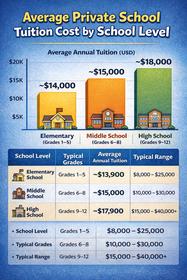
National averages for private K–12 tuition in the 2025–26 year are approximately $15,000 overall, with elementary grades slightly lower and high school grades often higher.
Independent and elite day schools frequently report tuition in the $30,000 to $50,000+ range, and boarding schools commonly exceed $55,000–$70,000 per year.
These costs reflect ongoing inflationary pressures, rising teacher compensation and expanded program offerings within many schools. Families need realistic expectations of total costs because tuition alone often does not include fees for textbooks, technology, transportation or extracurricular programs.
What Financial Aid Is and Why It Matters
Financial aid refers to funds provided by private schools, nonprofit organizations or state and federal programs to reduce the net cost for families. This can take the form of need-based grants, merit scholarships, discounts, payment plans or state education choice funds (like vouchers or education savings accounts).
Private school financial aid is distinct from federal student aid used for college; it is typically funded by the school’s own budget or through endowments and is awarded based on policies specific to each institution.
Types of Aid Available
-
Need-Based Grants and Scholarships
Most private schools award need-based grants, which do not need to be repaid and are intended to make tuition affordable based on a family’s financial situation. Eligibility usually depends on income, assets and household size, analyzed through a confidential application such as the Parents’ Financial Statement (PFS). -
Merit Scholarships
Some schools offer awards based on academic achievement, artistic talent, athletics or leadership. Merit awards vary broadly and can supplement or stand in place of need-based support. -
Vouchers and State Programs
Several states now offer education choice programs that allow public funds to help cover private tuition. For example, new programs in states like Idaho and expanded voucher initiatives in Texas provide families with several thousand dollars per student each year to offset costs. -
Education Savings Accounts and Tax Credits
Some states also provide tax credit scholarships or education savings accounts that families can use for tuition or related education expenses, widening how financial support can be structured.
Who Gets Aid
A significant share of private school students benefit from these financial resources:
Roughly 1 in 4 students at private schools receive some form of financial aid.
Among boarding schools, it is common for 30–45 percent of students to receive meaningful assistance.
Aid is not limited to low-income families; many middle-income and even upper-middle-income households qualify based on school formulas and cost of living considerations. Schools often annually review family financial circumstances and adjust awards accordingly.
Application Process and Timing
Each school determines its own application process, but there are common elements parents should know:
-
Financial Aid Forms
Most independent schools use standardized forms such as the Parents’ Financial Statement (PFS) to assess need. These forms require documentation of income, assets and expenses and should be submitted well before admissions deadlines. -
Deadlines
Financial aid deadlines typically coincide with admissions deadlines for the fall term, often several months before school starts. Applying early increases the chances of receiving aid, especially at competitive schools with limited budgets. -
Award Letters
Schools issue award letters that outline the amount and type of aid offered. These documents help families compare net cost across multiple schools.
How Schools Determine Aid Amounts
Private schools weigh both objective financial indicators and subjective judgments when awarding aid:
Household income and assets
Family size and number of children in school
Cost of attendance relative to family finances
Special circumstances such as medical expenses or change in employment
Because formulas vary by school, families are encouraged to apply broadly and seek personalized guidance from financial aid offices.
Recent Trends in Aid and Enrollment
Financial aid landscapes in 2026 reflect broader trends:
Tuition and aid amounts have risen together, yet the proportion of tuition covered by aid has remained stable in many sectors.
More families across income brackets are applying for aid, not just those at the lowest incomes.
In states with education choice policies, voucher and ESA participation is growing, influencing both enrollment patterns and how schools structure aid.
These shifts mean that planning and early exploration of options are more important than ever for families.
Practical Planning Tips for Parents
-
Start Early and Research Widely
Begin exploring private school options and financial aid requirements as early as possible, even in elementary grades. Visit school financial aid webpages and speak with admissions staff about timelines and available funding. -
Use Comparable Aid Calculators
Some schools and third-party organizations provide net price calculators that estimate the likely aid and costs for specific family situations. These tools can help set realistic expectations. -
Consider All Funding Sources
In addition to school aid, explore tax-advantaged savings (such as 529 plans) which may offer tax-free use for K-12 tuition up to IRS limits, as well as state tax credits or scholarship programs. -
Budget for Total Costs
Remember that tuition is only one component. Books, uniforms, transportation and extracurriculars can add significantly to annual expenses.
Conclusion
Financial aid continues to make private school accessible to a wide range of families in 2026. While tuition remains a substantial investment, understanding cost data, meeting application deadlines and leveraging all available aid options can dramatically improve affordability. By planning early and engaging with school financial aid offices and state programs, families can make informed decisions that align with both educational goals and financial realities.