
Understanding Private School Tuition (Updated for 2025)
Private school tuition remains one of the most important considerations for families evaluating K–12 education options. As the 2025–26 academic year unfolds, tuition rates, policy developments, and enrollment patterns are shifting in ways that directly affect family decision-making. This updated guide provides current insights into private school tuition, breaking down costs, trends, and what parents need to know when budgeting for private education.
Introduction: Why Tuition Matters
Choosing a private school involves more than selecting a campus or curriculum; it includes a clear understanding of the tuition landscape. Tuition funds not only teacher salaries and classroom instruction but also extracurricular programs, technology, facilities, and school operations. In 2025, families continue to weigh these costs against the benefits of smaller classes, specialized programming, and private school culture.
National Tuition Trends in 2025
Overview of Current Costs
Nationally, private school tuition varies widely depending on school type, location, and grade level. According to recent data:
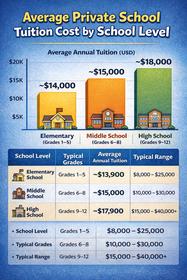
The average national private school tuition for the 2025–26 school year is approximately $14,999 annually, with elementary tuition around $14,018 and high school tuition near $17,954.
Independent and elite private schools often command much higher rates, with day school tuition frequently exceeding $30,000–$50,000 and boarding school costs climbing above $55,000–$70,000+ per year.
This wide range reflects profound variability by region, mission (religious versus nonsectarian), and the scope of services offered.
Cost Drivers in 2025
Several key factors are driving tuition increases:
Inflation and Operating Costs: Like many sectors, private schools are experiencing inflationary pressures on staff salaries, utilities, and supplies, leading to tuition increases in many communities.
Demand for Specialized Programs: Schools expanding STEM, arts, and advanced placement offerings often offset those enhanced programs with higher tuition.
Market Positioning: Independent and college-prep schools, particularly in high-cost areas like the Northeast, charge premiums reflecting both demand and prestigious reputation. Cerini & Associates, LLP
Comparing Day, Boarding, and Independent Tuition
Private schools are not a monolith. The structure of tuition differs by school model:
Day Schools: Most private students attend day schools. This category has a broad range from more affordable community parochial options to rigorous independent schools.
Boarding Schools: For families considering residential education, boarding institutions carry additional costs for room and board, often pushing annual tuition total toward or above $70,000 in many cases.
Independent Schools: These schools, typically nonsectarian and often with strong college preparatory focus, can command some of the highest fees nationwide.
Understanding these differences helps families align their financial planning with educational priorities.
Regional Variation in Tuition
Tuition costs also differ significantly by state and region:
Northeastern states such as Connecticut, Massachusetts, and New York consistently rank among the most expensive for private education. Education Data Initiative
In contrast, states like South Dakota, Nebraska, or parts of the Midwest and South tend to offer more moderate averages.
Regional cost differences are essential for families considering relocation or school choice across city and state lines.
Enrollment and Demographic Context
Despite high tuition levels, private school enrollment has shown pockets of growth. A recent analysis reported significant increases in private choice program participation, with enrollment rising by approximately 25% in the U.S. from 2024 to 2025. The Times of India
Traditional federal data suggest nearly 10% of U.S. K–12 students attend private schools, though this share varies by community. National Center for Education Statistics
Financial Aid and Net Tuition Realities
Published tuition (often referred to as the sticker price) rarely reflects what families actually pay. Many private schools offer:
Need-based financial aid: Targeted to families with demonstrated financial need.
Merit scholarships: Awarded for academic, arts, or athletic excellence.
Sliding scale tuition models: Increasingly used in high-cost markets to attract middle-income families.
In some elite independent schools, a significant share of students receive aid that meaningfully reduces net cost.
Policy Shifts Affecting Affordability
Public policy is reshaping how families finance private education:
Across the United States, education choice programs—including vouchers, tax-credit scholarships, and education savings accounts (ESAs)—are expanding, providing families with funds that can be applied toward tuition. Public School Review
As choice programs grow, some states are debating larger voucher initiatives that could shift public funds into private education support. The Washington Post
These policy landscapes vary by state, and understanding local rules is critical for families considering tuition assistance.
Hidden and Additional Costs Beyond Tuition
Families should also budget for costs often not included in published tuition:
Registration and technology fees
Transportation or bus services
Extracurricular and athletic fees
Books, uniforms, and supplies
These can collectively add thousands of dollars annually to the effective cost of attendance.
Expert Perspectives and Real-World Planning
Education economists emphasize that tuition should be evaluated in the context of overall family finances and educational priorities. For some families, private school tuition represents a strategic investment in smaller class sizes and tailored academic support. Others pursue private schooling for unique program opportunities or cultural fit.
Financial advisors often recommend planning for tuition several years in advance, considering options like 529 college savings plan flexibility or special education savings accounts where available.
Making Tuition Work for Your Family
Here are practical tips for families evaluating tuition:
Compare Net Costs: Ask schools for net tuition after aid, not just the published figure.
Explore Choice Programs: Investigate state and local education choice options that offer financial support.
Budget Holistically: Include all associated costs, not just tuition, in your planning.
Visit and Probe: School visits and direct financial conversations often reveal important insights into affordability and fit.
Conclusion
In 2025, private school tuition continues to challenge families financially but remains a viable and rewarding educational choice for many. Understanding current tuition trends, financial aid opportunities, and policy developments empowers families to make informed decisions aligned with their goals. By looking beyond sticker prices and exploring tailored financial strategies, parents can find pathways to quality private education that fit their circumstances.