
Sliding-Scale & Income-Based Tuition Models: Are They Right for Your Family?
Sliding-scale and income-based tuition models have become central to how many families evaluate private school affordability in 2025. As more schools commit to widening access, these models help families assess real costs, financial expectations, and long-term planning. For families comparing private school options, understanding how sliding-scale and income-based tuition models work is essential to making an informed decision.
This guide explains how sliding-scale and income-based tuition models function, how they compare to traditional financial aid, what families can expect during the process, and how to decide whether these models align with your financial needs and educational goals.
What Are Sliding-Scale and Income-Based Tuition Models?
Sliding-scale and income-based tuition models assign tuition based on a family’s financial profile rather than a fixed list price. Instead of a single tuition number, schools offer a flexible range, with each family paying an amount calibrated to its demonstrated ability to contribute.
Because sliding-scale and income-based tuition models remove the “all or nothing” aspect of traditional aid, they provide a more predictable and transparent structure for families.
Under these models, tuition contributions typically depend on:
- Household income
- Assets and liabilities
- Number of children in tuition-charging schools
- Major expenses and obligations
- Geographic cost-of-living factors
Parents often find that sliding-scale and income-based tuition models simplify the conversation around affordability and reduce the stigma sometimes associated with applying for aid.
Why Schools Are Expanding Sliding-Scale and Income-Based Tuition Models
Schools increasingly adopt sliding-scale and income-based tuition models to widen socioeconomic diversity and improve enrollment stability. By 2025, many day and boarding schools, particularly mission-driven or faith-based institutions, have shifted to these models to create an inclusive environment while maintaining financial sustainability.
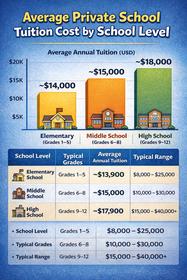
For broader context, families can review typical tuition ranges and financial aid trends on resources like the Private School Tuition page on PrivateSchoolReview.com, which offers national and state-level data.
How Sliding-Scale Tuition Works
While each school’s process differs, sliding-scale and income-based tuition models usually follow a consistent structure.
-
Financial Snapshot Submission
Families submit financial documents through a third-party platform or the school’s own portal. Schools often use independent evaluators to ensure consistency. -
Eligibility Evaluation
The school reviews the full picture of the household’s financial profile. Sliding-scale and income-based tuition models give admissions committees a more nuanced view of family obligations. -
Tuition Determination
The school assigns a tuition amount within the published scale. For example, a school may list tuition bands such as:Household Income Estimated Tuition Contribution Under $80,000 $1,500–$6,000 $80,000–$150,000 $6,000–$14,000 $150,000–$250,000 $14,000–$22,000 $250,000+ Full tuition with possible adjustments Sliding-scale and income-based tuition models often provide a more consistent expectation year to year, although tuition bands may shift as costs rise.
-
Renewal and Review
Families usually reapply annually. Schools then adjust the amount based on updated circumstances.
Sliding-Scale vs Traditional Financial Aid
While sliding-scale and income-based tuition models resemble financial aid, the structure and experience differ.
Sliding-Scale and Income-Based Tuition Models
- Families know published ranges before applying.
- Tuition adjusts consistently across the school community.
- Schools promote the model as part of their mission.
Traditional Financial Aid
- Families receive individualized awards, often without published ranges.
- More variation exists between similar financial profiles.
- The process may feel more opaque or competitive.
Many parents find sliding-scale and income-based tuition models more predictable. At the same time, some schools blend both approaches to preserve flexibility.
To compare aid frameworks among schools, parents can explore individual school profiles on PrivateSchoolReview.com, which outlines tuition, admissions, and financial aid policies.
Benefits of Sliding-Scale and Income-Based Tuition Models
Families considering sliding-scale and income-based tuition models often cite several key advantages.
-
Predictability
Knowing the likely tuition band early in the admissions process helps families plan years ahead. -
Transparency
Clear ranges help parents understand how their financial profile aligns with expected contributions. -
Reduced Stigma
Instead of a separate “aid recipient” category, most families fall naturally along the scale. -
Accessibility
Sliding-scale and income-based tuition models open the door to students from a wider range of backgrounds, supporting school diversity goals. -
Equity
Schools evaluate families consistently across similar income brackets.
Challenges and Misconceptions
Despite their advantages, sliding-scale and income-based tuition models require careful consideration.
-
Misconception: They Always Guarantee Lower Tuition
Families sometimes assume they will automatically qualify for significant reductions. In reality, the scale reflects both family finances and institutional resources. High-demand schools may have restricted budgets. -
Challenge: Required Financial Disclosure
Sliding-scale and income-based tuition models require detailed financial reporting. Some parents find the process intrusive.
-
Challenge: Annual Reassessment
A family’s assigned tuition may rise if their financial situation improves. Predictability is relative, not absolute.
For context on how aid policies vary, parents can review articles such as Financial Aid Myths on PrivateSchoolReview.com, which offers guidance on navigating aid decisions.
How to Evaluate Whether These Models Fit Your Family
To determine whether sliding-scale and income-based tuition models are right for your family, consider the following factors.
-
Your Long-Term Financial Outlook
Families should assess projected income stability, childcare changes, college planning, and other obligations. Sliding-scale and income-based tuition models work best for families with predictable financial planning horizons. -
Your Comfort With Disclosure
The depth of financial review varies. If your financial situation includes complexities such as small-business ownership, these models may require additional documentation. -
School Mission Alignment
Schools that adopt sliding-scale and income-based tuition models often emphasize community values and inclusion. Families should prioritize mission fit as much as cost. -
Preferred Tuition Predictability
If you want a clear understanding of affordability early in the process, you may find sliding-scale and income-based tuition models helpful. -
Comparisons Among Schools
Some institutions publish highly detailed tuition bands while others provide only broad ranges. As a starting point, explore school affordability profiles like this example: The Madeira School Profile.
Questions to Ask Schools About Sliding-Scale and Income-Based Tuition Models
Parents exploring sliding-scale and income-based tuition models should ask admissions and finance teams targeted questions:
- How many families currently participate in the model?
- How does the school define ability to pay?
- What is the average tuition contribution for families in our income range?
- How often do tuition bands adjust?
- Are additional expenses included in the calculation?
- Does the model apply to re-enrolling students consistently?
- How does financial aid for extracurriculars or travel work under this system?
Clear communication helps ensure that sliding-scale and income-based tuition models meet the needs of families.