
Financial Aid for Private Schools: What Families Need to Know in 2025
For many families exploring independent education, navigating private-school financial aid can feel like stepping into its own ecosystem of forms, deadlines, and formulas. Whether you are new to private schools or returning to the process after several years, understanding how financial aid works in 2025 is essential for making informed decisions.
This updated guide explains the fundamentals of private-school financial aid, how schools evaluate need, what factors families often overlook, and the strategic questions worth asking before applying. The focus is on practical, relevant information that helps families choose and afford high-quality K–12 independent education.
- Why Financial Aid Matters for Private-School Families
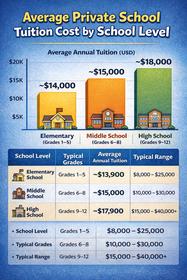
Private-school tuition represents a significant investment, and financial aid continues to play a central role in widening access to independent education. More schools now use structured. Understanding the process is not simply about affordability. It also helps families compare schools accurately. Tuition “sticker price” varies widely, and so does the net price that families actually pay.
Key distinctions between private-school aid and other systems
Private-school financial aid differs from public-sector models in several consistent ways:
- Tuition assistance is based on demonstrated financial need as determined by specialized forms, school policies, and third-party assessment services.
- Aid is not guaranteed year to year; families must reapply and demonstrate need annually.
- Schools base decisions on their own budgets and philosophies rather than federal formulas or entitlement programs.
For families used to public-school structures or general higher-education processes, the private-school funding landscape requires a more individualized, school-specific approach.
- How Private-School Financial Aid Works in 2025
While every school has its own process, certain shared practices define the current financial-aid landscape.
The foundational step: the financial-aid application
Most private schools rely on a financial-aid platform such as Clarity or School and Student Services (SSS). These systems analyze income, assets, debt obligations, and family size to help schools estimate a family’s ability to contribute toward tuition.
Schools then use this assessment to inform awards, but they are not bound to the formula. They may adjust for local cost-of-living, unique family circumstances, or institutional priorities.
Major types of private-school aid
| Aid type | What it includes | Why it matters |
|---|---|---|
| Need-based grants | Tuition assistance that does not need to be repaid | The primary form of aid at most independent schools |
| Merit scholarships (offered by a limited number of schools) | Awards for academics, arts, leadership or other achievements | Less common than many families expect, but expanding as schools diversify aid portfolios |
| Sibling discounts or multi-child considerations | Reduced tuition for families with more than one child enrolled | Helps families with multiple students navigate cumulative costs |
| Payment plans | Tuition paid monthly or quarterly | Aids budgeting even without traditional financial-aid eligibility |
Private schools typically calculate a total cost of attendance, which includes tuition, required fees, and sometimes incidental expenses. The family contribution plus aid equals the net cost.
Families should review each school’s published aid philosophy and its net price calculator, where available. Private School Review also provides school-level tuition, fee, and financial-aid information that can help families compare options more effectively.
- What Families Often Overlook
Several factors shape financial-aid decisions, yet they frequently surprise applicants.
A. Past educational expenses are not automatic factors
Payments toward preschool, enrichment programs, or previous private-school tuition usually do not reduce a family’s calculated ability to pay. Aid assessments focus more on current income, assets, and obligations than on past spending choices. That said, some schools consider context, especially when families have consistent private-school commitments across multiple children.
B. Home equity, investments, and savings matter
Independent schools often review a broader financial picture than families anticipate. Depending on the aid platform used, the school may consider:
- Home equity
- Investment accounts
- Education savings plans
- Liquid and non-liquid assets
How these factors are weighed varies. Some schools cap home-equity considerations. Others adjust expectations based on regional cost-of-living.
C. Filing early increases access
Most schools have priority deadlines, and applications completed on time receive full consideration. Late applications may be reviewed only if funds remain.
D. Aid does not typically cover non-tuition expenses
While some schools provide supplemental support for books, devices, or trips, these offerings differ widely. Families should ask how non-tuition costs are handled, since they affect the total budget.
- Strategic Questions for Families Evaluating Private-School Aid
Before applying, families benefit from asking targeted questions that clarify total cost and alignment with family priorities.
-
What percentage of students receives aid, and what is the average award?
This helps families gauge the depth of a school’s aid program. -
How does the school evaluate assets and home equity?
Policies vary, and they influence award outcomes. -
If we have multiple children, how is that factored into the assessment?
Some schools adjust family contribution expectations more than others. -
Is aid renewable annually, and what conditions must be met?
Ask whether significant income changes automatically trigger recalculation. -
How does the school support incidental or hidden costs?
This includes technology fees, uniforms, trips, and transportation. -
Does the school offer merit-based opportunities?
Most do not, but some emerging programs reward talent or leadership to help broaden access. -
What is the school’s appeal process?
Families experiencing job loss, medical expenses, or other significant changes may request reconsideration.
Financial-Aid Planning in the Context of Admissions
Financial aid is closely tied to the admissions process. Families should understand how the two interact.
Admissions decisions and aid are often separate, but not always independent
Many schools use a “need-blind” model, where admissions decisions are made without considering the family’s financial profile. Others use a “need-aware” approach that factors the aid budget into final decisions. Understanding which model a school uses helps set appropriate expectations.
Aid availability can be limited for mid-year or late applicants
Families applying outside primary deadlines may find fewer funds available, even if they demonstrate substantial financial need.
Strengthening the student’s application matters
Because aid budgets are finite, a compelling application strengthens the family’s overall position. Schools want to invest in students who will contribute meaningfully to the community.
For more insights on choosing a school, families may find these helpful:
- “How Do I Choose The Right School?” (PrivateSchoolReview.com)
-
“Understanding Private School Tuition” (PrivateSchoolReview.com)
2025 Updates and Evolving Trends
Several trends shape private-school financial-aid practices heading into 2025.
Aid platforms continue to streamline applications
Platforms like Clarity have expanded, simplifying document uploads and offering mobile-friendly tools that reduce complexity for families.
Inflation pressures shift how schools allocate aid
Rising operating costs mean aid budgets must stretch further. Many schools now prioritize applicants with significant demonstrated need rather than distributing small awards more broadly.
More schools experiment with indexed tuition models
Indexed tuition ties costs to a family’s financial profile rather than traditional aid packages. While not widespread, this model is growing and offers greater price transparency.
Demand for aid remains high
The number of families applying for assistance continues to increase. Early planning and timely submissions are more important than ever.
Action Checklist for Families Applying for Private-School Aid
Step 1: Review each school’s financial-aid policies, deadlines, and required platforms.
- Step 2: Gather tax returns, W-2s, business statements, and other documents early.
- Step 3: Complete the financial-aid application before the priority deadline.
- Step 4: Use school-specific net price calculators where available.
- Step 5: Discuss non-tuition expenses with admissions or financial-aid staff.
- Step 6: If your financial circumstances change during the year, notify the school promptly.
-
Step 7: Reapply annually and maintain communication with the aid office.
Final Thoughts
Private-school financial aid in 2025 remains both highly individualized and increasingly transparent. Families who approach the process early, understand the factors that shape awards, and communicate proactively with schools place themselves in the strongest position.
By focusing on net cost, clarifying school-specific policies, and planning for the full scope of expenses, families can evaluate private-school options with clarity and confidence. The result is a more informed, strategic approach to choosing an educational environment that meets both the student’s needs and the family’s financial goals.