
Sliding-Scale & Income-Based Tuition Models: Are They Right for Your Family?
Private school tuition has long been one of the most significant considerations for families exploring independent education. In 2026, as tuition continues to rise nationwide, more schools are adopting flexible pricing structures designed to expand access and increase socioeconomic diversity. Among the most notable approaches are sliding-scale and income-based tuition models.
But are these options truly affordable? And more importantly, are they the right fit for your family?
This guide examines how sliding-scale and income-based tuition programs work, who qualifies, and what families should consider before applying.
The Rising Cost of Private Education in 2026
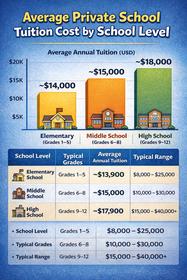
Private school tuition has steadily increased over the past decade. According to national education data compiled by the National Center for Education Statistics, average private school tuition continues to climb, particularly in urban and suburban regions. In some metropolitan areas, annual tuition for independent day schools now exceeds $30,000, while boarding schools may surpass $65,000 per year.
In response, many schools are rethinking traditional financial aid models. Instead of awarding aid only after families apply for assistance, some institutions now proactively structure tuition around a family’s income.
This shift reflects broader conversations about affordability, access, and long-term sustainability in private education.
What Are Sliding-Scale and Income-Based Tuition Models?
While the terms are sometimes used interchangeably, there are subtle distinctions.
Sliding-Scale Tuition
Under a sliding-scale model, tuition adjusts within a predetermined range based on a family’s financial profile. Schools establish minimum and maximum tuition levels, and families submit financial documentation to determine where they fall within that range.
Key characteristics include:
- Transparent income brackets
- Predictable tuition ranges
- Reduced stigma compared to traditional financial aid
- Often limited to day schools rather than boarding programs
Income-Based Tuition
Income-based tuition goes a step further. Tuition is calculated as a percentage of household income, sometimes with caps or thresholds.
For example, a school might charge 10 percent to 15 percent of adjusted gross income, up to a maximum amount. This approach mirrors models used in higher education loan repayment plans and aims to make private schooling more proportional to a family’s financial capacity.
The concept has gained traction in progressive independent schools and mission-driven institutions committed to socioeconomic diversity.
Why Schools Are Adopting Flexible Tuition Models
Private schools face increasing pressure to balance financial sustainability with broader access. Sliding-scale and income-based tuition models address several challenges:
Expanding Access
Organizations such as the National Association of Independent Schools have emphasized socioeconomic diversity as a strategic priority. Flexible tuition helps attract families who might otherwise assume private school is out of reach.
Reducing Financial Aid Stigma
Traditional financial aid systems often require families to apply separately, which can feel intimidating. Sliding-scale models normalize affordability adjustments by embedding them into the tuition structure.
Improving Enrollment Stability
Schools that broaden affordability often see stronger enrollment pipelines. In competitive markets, offering income-adjusted tuition can distinguish a school from neighboring institutions.
How the Application Process Works in 2026
While details vary, most schools follow a similar framework:
- Families submit tax returns and financial documentation.
- Schools evaluate income, assets, and household size.
- Tuition is calculated based on established guidelines.
- Agreements are reviewed annually.
Many schools use third-party financial analysis platforms to ensure consistency and confidentiality. Families may be asked to provide additional context if their financial situation has changed.
It is important to note that sliding-scale tuition is not automatically guaranteed. Some schools cap participation based on budget constraints.
Advantages of Sliding-Scale & Income-Based Tuition Models
For many families, these models offer meaningful benefits.
Greater Transparency
Published tuition ranges reduce uncertainty. Families can estimate potential costs before investing significant time in the admissions process.
Increased Predictability
Income-based calculations provide clarity about future adjustments. If income changes, tuition adjusts proportionally.
Broader Community Diversity
Research from organizations such as the Brookings Institution highlights the academic and social benefits of economically diverse school communities. Students benefit from broader perspectives, increased empathy, and stronger preparation for real-world environments.
Alignment With Mission
Faith-based and mission-driven schools, in particular, see flexible tuition as an extension of their values.
For families who have already explored options through our guide to financial aid at private schools, sliding-scale models may feel like a more streamlined alternative.
Potential Drawbacks to Consider
While promising, these models are not ideal for every family.
Annual Financial Disclosure
Families must typically submit detailed financial records each year. Some prefer the privacy of fixed tuition arrangements.
Tuition Variability
If household income increases significantly, tuition may rise accordingly. This can make long-term budgeting more complex.
Limited Availability
Not all private schools offer sliding-scale or income-based tuition. Boarding schools, in particular, are less likely to adopt full percentage-based models due to higher operational costs.
Families considering boarding education can compare traditional aid options through resources such as our overview of boarding school financial aid programs.
2026 Trends in Flexible Tuition
Several developments have shaped the conversation this year.
Expansion in Urban Independent Schools
Urban day schools in cities such as New York, Chicago, and Los Angeles have expanded sliding-scale programs to remain competitive amid demographic shifts and enrollment declines.
Increased Transparency
Schools are publishing clearer tuition charts online, reducing guesswork. Some provide calculators that allow families to estimate costs based on income.
Integration With State Scholarship Programs
In states with education savings accounts or tax credit scholarship programs, flexible tuition models may be combined with public funding options. Families can learn more about state-level policies through the U.S. Department of Education.
However, policies vary significantly by state, and eligibility rules may change annually.
Is Sliding-Scale & Income-Based Tuition Right for Your Family?
When evaluating whether Sliding-Scale & Income-Based Tuition Models: Are They Right for Your Family?, consider the following factors.
Your Income Stability
If your household income fluctuates significantly, percentage-based tuition may result in changing annual costs. Families with stable, predictable income may find the model easier to manage.
Comfort With Financial Transparency
Income-based tuition requires disclosure of tax returns and financial statements. Ensure you are comfortable with the process.
Long-Term Planning
Consider how tuition might evolve over time:
- Will a promotion increase tuition obligations?
- Are you planning for additional children to enroll?
- How does this compare to fixed tuition plus financial aid?
School Financial Health
Ask admissions representatives:
- How long has the sliding-scale model been in place?
- What percentage of families participate?
- Is the program sustainable long term?
A well-established model is typically more stable than a pilot initiative.
Comparing Tuition Models
Below is a simplified comparison to help clarify differences.
| Feature | Traditional Tuition + Aid | Sliding-Scale Tuition | Income-Based Tuition |
|---|---|---|---|
| Tuition Published | Single rate | Range published | Percentage formula |
| Separate Aid Application | Yes | Sometimes | Often integrated |
| Annual Financial Review | For aid recipients | Yes | Yes |
| Predictability | Moderate | Moderate | High if income stable |
| Stigma Concerns | Possible | Reduced | Minimal |
Each model serves different family needs.
Questions to Ask Admissions Offices
When exploring Sliding-Scale & Income-Based Tuition Models: Are They Right for Your Family?, schedule a conversation with admissions or the business office and ask:
- What income brackets determine tuition tiers?
- Are assets considered in addition to income?
- How are extraordinary expenses evaluated?
- What happens if our financial situation changes midyear?
- Are there caps or floors on tuition adjustments?
Transparency from the school should mirror the transparency expected from families.
Final Thoughts
Sliding-Scale & Income-Based Tuition Models: Are They Right for Your Family? The answer depends on your financial profile, comfort with disclosure, and long-term planning goals.
In 2026, flexible tuition structures are no longer experimental concepts. They are increasingly mainstream among mission-driven independent schools seeking to expand access while maintaining financial health.
For some families, these models provide a realistic pathway to private education that once seemed unattainable. For others, traditional tuition combined with merit or need-based aid may offer greater predictability.
The most important step is informed comparison. Speak with admissions teams, review published tuition policies carefully, and evaluate your family’s financial stability over time.
Private education is a significant investment. Understanding how sliding-scale and income-based tuition models work ensures that decision is both academically and financially sound.