Opinion

Should Latin be Taught?

Updated
|
Should Latin be Taught?
The benefits of studying a dead language.

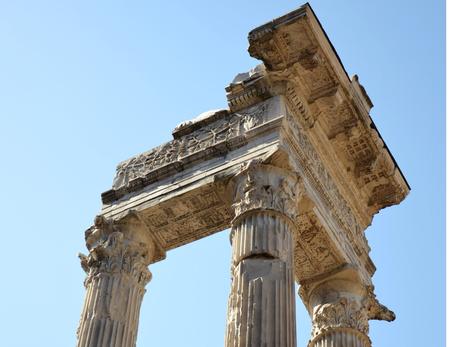
Does a dead language have any place in a 21st-century curriculum? Is it useful? Is it relevant? Does it have value as an enrichment to the core curriculum? I think it does, and for the following reasons.

1. Latin offers young people a glimpse into the life and times of the ancient Romans.

Yes, they can read about ancient Rome and watch videos. They can learn about the expansion of the Roman Empire under Julius Caesar. All that information is readily available. But it is filtered information. The whole point of learning a language is to be able to read source materials. I don't want somebody telling me what Julius Caesar said. I want to read it for myself. I want to understand what Caesar said, why he said it, how he said it - the works.

With that assumption in mind, it makes sense to allow students to experience the language by learning how to speak it. Perhaps Latin may be a dead language because it is no longer the lingua franca of commerce and world affairs. On the other hand, Latin is a beautiful-sounding language that will delight young listeners.

I will disclaim that I learned Latin back in the 50s and 60s when it was taught in the rather old-fashioned way languages were taught back then. You learned endless conjugations and declensions. You struggled with Latin's nuanced sense of tense. Et cetera. It would have been rather dry and dull had it not been for


. . .read more

Has Technology Improved Educational Outcomes?

Updated
|
Has Technology Improved Educational Outcomes?
We have spent tens of billions on educational technology since the 1990s. Has all this spending improved educational outcomes?

This article has been updated to reflect 2026 data and recent developments.

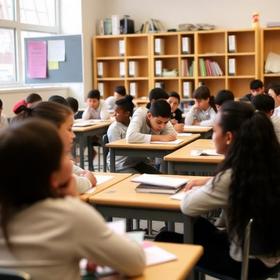
As a nation, we spend billions on K-12 educational technology. So, the question of whether all this spending is improving outcomes is a fair one. Has technology, in fact, improved educational outcomes?

In 2026, that question has become even more relevant as schools incorporate artificial intelligence, adaptive learning platforms, learning management systems, and other digital resources. Private School Review's Technology in Private School Classrooms in 2026 examines how these technologies are being incorporated into private school classrooms.

Pros

Technology has freed up administrative time

Electronic grade books save time for teachers. Computerized tests and quizzes save more time. The software that allows students to master skills in maths, sciences, and languages is a huge time saver. Email and blogs make communication with parents and administration instantaneous and very efficient. And the tools just keep getting better and better. The less time a teacher has to spend on administrative tasks, the more time she theoretically can spend on lesson preparation and other purely teaching-related tasks.

In 2026, learning management systems and AI-assisted tools can further streamline some administrative and instructional tasks. The U.S. Department of Education provides resources addressing the opportunities and considerations surrounding artificial intelligence in education. However, the value of these technologies still depends on how effectively teachers and schools use them.

Technology has opened new worlds

iPads and wireless networks

. . .read more

Should Teachers Be Unionized?

Updated
|
Should Teachers Be Unionized?
One of the basic differences between private and public schools is the fact that most public school teachers belong to a union. Should teachers be unionized?

One of the basic differences between private and public schools is the fact that most public school teachers belong to a union. Does that make a difference for public school teachers? Does having a unionized faculty benefit schools? How did unions get involved with public education? Are private school faculties unionized? Basically, the question is, should teachers be unionized or not? My answer to that question is "Yes" if you teach in a public school and "No" if you teach in a private school. Let me explain why.

In Public Schools: The Case for Protection and Leverage

Public schools are essentially controlled by the government at the local, state, and national levels. They also are funded by taxpayers at all those levels. So it makes sense for teachers to want and need some protection from and leverage with those three quarters. The most potent protection public school teachers have is their union. Teacher unions also furnish the leverage or negotiating strength necessary to engage administrations in frank discussions about matters like compensation, class size, accountability, etc.

Private schools are funded primarily by the tuition fees paid by their customers, i.e., the parents of their students. Endowments and fundraising make up the delta between what tuition raises and the actual expenses for the school year. Income and expenses must align. Each private school is an independent corporate entity controlled by school trustees, not governments. Each private school has its own particular mission and educational goals. Each school hires teachers

. . .read more

Recent Articles

Should Your Child Stay at the Same Private School K–12?
Explore whether your child should attend the same private school from kindergarten through graduation, weighing academic continuity, friendships, changing needs, tuition costs, and opportunities at different educational stages.
When Your Child's Closest Friends Leave Private School
Learn how to support your child when close friends leave private school, manage loneliness, maintain friendships, encourage new connections, recognize emotional challenges, and decide when additional school support is needed.
When Your Child Doesn't Connect With Their Teacher
Discover when parents should intervene if their child struggles to connect with a private school teacher, including warning signs, communication strategies, classroom concerns, and practical steps toward improving relationships.

Opinion