Paying For It

Private school can be a big investment. Learn more about tuition costs, extra fees and the funding options available. We'll cover financial aid, scholarships, and outside financing. Explore some of the most expensive schools and learn where your child can attend free.

View the most popular articles in Paying For It:

Financial Aid for Private Schools: 2026 Parent Guide

Updated
|
Financial Aid for Private Schools: 2026 Parent Guide
Learn how private school financial aid works in 2026, including grants, scholarships, and application tips for families.

Private school tuition can be a significant investment, but it is increasingly accessible thanks to a wide range of financial aid options. In 2026, more independent schools are prioritizing affordability and socioeconomic diversity, expanding aid programs and refining application processes to support families from varied financial backgrounds.

This updated guide explains how financial aid for private schools works, the types of assistance available, and how families can successfully navigate the process.

Understanding Financial Aid for Private Schools

Financial aid for private schools typically comes in the form of need-based grants rather than loans. Unlike colleges, most K–12 private schools do not expect repayment. Instead, schools allocate a portion of their operating budgets or endowment income to support families who demonstrate financial need.

According to the National Association of Independent Schools (NAIS), more than 20 percent of private school students receive some form of financial aid, and that percentage continues to grow as schools focus on access and inclusion.

Most schools use standardized financial assessment tools such as those provided by School and Student Services (SSS) to evaluate a family’s ability to pay.

Types of Private School Financial Aid

Families exploring financial aid for private schools should understand the different forms of assistance available.

1. Need-Based Grants

The most common type of aid, need-based grants are awarded based on a family’s financial situation. Schools consider:

  • Household income
  • Assets and savings
  • Number of children in tuition-charging schools
  • Cost of living factors

These grants can cover anywhere from a small percentage of
. . .read more

15 Questions Smart Parents Ask Before Tuition

Updated
|
15 Questions Smart Parents Ask Before Tuition
Discover 15 essential questions smart parents ask before paying private school tuition in 2026. Make informed, confident education decisions.

Choosing a private school is one of the most significant educational investments a family can make. With annual tuition costs continuing to rise in 2026, parents are looking beyond glossy brochures and rankings to ask deeper, more strategic questions. The goal is not just to find a good school, but the right school for a child’s academic, social, and emotional development.

This guide outlines the 15 Questions Smart Parents Ask Before Paying Private School Tuition, helping families evaluate value, fit, and long-term outcomes before committing financially.

Why Asking the Right Questions Matters

Private school tuition can range from $10,000 to over $60,000 annually, depending on location and boarding status. According to the National Center for Education Statistics, private schools serve about 10% of U.S. students, yet vary widely in quality, mission, and resources.

In 2026, increased competition, hybrid learning models, and expanded financial aid options have made it even more important for parents to conduct thorough due diligence.

Academic Quality and Outcomes

1. What is the school’s academic philosophy?

Understanding whether a school emphasizes traditional instruction, project-based learning, or a specific framework like Montessori or International Baccalaureate helps determine alignment with your child’s learning style.

2. How are students assessed and supported?

Ask about grading systems, standardized testing, and intervention strategies. Schools should provide clear data on how they track student progress.

3. What are college placement outcomes?

Look beyond acceptance rates. Ask:

  • Which colleges do students attend?
  • Are there patterns in placements?
  • How strong is college counseling?
. . .read more

Average Private School Tuition Cost in 2026

Updated
|
Average Private School Tuition Cost in 2026
Discover the average private school tuition cost in 2026, including national averages, regional differences, and financial aid options for families.

Private schools offer smaller class sizes, specialized programs, and independent governance. However, tuition varies widely depending on the school’s location, grade level, and mission. Understanding national averages and the factors that influence pricing can help parents make informed decisions about affordability and long-term planning.

This updated 2026 guide examines current tuition averages, explains why costs vary so significantly, and outlines financial aid options that can make private education more accessible.

What Is the Average Private School Tuition Cost in 2026?

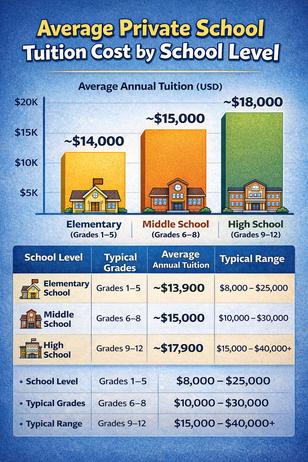
Across the United States, the average private school tuition cost in 2026 is approximately:

School TypeAverage Annual Tuition
Private Elementary School$12,500
Private High School$16,200
Overall Private School Average$14,100

These figures reflect nationwide averages based on aggregated school data and industry reports from organizations such as the National Center for Education Statistics and independent school associations.

While averages are helpful, they can mask substantial variation. Tuition may range from less than $6,000 at smaller religious schools to more than $50,000 at elite college preparatory institutions.

How Private School Tuition Has Changed Over Time

Private school tuition has steadily increased over the past two decades, though growth has moderated somewhat in recent years.

Several factors influence these changes:

  • Inflation and rising operational costs
  • Teacher salary increases
  • Campus facilities and technology upgrades
  • Expanded student services and extracurricular offerings

According to tuition trend data from the National Association of Independent Schools, many independent schools have shifted toward moderate tuition increases while expanding financial aid budgets to maintain accessibility.

Schools increasingly recognize that affordability is

. . .read more

Costs of Private School in 2026

Updated
|
Costs of Private School in 2026
Discover the hidden costs of private school in 2026, including fees, uniforms, and extras parents must budget for beyond tuition.

Hidden Costs of Private School in 2026: Fees, Uniforms, Extras & What to Budget

For many families, private school tuition is the most visible and anticipated expense. However, tuition represents only part of the financial commitment. The true cost often includes a wide range of additional fees, required purchases, and optional enrichment opportunities that can significantly increase the total annual investment.

In this guide, we break down the Hidden Costs of Private School in 2026: Fees, Uniforms, Extras & What to Budget, offering updated insights and practical budgeting advice to help families plan with confidence.

The Tuition Baseline in 2026

According to the most recent national data from the National Center for Education Statistics, average private school tuition in the United States varies widely by grade level and region. Independent day schools in urban areas frequently exceed $25,000 per year for elementary grades and $35,000 or more for high school. Boarding schools can surpass $60,000 annually.

In addition, data from the National Association of Independent Schools indicates that tuition increases have continued steadily, reflecting rising operational costs, faculty salaries, and investments in campus infrastructure.

While tuition is the headline figure, families should expect the total cost of attendance to be meaningfully higher once mandatory and optional expenses are included.

Mandatory Fees Beyond Tuition

Nearly every private school assesses additional required fees. These can range from a few hundred dollars to several thousand per year.

Common required fees include:

  • Application and enrollment fees
  • Annual registration or re-enrollment
. . .read more

Sliding-Scale & Income-Based Tuition Guide 2026

Updated
|
Sliding-Scale & Income-Based Tuition Guide 2026
Explore sliding-scale and income-based tuition models in 2026. Learn how they work, who qualifies, and whether they fit your family’s needs.

Sliding-Scale & Income-Based Tuition Models: Are They Right for Your Family?

Private school tuition has long been one of the most significant considerations for families exploring independent education. In 2026, as tuition continues to rise nationwide, more schools are adopting flexible pricing structures designed to expand access and increase socioeconomic diversity. Among the most notable approaches are sliding-scale and income-based tuition models.

But are these options truly affordable? And more importantly, are they the right fit for your family?

This guide examines how sliding-scale and income-based tuition programs work, who qualifies, and what families should consider before applying.

The Rising Cost of Private Education in 2026

Private school tuition has steadily increased over the past decade. According to national education data compiled by the National Center for Education Statistics, average private school tuition continues to climb, particularly in urban and suburban regions. In some metropolitan areas, annual tuition for independent day schools now exceeds $30,000, while boarding schools may surpass $65,000 per year.

In response, many schools are rethinking traditional financial aid models. Instead of awarding aid only after families apply for assistance, some institutions now proactively structure tuition around a family’s income.

This shift reflects broader conversations about affordability, access, and long-term sustainability in private education.

What Are Sliding-Scale and Income-Based Tuition Models?

While the terms are sometimes used interchangeably, there are subtle distinctions.

Sliding-Scale Tuition

Under a sliding-scale model, tuition adjusts within a predetermined range based on a family’s financial profile. Schools establish

. . .read more

Recent Articles

Should Your Child Stay at the Same Private School K–12?
Explore whether your child should attend the same private school from kindergarten through graduation, weighing academic continuity, friendships, changing needs, tuition costs, and opportunities at different educational stages.
When Your Child's Closest Friends Leave Private School
Learn how to support your child when close friends leave private school, manage loneliness, maintain friendships, encourage new connections, recognize emotional challenges, and decide when additional school support is needed.
When Your Child Doesn't Connect With Their Teacher
Discover when parents should intervene if their child struggles to connect with a private school teacher, including warning signs, communication strategies, classroom concerns, and practical steps toward improving relationships.

Paying For It

FINANCIAL AID
Paying for private school can be expensive and financial aid can be a huge help. Here we'll cover the financial aid options, how eligibility is determined and how it can affect the admissions process.
FINANCING BASICS
There are several ways to finance a private school education, learn more about your options here. We'll explore some of the most expensive schools, explain why tuition is rising and show you how it's all paid for.
FREE SCHOOLS AND SCHOLARSHIPS
Don't let the cost of private school deter you, many schools offer scholarships. Explore scholarships, how they are funded and get a list of schools your child may be able to attend tuition free.