Comparing Day, Boarding & Hybrid Private Schools: Which Fits Your Child in 2026?
Choosing among day, boarding, and hybrid private schools is one of the most consequential education decisions families face. In 2026, this choice carries even greater weight as private schools adapt to shifting family lifestyles, expanded academic expectations, and post-pandemic innovations in student life. Day, boarding, and hybrid private schools now offer more flexible pathways than ever, but flexibility also brings complexity.
For parents evaluating day, boarding, and hybrid private schools, the right answer depends on far more than geography or tuition. Academic rigor, student independence, emotional readiness, family schedules, and long-term goals all play a role. Understanding how day, boarding, and hybrid private schools differ in today’s landscape helps families align school choice with a child’s needs rather than assumptions.
This guide offers a practical, up-to-date comparison of day, boarding, and hybrid private schools, with insights tailored to families planning for 2026 and beyond.
Understanding Day, Boarding, and Hybrid Private Schools
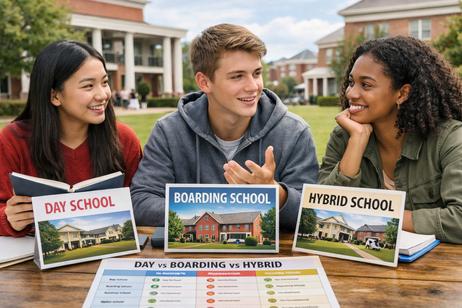
Day, boarding, and hybrid private schools share a commitment to small classes, individualized instruction, and mission-driven education. Where they diverge is in structure and daily experience.
Day private schools educate students during the academic day, typically from early morning through mid-afternoon. Students return home each evening and remain fully embedded in family life.
Boarding schools provide a residential experience where students live on campus during the academic term. Boarding, day, and hybrid private schools often share academic programs, but boarding schools add a 24/7 learning environment that extends beyond the classroom.
Hybrid private schools, sometimes called day-boarding schools, combine both models. Students may board five days a week, live on campus part-time, or choose between day and boarding options depending on grade level or family preference.
As demand grows for flexibility, hybrid private schools are one of the fastest-expanding segments within day, boarding, and hybrid private schools.
Academic Experience Across Day, Boarding, and Hybrid Private Schools
Academics are often similar across day, boarding, and hybrid private schools, but how students engage with learning differs meaningfully.
Day private schools typically emphasize structured academics balanced with home-based enrichment. Students complete homework at home, participate in community-based activities, and rely heavily on family support for time management.
Boarding schools integrate academics with residential life. Evening study halls, faculty advisors, and peer collaboration are central features. In day, boarding, and hybrid private schools that offer boarding, learning continues well beyond the final bell.
Hybrid private schools provide a blended academic rhythm. Boarding students benefit from on-campus academic support, while day students maintain home routines. For families comparing day, boarding, and hybrid private schools, this flexibility can be especially appealing.
In 2026, many day, boarding, and hybrid private schools have expanded advanced coursework, experiential learning, and interdisciplinary programs to remain competitive and relevant.
Student Independence and Personal Growth
One of the most significant differences among day, boarding, and hybrid private schools lies in how they foster independence.
Day private schools support independence gradually, with parents closely involved in daily routines. This structure suits younger students or those who thrive with consistent family presence.
Boarding schools intentionally cultivate independence. Students manage schedules, advocate for themselves, and navigate social dynamics within a supervised residential environment. Research highlighted by boarding school experts at https://www.boardingschoolreview.com/articles/boarding-school-benefits notes that this structured independence often translates into strong college readiness.
Hybrid private schools offer a middle ground. Students experience independence during boarding days while maintaining strong family connections. For many families evaluating day, boarding, and hybrid private schools, this balance reduces anxiety around full-time boarding.
Social Development and Community Life
Social experience varies widely across day, boarding, and hybrid private schools.
Day private schools often draw from local communities. Friendships may extend beyond campus, and students maintain strong ties to hometown peers.
Boarding schools create immersive social environments. Students live, study, and socialize together, forming close-knit communities that often feel like extended families. For socially adaptable students, boarding within day, boarding, and hybrid private schools can be transformative.
Hybrid private schools foster diverse social networks. Boarding students benefit from immersive relationships, while day students maintain community ties. Many hybrid private schools report stronger social flexibility among students as a result.
In 2026, wellness programming and social-emotional learning are priorities across day, boarding, and hybrid private schools, reflecting broader shifts in student support expectations.
Family Lifestyle and Logistics
Family logistics frequently drive decisions among day, boarding, and hybrid private schools.
Day private schools require daily transportation and alignment with family schedules. For families with flexible work arrangements or nearby campuses, this model fits naturally.
Boarding schools reduce daily logistical demands but require emotional readiness for separation. Families comparing day, boarding, and hybrid private schools should consider how often they wish to see their child during the academic week.
Hybrid private schools address modern family realities. Some families choose boarding during the week and home life on weekends, while others alternate seasonally. According to enrollment trend analysis shared at https://www.privateschoolreview.com/articles/private-school-trends, flexibility is a major driver of hybrid school growth.
Cost Considerations in 2026
Tuition varies significantly across day, boarding, and hybrid private schools.
Day private schools typically have the lowest tuition, though costs can rise with extended programs or transportation.
Boarding schools are the most expensive, reflecting housing, meals, and round-the-clock supervision. However, many families view boarding within day, boarding, and hybrid private schools as a comprehensive investment rather than a simple tuition comparison.
Hybrid private schools offer tiered pricing. Families pay for boarding only when needed, making this option more accessible for some.
Financial aid remains widely available across day, boarding, and hybrid private schools, and in 2026 many schools have expanded need-based assistance to remain inclusive.
Technology, Structure, and Flexibility
The pandemic permanently reshaped instructional delivery across day, boarding, and hybrid private schools. In 2026, most schools maintain robust digital platforms, remote conferencing options, and flexible scheduling policies.
Day private schools often integrate technology to support homework and parent communication.
Boarding schools use technology to enhance academic support and family connection without diminishing residential engagement.
Hybrid private schools rely heavily on technology to coordinate schedules and ensure consistency between day and boarding students. Families interested in flexible learning environments often gravitate toward hybrid private schools for this reason.
Who Thrives Where? A Practical Comparison
The following summary helps families assess fit across day, boarding, and hybrid private schools:
- Day private schools suit students who value daily family interaction and community-based activities.
- Boarding schools suit students seeking independence, immersive learning, and global peer networks.
- Hybrid private schools suit students and families wanting flexibility without sacrificing structure.
For a broader overview of private school models, families may find https://www.privateschoolreview.com/articles/types-of-private-schools a helpful reference point.
Looking Ahead: Choosing Day, Boarding, and Hybrid Private Schools for the Future
As families plan for 2026 and beyond, the distinctions among day, boarding, and hybrid private schools matter more than ever. The best choice aligns with a child’s maturity, learning style, and emotional readiness, not simply prestige or tradition.
Educational consultants increasingly advise families to visit multiple day, boarding, and hybrid private schools, speak with current parents, and involve students in the decision-making process. Long-term success depends on fit, engagement, and support.
No single model is universally superior. Day, boarding, and hybrid private schools each offer compelling advantages when matched thoughtfully to the right student.
Final Thoughts for Families
Selecting among day, boarding, and hybrid private schools is both a practical and deeply personal decision. In 2026, families benefit from unprecedented choice, flexibility, and transparency. By understanding how day, boarding, and hybrid private schools differ in academics, community, cost, and lifestyle, parents can choose confidently and intentionally.
For families seeking additional guidance on boarding environments specifically, https://www.boardingschoolreview.com offers in-depth profiles and expert insights that complement this comparison.
Ultimately, the best of day, boarding, and hybrid private schools are those that help students grow academically, socially, and personally, preparing them not only for college, but for life beyond it.