When parents compare private schools, they often examine class size, curriculum, homework, athletics, arts programs, and college preparation. One part of the school day receives far less attention: the time when students are not being directed through a lesson, practice, meeting, or organized activity.
How much unstructured time does your child actually have during a private school day?
The answer can reveal more than parents might expect. A tightly scheduled school may provide outstanding academic opportunities but leave students moving continuously from one adult-directed activity to another. Another school may deliberately protect recess, lunch, free periods, outdoor time, or informal social time.
Neither schedule is automatically better. What matters is whether the rhythm of the day suits your child's age, temperament, academic needs, and ability to manage independence.
What Counts as Unstructured Time?
Unstructured time does not necessarily mean students are completely unsupervised.
It generally refers to periods when students have some choice about what they do rather than following a teacher-directed lesson or scheduled activity. Depending on the student's age and the school, this might include recess, part of lunch, free periods, time in common areas, outdoor breaks, or brief periods between scheduled commitments.
Private schools vary substantially in how they organize these periods.
Parents can get an initial sense of that balance by examining Inside the Daily Life of a Private School Student, then comparing that general picture with the actual schedule at each school they are considering.
The distinction between free time and structured activity matters. Physical education is not recess. A teacher-directed advisory activity is not necessarily downtime. A supervised study hall may provide academic flexibility but still have specific expectations.
Ask what students are actually allowed to do during each period.
Why Breaks During the School Day Matter
Unstructured time can look unproductive on a timetable. From a developmental perspective, however, breaks serve important purposes.
The Centers for Disease Control and Prevention describes recess as a regularly scheduled period for physical activity and play in which students can engage with peers in activities of their choice. The agency identifies benefits that include physical activity, attention, concentration, classroom behavior, and social and emotional development.
In 2026, the American Academy of Pediatrics updated its policy on recess and emphasized its importance for children and adolescents, not simply younger elementary students. The organization describes breaks as opportunities to step away from sustained cognitive demands, manage stress, interact with peers, and regain concentration.
That does not mean every student needs the same amount or type of free time. It does mean parents should avoid assuming that every unscheduled minute represents time that could be used more effectively for another class.
Look at the Entire Schedule, Not Just Recess
Parents of younger children may naturally ask about recess. For middle and high school students, unstructured time can be harder to identify.
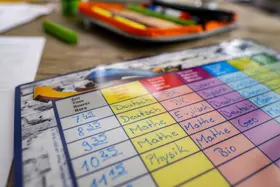
Request a sample daily or weekly schedule.
Then mark every period that is predetermined, including classes, advisory, chapel or assemblies where applicable, athletics, required clubs, study halls, meetings, and other obligations.
What remains?
A high school student may technically have a free period but routinely use it to complete assignments. Lunch may be listed as 40 minutes, but students might spend part of that time attending meetings or seeking help from teachers. Passing periods may exist but be too short for anything other than reaching the next classroom.
The school's schedule should also be considered alongside evening demands. How Much Homework Is Too Much? explains why families should evaluate the entire academic day rather than looking at homework as an isolated number.
A student whose school day is highly structured and who then faces several hours of evening work experiences a very different daily rhythm from a student who has opportunities to begin assignments, socialize, or decompress during school.
Unstructured Does Not Mean Unimportant
A student talking with friends during lunch may appear to be doing very little. In reality, informal peer interactions are one way children and adolescents develop independence and social judgment.
Students have to decide whom to spend time with, how to enter conversations, how to resolve minor disagreements, and what to do when plans change.
The 2026 American Academy of Pediatrics recess policy specifically highlights opportunities for communication, negotiation, cooperation, problem-solving, self-regulation, and peer engagement during recess.
Those experiences differ from teacher-directed social-emotional lessons because students have greater responsibility for navigating the situation themselves.
Private schools often emphasize leadership and independence as important outcomes. Parents should consider where students are actually given opportunities to practice those qualities without an adult organizing every interaction.
More Free Time Is Not Automatically Better
There is an important counterpoint.
Some children thrive when given independence. Others find unstructured periods difficult.
A shy student may feel isolated during a long lunch. A younger child may need help entering games. Students with attention, executive functioning, or social challenges may struggle with free periods unless expectations and support are clear.
Supervision also matters.
Unstructured time should not mean that adults disappear. Schools still need appropriate oversight, clear behavioral expectations, accessible staff members, and systems for responding when students need help.
Parents should therefore ask not only, "How much free time is there?" but also, "What does that time look like?"
The goal is not maximum freedom. It is an appropriate balance between independence and support.
Watch Students Between Classes
One of the best ways to understand the daily rhythm of a private school is to visit when classes are actually in session.
Private School Review's The Second Visit Strategy: What to Look for After the Open House recommends paying attention to hallways, common areas, transitions, and informal interactions, because these moments can reveal aspects of school culture that are difficult to see during a formal admissions presentation.
Observe what happens when students are not sitting in classrooms.
- Do they appear rushed?
- Are they talking comfortably with one another?
- Are common areas actually used?
- Do teachers interact naturally with students?
- Do younger students have opportunities to play?
- Can older students sit together informally, or is virtually every minute scheduled?
A polished tour can demonstrate facilities. Watching an ordinary transition can show how students actually experience the school.
Ask Whether Free Periods Are Truly Free
At the middle and high school levels, the phrase "free period" deserves closer examination.
At one school, students may decide whether to study, read, visit a teacher, socialize, or spend time outdoors. At another, the period may effectively function as mandatory supervised study.
Neither model is inherently wrong.
The question is whether the school's description matches the student's experience.
Ask whether students may leave designated study spaces, whether they can use outdoor areas, whether technology is permitted, and whether older students receive progressively greater independence.
This is particularly important for families choosing between schools with different educational philosophies. What Is Really Important in Choosing a School? encourages families to consider whether a school's philosophy aligns with their own priorities rather than focusing solely on highly visible features.
How a school handles student time is one practical expression of that philosophy.
Lunch Can Reveal More Than the Menu
Parents often evaluate lunch by asking what food is served. Ask how the time itself works too.
How long do students actually have to eat after walking to the dining area and waiting for food? Are students expected to attend club meetings during lunch? Can they remain and talk with friends after eating?
For older students, informal conversation over lunch may be one of relatively few times during the day when social interaction is not built around a class, team, club, or other organized activity.
Consider Your Own Child
There is no ideal number of unstructured minutes that guarantees a good private school experience.
Instead, think about your child's needs.
Does your child become tired after long periods of concentrated work? Does your child need physical movement between classes? Does independent time help with organization, or does too much freedom create stress? Does your child enjoy spontaneous social interaction, or prefer structured activities?
These questions can change with age.
A first grader may need opportunities for physical play. A middle school student may value social time. A high school student balancing advanced classes and athletics may appreciate a free period simply because it provides enough time to begin homework before practice.
Questions to Ask Before Enrolling
Instead of asking only whether a school has recess or free periods, ask for specifics:
- Can I see a complete student schedule for my child's grade?
- How much time is genuinely student-directed?
- How long is lunch after transitions and serving time are considered?
- Are free periods optional study time or mandatory study halls?
- Can students go outdoors during breaks?
- How does the amount of unstructured time change as students get older?
- What supervision is provided without unnecessarily directing students' activities?
- Is recess or free time routinely replaced by academic work, meetings, or other obligations?
Parents conducting broader comparisons may also find Private School Review's Checklist for Comparing Schools useful for recording differences among schools during visits.
Look for the Rhythm Behind the Schedule
A private school's timetable tells you what students are expected to accomplish. The spaces between those commitments can tell you something equally important about how the school views childhood, adolescence, independence, social development, and rest.
Unstructured time does not have to occupy a large portion of the school day to be meaningful. What matters is whether students have reasonable opportunities to move, talk, think, make choices, and temporarily step away from continuous adult-directed activity.
When comparing private schools, ask for the real schedule rather than relying solely on descriptions of academic rigor and extracurricular opportunity.
The question is not simply how much a school can fit into one day. It is whether the day leaves enough room for your child to learn, participate, connect with other students, and occasionally decide what to do next.