
How Admissions Works

The private school admissions process can be competitive. Explore the process, compile your profile and submit your application with help from our tips and tools. Explore the challenges of getting into private school and the most common mistakes made during the admission process.

View the most popular articles in How Admissions Works:

Admissions to Private School: A-Z

Updated
|
Admissions to Private School: A-Z
Admissions to Private School: A-Z puts all the information you need to navigate the private school admissions process in one convenient place. Whether you are just beginning or have been through this before, you will find help and advice to guide you.

Admissions to Private School: A-Z puts all the information you need to navigate the private school admissions process in one convenient place. Whether you are just beginning or have been through this before, you will find the help and advice to guide you through the various steps involved in submitting an application for admission to private school.

The Admissions Process

Our Application Calendar will keep you organized throughout the stressful process of applying to private school. There's a lot to keep track of. So plan your work carefully and try to stick to the schedule. Ideally, you have started the process at least 18 months before the expected date of starting school. For example, for fall 2017 admissions, you need to begin in the spring of 2016. If you are an international student, you need to allow an additional six months because there are some important additional steps which you need to follow. Here is an introduction to the Lower School at Rye Country Day School.

Applying to any private school is just that, an application. Why is that? Private schools do not have to accept your child. That is one of the essential differences between public and private schools. Remember that places in schools in major metropolitan areas tend to be very limited. Enhance your prospects by avoiding common admissions mistakes. What if they waitlist your child? Is that the end of the world? Not exactly. What happens when you start


. . .read more

5 Admissions Mistakes

Updated
|
5 Admissions Mistakes
Planning and care can avoid these five common admissions mistakes.

The following five common admission mistakes can and should be avoided. With a little advance planning and organization, this is quite doable. The point of avoiding these common admissions mistakes is to improve your child's chances during the entire admissions process.

Plan your private school search process

On this site, we have several articles which you can bookmark and refer to from time as you work through what is, after all, a lengthy, 16-18 month process on average. Our Applications Calendar will help keep you organized from week to week, month to month. With a long-term project like choosing a private school, it is easy to lose sight of some of the important deadlines. When that happens, you will stress yourself unduly as you try to accomplish several months' work in a few weeks.

1. Not Observing the Deadlines

Deadlines are set for a reason. The admissions staff has hundreds of applications to process. If you miss the deadlines, it may not be a big deal to you. But it does send a signal to the admissions staff. Most likely the wrong signal.

Missing deadlines due to unforeseen circumstances happens. If that happens to you, then call immediately when you realize you will not be able to meet the deadlines. People will be much more accommodating when you alert them before, not after, the fact.

Remember that each private school is unique. Many have the same deadlines. Others set their own cutoff dates. Be careful to observe

. . .read more

5 Tips for a Successful Admissions Interview

Updated
|
5 Tips for a Successful Admissions Interview
When you meet with the admissions staff, create a favorable impression by following these tips.

When you and your child visit schools that you are seriously interested in, you will also have an appointment with the admissions staff. Depending on the school, you might even meet with a dean or perhaps the head of school. Obviously, when you meet with these people, you will be trying to put your best foot forward. However, you will be in unfamiliar surroundings. So, my advice is simply to relax. Stay calm. Above all don't let your nerves get the better of you. Follow these tips for a successful admissions interview.

1. Don't draw attention to any minor learning issues.

I am not for a minute advocating that you cover anything up. Nor am I suggesting that you dissemble. What I am reminding you of is the fact that admissions staff are professionals. They have reviewed hundreds, even thousands of applications over the years. They know how to interpret test scores and transcripts. So let the test scores and academic records speak for themselves. Blurting out that your son has a slight learning difficulty is not going to enhance your chances of his getting into schools. It will not matter much in others. On the other hand, if he has been diagnosed with dyslexia or ADD, or some other learning difficulty, then you need to be applying to a school that has qualified staff and programs in place to address those learning issues. But your son's B grade in mathematics or his lack of prowess

. . .read more

5 Admissions Tips for International Students

Updated
|
5 Admissions Tips for International Students
This guide provides five crucial tips for international students applying to U.S. private schools. It covers important aspects such as the I-20 form, visa applications, meeting deadlines, documentation, and adhering to visa restrictions.

If you live overseas and are thinking about sending your child to a private school in the United States, pay attention to the following five admissions tips for international students. I assume you are not an American citizen or a green card holder, and English is not your first language. Many students from countries outside the United States want to attend American private schools. International students make up about 15% of the student population in American boarding schools, according to The Association of Boarding Schools.

The I-20 Form

Be aware that not every private school is certified by the United States Immigration Service to accept foreign students. Why is that important? Always confirm that the school in which you are interested is a Student and Exchange Visitor Program (SEVP) certified school. If the school is not SEVP-certified to accept foreign students, it will be unable to issue the I-20 form, which is the first step in applying for and obtaining a student visa from the U.S. Immigration Service. Once you have received the I-20 from the school that you have chosen to attend, you will pay the I-901 Student and Exchange Visitor Information System (SEVIS) Fee. The Immigration Service will not allow your child to enter the United States as a student without the proper paperwork. If in doubt, ask the school if it can issue the I-20 form. Do not assume anything.

Pay Attention to The Deadlines

Applying for admission to an American boarding school

. . .read more

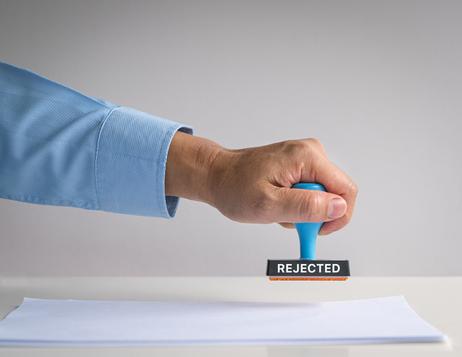
They Didn't Accept My Child!

Updated
|
They Didn't Accept My Child!
This piece offers guidance to parents whose children have been rejected from a private school. It explains the admissions process, reasons for rejection, and suggests next steps, including exploring alternative schools and seeking professional advice

You thought everything was set. The test scores were excellent. She had glowing teacher recommendations. The visit and the interview went well. But the school didn't accept your child. What do you do now?

A private school does not have to accept your child. Nor does it have to give you any reason why it has refused your child admission. How can this be? Indeed, there must be some federal or state laws that govern the situation. There is no legal recourse because private schools don't take public funding. They pride themselves on their independence. They admit who they choose for whatever reasons they decide are best.

Most of the time, parents find themselves in this frustrating situation because they think they can choose a private school for their child by themselves. Of course, technically, you can do it. You can also write your own will or buy a house without consulting an attorney. But would you? Should you? Do you trust your limited knowledge of private schools? That is why you need to hire a professional educational consultant. A consultant offers you a wealth of experience for a very modest fee. While she can't guarantee that your child will get into a particular private school, a consultant knows private schools. He understands the process and knows who to call and what questions to ask.

So unless your father endowed the school or was its first headmaster, don't take a chance. Seek and pay for the expert advice

. . .read more

Recent Articles

Can Private Schools Raise Fees After You Sign?
Can private schools increase mandatory fees after enrollment contracts are signed? Learn how contract terms, fee disclosures, state laws, and parent rights affect unexpected charges and available options.
Financial Aid When a Sibling Graduates Private School
Learn how private school financial aid may change when an older sibling graduates, including revised family contributions, sibling discounts, college expenses, renewal decisions, and practical steps to protect affordability.
Private School Expansion: Preserving School Culture
Discover how growing private schools can expand enrollment while preserving small classes, personal attention, strong relationships, and school culture, plus essential questions parents should ask before choosing a school.

Getting into Private School