Teacher

A glimpse into some of the most important facing teachers today. Learn why it's important to be cautious on Facebook. Get tips on switching to a teaching career later in life. And learn how a teacher can influence students and their families.

View the most popular articles in Teacher:

Microcredentialing for Teachers in Private Schools

Updated
|
Microcredentialing for Teachers in Private Schools
Explore how microcredentialing helps private school teachers build skills, improve instruction, and stay competitive in 2026.

Microcredentialing for teachers in private schools is rapidly reshaping professional development in 2026. As independent schools face rising expectations from families and increasing competition, many are turning to flexible, skill-based certification models to strengthen teaching quality and retain top talent.

Unlike traditional degrees or one-time workshops, microcredentials allow educators to demonstrate mastery in specific competencies, from project-based learning to AI integration in the classroom. For private schools, which often operate with greater curricular autonomy than public systems, this model aligns closely with their need for innovation and differentiation.

This article examines how microcredentialing works, why it is gaining traction in private education, and what it means for teachers, administrators, and families.

What Is Microcredentialing?

Microcredentialing is a form of competency-based professional development. Teachers earn digital badges or certifications by demonstrating specific skills through evidence, rather than simply attending training sessions.

These credentials are typically:

  • Focused on targeted skills, such as formative assessment or inclusive teaching
  • Self-paced or flexible
  • Verified through submitted artifacts, such as lesson plans or classroom videos
  • Stackable, allowing educators to build broader expertise over time

Organizations such as Digital Promise have expanded microcredential offerings in recent years. According to Digital Promise, microcredentials are designed to recognize educator skills that are directly tied to classroom practice.

For private schools, this practical, outcomes-based approach offers a clear advantage over traditional professional development models that may not translate into measurable classroom improvement.

Why Private Schools Are Embracing Microcredentialing

Private schools have long emphasized teacher quality as a defining feature.
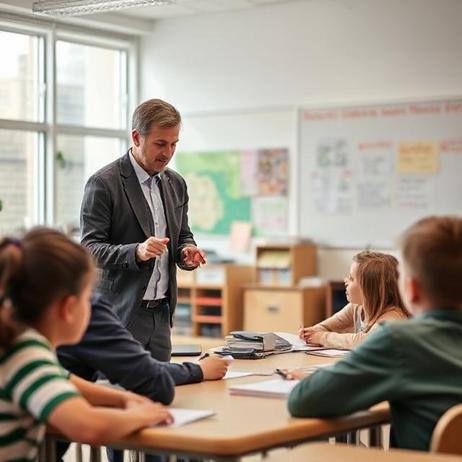
. . .read more

Private School Survival Guide for Teachers (2025 Edition)

Updated
|
Private School Survival Guide for Teachers (2025 Edition)
Essential strategies and updates for teachers thriving in private school settings in 2025 — recruitment, culture, salary, trends and retention tips.

The Private School Survival Guide for Teachers

If you are a teacher considering or currently working in a private school, this guide is designed to help you navigate the unique landscape of independent or parochial schools in 2025. From salary realities and recruitment practices to culture norms, workload expectations and retention strategies, the survival-kit below offers a professional, clear and practical overview—targeting educators, administrators and even informed parents who partner with teachers.

  1. Understanding the Private School Landscape

Working in a private school means operating in a different environment from public education. Schools may be day or boarding, secular or religious, large or boutique. Especially in 2025, several trends are shaping this sector:

  • Teachers continue to face a national shortage: roughly 1 in 8 teaching positions remain unfilled or staffed by under-certified teachers.

  • Private schools are under pressure from global issues such as enrollment shifts, rising operational costs and increasing demand for transparency from parents.

  • Tuition and cost pressures continue: nationally, private school tuition averages about $14,000–$15,000 per year for K-12 in many schools in 2025.

For a teacher, this means you join a sector that expects high service, adaptability and engagement—often with fewer structural protections than public schools.

  1. Salary, Benefits and Job Conditions

One of the key practical considerations for any teacher is compensation. In private schools:

  • The average salary for a U.S. private school teacher is around $46,590 per year (ZipRecruiter data, Oct 2025) with large variation depending on location, experience and school size.

  • By comparison, public school teacher salaries

. . .read more

Private School Teacher Survival Guide 2025

Updated
|
Private School Teacher Survival Guide 2025
Practical strategies for private school teachers in 2025 to thrive, balance workloads, and connect with students and school communities.

The Private School Survival Guide for Teachers (2025 Edition)

Teaching in a private school can be immensely rewarding. Small class sizes, supportive families, and the opportunity to shape a school community are powerful draws for many educators. At the same time, the role comes with unique expectations—balancing high parental involvement, rigorous academic standards, and often a broader teaching load than in public schools.

This updated 2025 guide offers practical strategies to help teachers not just survive, but thrive, in today’s private school environment.

Understanding the Private School Context

Private schools serve about 10% of U.S. K–12 students as of 2024, according to the National Center for Education Statistics. While tuition ranges widely—from under $10,000 at some parochial schools to over $60,000 at elite boarding schools—families increasingly expect a return on that investment.

That means teachers are often seen not only as classroom instructors, but as mentors, advisors, and role models. Many schools also expect faculty to contribute outside the classroom through coaching, residential life, or extracurricular programs.

“Private school teaching demands flexibility. You’re not just teaching English or math—you’re helping build a culture,” notes Dr. Sarah Williams, Director of Faculty Development at a leading independent school in New England.

Managing Workload and Expectations

Private school teachers often enjoy smaller class sizes—averaging 15 students per class compared with 24 in public schools—but the trade-off is a heavier overall workload. Many faculty wear multiple hats, from directing student clubs to assisting with admissions events.

Strategies for balance:

  • Clarify
. . .read more

What A Teacher Does

Updated
|
What A Teacher Does
A teacher wears many hats. Here's a look at her duties and responsibilities.

In all the years I have written about private schools, I have never written anything about what a teacher does. This year after the pandemic, I feel that it is even more critical than ever to encourage and attract people to the profession. Let me preface my remarks by noting that teaching in a private school is somewhat different from teaching in a public school. The only exception to that statement that I can think of would be teaching in rural schools or other places where the school district is very small. Private schools are free-standing entities. There's no such thing as a district of private schools. As a result, a small PK-6 private school could have twelve teachers or less and a correspondingly tiny administrative staff. So, if small-sized schools appeal to you and prefer being in a situation where your voice can be heard, I recommend that you explore teaching in a small school. Of course, there are large PK-13 private schools with 1,000 or more students. Explore working in one of those if that's your thing.

Something which may appeal to those of you thinking about becoming a teacher later in life is that most private schools will accept your credentials without a teaching certificate. They will generally insist that you earn your teaching certification within a fixed period of a year or so. Most private schools focus on the quality of your tertiary education. So, if you did a bachelor of science

. . .read more

Be Careful What You Post in Facebook!

Updated
|
Be Careful What You Post in Facebook!
Teachers need to learn how to be Facebook savvy. Otherwise Facebook will cause them lots of problems.

I wrote this article and its companion Leave No Evidence! because I have long been concerned that my colleagues in the classroom are not as street smart with social media as they need to be. I am focusing on the use of Facebook here. However, much of what I have to say applies to the other social media apps such as Instagram and Twitter.

When you use social media, be aware of the following:

  • Your posts are forever.
  • Your posts can be forwarded outside your circle of friends.
  • Your comments can be forwarded outside your circle of friends.
  • Your following of people and groups is visible.

Your posts are forever.

As part of my research for this article, I googled "teacher fired for posting on Facebook" and got 2,602,000 search results. Well, not all of those search results are relevant, but you get my point. My warning is simple and very clear: if you are employed by a school or would like to be, do not post anything on Facebook which could be misinterpreted by your present or future employer. The issue is not freedom of speech. The issue is electronic media. It is everlasting.

Now, let me be more specific about what to post and what not to post. Birthday and anniversary greetings are appropriate. Nasty, intolerant comments are not appropriate. News about family gatherings and activities are appropriate. Photos of a family gathering or

. . .read more

Recent Articles

Should Your Child Stay at the Same Private School K–12?
Explore whether your child should attend the same private school from kindergarten through graduation, weighing academic continuity, friendships, changing needs, tuition costs, and opportunities at different educational stages.
When Your Child's Closest Friends Leave Private School
Learn how to support your child when close friends leave private school, manage loneliness, maintain friendships, encourage new connections, recognize emotional challenges, and decide when additional school support is needed.
When Your Child Doesn't Connect With Their Teacher
Discover when parents should intervene if their child struggles to connect with a private school teacher, including warning signs, communication strategies, classroom concerns, and practical steps toward improving relationships.

Jobs in Private Schools