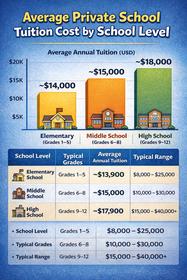

For many families, tuition is the number that dominates conversations about private school affordability. Admissions brochures and school websites prominently display annual tuition, making it easy to assume that this figure represents the total cost of attendance. In reality, tuition is often just the starting point.
Most private schools require families to pay a variety of additional fees that support technology, facilities, student activities, uniforms, transportation, and other essential services. While many of these expenses are disclosed during the admissions process, they may not be immediately apparent when comparing schools based solely on published tuition.
Understanding these required costs before enrolling allows families to create a more accurate budget and avoid financial surprises during the school year.
Why Tuition Doesn't Tell the Whole Story
Tuition primarily covers instruction and the day-to-day operation of the school. However, private schools also rely on additional fees to fund services and programs that enhance the student experience. These charges vary considerably from one institution to another, making it important to compare the total cost of attendance rather than tuition alone.
Private School Review's article on Costs of Private School in 2026 explains how required and optional expenses combine to create the true annual investment.
Enrollment and Registration Fees
Long before the first day of school, families often encounter application, enrollment, and registration fees. These one-time or annual charges help schools process admissions, secure a student's place, and manage administrative costs.
Although these fees may seem modest compared with tuition, they can add several hundred dollars, or more, to the initial cost of enrollment. Some schools also charge annual re-enrollment fees for returning students, making this an ongoing expense rather than a one-time payment.

Before signing an enrollment contract, ask whether these fees are refundable and whether additional deposits will be required later in the admissions cycle.
Technology Fees Continue to Grow
Technology has become an integral part of private education. Many schools now operate one-to-one device programs or require students to bring approved laptops or tablets.
Technology fees may cover device management, software licenses, cybersecurity, digital learning platforms, and technical support. Even when students provide their own devices, schools often assess annual technology fees to maintain their digital infrastructure.

Families comparing schools should ask whether these fees include equipment replacement, insurance, or future software upgrades.
Uniforms and Dress Code Requirements
Uniform costs vary widely depending on the school's dress code and approved vendors. Some schools require separate uniforms for everyday classes, athletics, formal events, and extracurricular activities.
In addition to purchasing uniforms, parents should ask whether replacement items must be bought from designated suppliers and whether seasonal changes require additional clothing purchases throughout the year.

Unlike tuition, uniform expenses typically increase as children grow and require new clothing sizes.
Activity and Student Program Fees
Private schools often provide exceptional opportunities outside the classroom, but many of these programs involve mandatory fees.
Student activity charges may help fund:
- School events
- Clubs and organizations
- Performing arts programs
- Athletic participation
Student publications
Some schools bundle these costs into a single annual activity fee, while others assess charges separately throughout the year. Requesting a complete fee schedule can make it easier to compare schools fairly.
Families interested in building a realistic education budget may also benefit from reading How to Stress-Test a Private School Budget Before Enrolling.
Transportation and Daily Logistics
Transportation is another expense that families sometimes underestimate.
If a school offers bus service, ask whether transportation is included in tuition or billed separately. Families who drive students should also consider fuel, parking, and commuting time as part of the overall cost of attendance.

For boarding students, travel expenses during holidays and school breaks can add significantly to annual education costs.
The National Center for Education Statistics notes that transportation and related expenses vary considerably among private schools and should be considered when comparing educational options.
Learning Support May Cost Extra
Many parents assume that all academic support services are included in tuition, but that is not always the case.
Some schools provide learning specialists, executive functioning support, reading intervention, or small-group instruction as part of their educational program. Others offer these services only for an additional fee or recommend outside tutoring.

Understanding exactly what academic support is included can help families evaluate the overall value of tuition rather than focusing solely on the published price.
Private School Review explores this distinction in Learning Support vs. Tutoring: What's Included in Private School Tuition?.
Capital Improvement and Facility Fees
Some independent schools assess annual facility or capital improvement fees to help maintain and expand campus resources.
These charges may support classroom renovations, security upgrades, technology infrastructure, athletic facilities, or new construction projects. While these investments benefit students, families should understand whether such fees are recurring or tied to specific projects.

Admissions offices should be able to explain how these funds are used and whether additional capital campaigns are conducted separately.
The National Association of Independent Schools recommends that families ask schools to explain all required fees before making an enrollment decision.
Fundraising Expectations
Although technically separate from tuition, fundraising expectations are common at many private schools.
Annual funds, auctions, galas, and classroom giving campaigns often support scholarships, campus improvements, and special programming. While participation may be voluntary, some families feel social pressure to contribute.

Ask admissions representatives how fundraising works at their school and whether participation is expected. Understanding the school's culture around giving helps families prepare for potential financial commitments beyond required fees.
Planning for Annual Increases
Even after accounting for current expenses, families should remember that required costs often increase over time.
Tuition adjustments frequently receive the most attention, but technology fees, activity charges, transportation costs, and other required expenses may also rise from year to year. Building flexibility into your education budget can make future increases easier to manage.
Private School Review's article on Private School Fees Increase Mid-Year: A Parent Action Plan offers practical advice for responding to unexpected cost increases.
The U.S. Department of Education also encourages families to compare the full cost of attendance when evaluating educational options rather than relying solely on advertised tuition.
Questions Every Parent Should Ask
Before committing to a private school, request a written breakdown of every required expense for the upcoming academic year. A comprehensive fee schedule should include tuition, registration, technology, activities, transportation, uniforms, and any other mandatory charges.
It is also worth asking how often fees increase, whether additional expenses are introduced during the school year, and what optional costs families commonly choose to incur. These conversations provide a much more realistic understanding of affordability than tuition figures alone.
The National Business Officers Association encourages transparency in school financial practices and provides guidance on independent school business operations that can help families better understand how schools structure costs.
Looking Beyond the Sticker Price
Private school tuition is only one part of the financial picture. Required expenses such as enrollment fees, technology charges, uniforms, transportation, student activities, and facility assessments can substantially increase the total annual cost of attendance.
Rather than comparing schools using tuition alone, families should evaluate the complete financial commitment and ask for a detailed fee schedule before making a decision. By understanding the true cost of required private school expenses beyond tuition, parents can budget with greater confidence and choose a school that aligns with both their educational priorities and their long-term financial goals.