
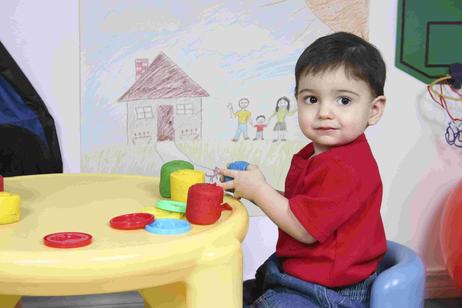
You and I are going to take a quick look at the options available to us for educating our preschooler. The first thing to remember is that you are not alone. Tens of thousands of other parents are in the exact same situation you are in. You know that you have to find a safe, reliable, trustworthy preschool or child care center for your precious toddler. You are not quite sure how to assess and evaluate all the preschool and daycare options in your area. With these concerns and requirements on the table let's discuss how to proceed.
First, a factoid for you:
"According to the 1995 U.S. Census Bureau Survey of Income and Program Participation (SIPP), over thirty-six percent of families of preschoolers with working mothers primarily relied on child care in the home of a relative, family day care provider or other non relative. Almost twenty-six percent of families used organized child care facilities as their primary arrangement."
Child Care Centers (Day cares): A widely available option
Decades ago when you had a child, mother stayed home and looked after the baby. Father went to work. In the 21st century that model seems so quaint. Also not viable. Most families need two or more incomes just to stay afloat these days. That's where daycare comes in. A good child care center will allow both parents to manage their busy schedules without too much worry.
How do child care centers work?
Most child care centers take infants from the age of six weeks. Typically they are open from 7 a.m. until 6 p.m. Some facilities open earlier and close later. Most child care centers will close for federal and/or state holidays and during bad weather.
How much does a child care center cost?
The cost of day care varies according to the area in which you live. Child care centers will be more expensive in major metropolitan areas. Day care in a rural setting will usually be less expensive. Tuition ranges from $250 to $400 per week for infants. Somewhat less for toddlers. Breakfast, lunch and snacks are usually provided.
Who regulates and licenses child care centers?
Child care centers are licensed and regulated by state and local government. The licensing requirements vary widely. So do the regulations governing child care centers. You will need to do your own due diligence very carefully before you make arrangements to leave your precious infant with any daycare anywhere. See recommendations from other parents. To further calm your nerves, find out if the daycare you are interested in offers live webcam.
What kind of programs do child care centers offer?
Most facilities let you choose the daily routine for your infant up to 18 months. As your child becomes more independent you begin to see the introduction of activities which will stimulate your child's imagination. Spanish, computers, art, physical education and similar preschool courses support your child's growth from age 3 to 4.
As I reviewed daycare web sites I was struck by this common theme: child care centers want to be seen as your child's second home. Generations ago you would have left your infant with its grandmother or an aunt. That's the kind of warm nurturing environment most child care centers seek to replicate.
Caveats: be sure to have a backup plan in place to cover three obvious contingencies:
- Your child is sick.
- The facility is closed due to weather-related conditions.
- The facility is closed due to a holiday.
Two of these three contingencies occur without warning. If you work for somebody, be sure to discuss the flexibility needed to handle these contingencies. Also be prepared for that other unexpected situation when the daycare calls and reports that you need to come pick up your child because she is sick.
Tip: do your math carefully.
If the spouse who is returning to work is making $50,000 gross and you are spending close to $25,000 on child care and day care, perhaps it makes more sense for one of you to stay home for a year or two.
What is the difference between a daycare and a preschool?
The difference is in the age groups. Daycare usually covers six weeks through age two. Preschool starts at age 2. There is more educational structure to a preschoolers day. Children have lessons in languages, dance, art, physical education and similar subjects. Activities will be play-based and experiential as a rule.
This video illustrates the variety of programs offered at Children's Choice Learning Centers.
Most private schools which offer primary grades will have a preschool. It makes sense to transition your child from a daycare facility into a preschool which feeds into a private school's primary grades. In some major metropolitan areas such as New York City, places in the primary grades (grades 1 through 6) are limited. Getting your child into the preschool track becomes a matter of some urgency as once you have that settled you are pretty much assured of having a place in the primary division.
What does preschool cost?
Depending on where you live, you can expect to pay from $3,000 to $23,000 a year for preschool. The low end typically will be a church-related preschool. The high end will be a non-profit private day school.
What kind of educational methods/philosophies are available?
The range of options can be extensive depending on the area in which you live. Some of the more popular early education methods include Montessori, Waldorf and Reggio Emilia. Various churches, temples and mosques support early education as well. You will find that tuition at religious schools for members often is considerably less expensive than at a private day school.
The Reggio Emilio Approach is one of three options worth evaluating. This video gives an overview.
Who involved do you have to be?
Preschools thrive on the support of parents. Parent teacher organizations do everything from providing support for activities to raising funds for the school. Count on dedicating a certain amount of time each month to helping out.
What are the hours?
Most preschool programs dismiss at noon or thereabouts. You can expect to pay extra for after school care which many schools offer.
What happens if my child is sick?
As with a child care center you will need to have some contingency plans set up when you send your child to preschool. Children never get sick on a set schedule. If the weather in your part of the country can close schools, you will need to provide care for your child. A trusted babysitter or a member of the family need to be ready to go at a moment's notice. Having a sympathetic employer helps.
Some final thoughts
Don't feel pressured into accepting a solution which does not feel right to you. Our parental instincts are usually right. Ask trusted friends and family members for their advice and opinions. Begin to think about child care options as soon as you can. I know that you have a lot on your plate with a newborn. But the truth is that the sooner you settle on a solution for your child's day care, the better.