Choosing a Private School

This section will provide expert advice, valuable tools, and relevant resources to aid in the decision making process. Learn more about what factors to consider when choosing a private school, what to expect at an open house, and how an educational consultant can help.

View the most popular articles in Choosing a Private School:

Checklist for Comparing Schools - Curriculum and Instruction

Updated
|
Checklist for Comparing Schools - Curriculum and Instruction
What's being taught and how it is being taught are important parts of your checklist for comparing schools on your short list.

This step in your school search process comes after you have narrowed down the list of schools which you are looking at. When you begin comparing schools on your short list, review what is being taught and how it is being taught. Instruction goes to the heart of what private schools are really all about. That is the main reason private schools exist. This is why we send our children to private school. We want certain subjects taught. More importantly, we want them taught in a certain way.

What we want our children taught generally exceeds any minimum requirements. The state department of education will require every school under its jurisdiction to meet certain minimum requirements. That is a given. For example, a high school student must receive a certain number of credits in English and mathematics in order to graduate. Private schools typically outpace any minimums specified by the state department of education.

Against this backdrop, take time to review the courses which are offered in the schools on your short list. Do these courses match your objectives and requirements? Do they offer the depth and intensity which you want your child to have? For example, Shakespeare is taught in many public high school English courses. Typically one play will be covered in an academic year. By contrast, a private school English class will read two or three Shakespeare plays in a year. Because private school classes are small and the students focused on their academic work,

. . .read more

Checklist for Comparing Schools: Administration and Faculty

Updated
|
Checklist for Comparing Schools: Administration and Faculty
Here are some of the questions to ask and things to look for when comparing administration and faculty for schools on your shortlist.

When you begin comparing schools on your shortlist, it is important to at least be aware of certain important aspects of the school and its operation. While you can certainly tell whether a school is well-run just by visiting it and observing the condition of the grounds and facilities, it is worth asking a few detailed questions. The answers to these questions can be found online, as a rule, so explore the school's website thoroughly before asking the admissions staff.

How long has the head of school/principal been in office?

This question speaks to the stability of the school. If the headmaster or headmistress (also called head and occasionally director) has been there for a couple of years, that's a good sign. Private school heads will stay forever if they are doing a good job and the trustees are satisfied with his job performance. Nowadays a private school head is the de facto CEO of the school. But his major responsibility is going to be in the area of fundraising. Public relations is another part of his brief.

If the door to the headmaster's office has become a revolving one with several heads coming and going over a period of a few years, you might want to find out why they didn't stay. Most private schools conduct national searches for a head of school and involve the school community in the process. So it would be unusual for a school to get the fit wrong.

Is there a
. . .read more

Considering a Jewish Education

Updated
|
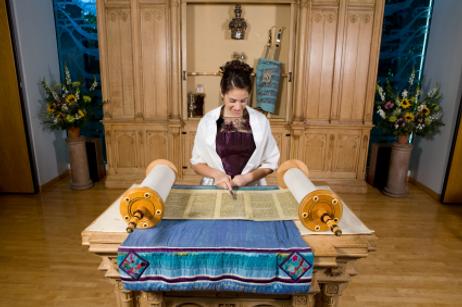
Considering a Jewish Education
This comprehensive guide explores the key considerations for parents contemplating Jewish education for their children. It addresses crucial questions about timing, teaching methods, curriculum content, and location, emphasizing the importance of aligning educational choices with family values and religious observance levels while acknowledging parents' role in their child's spiritual development.

This article has been updated to reflect 2026 data and recent developments.

If you are a Jewish parent thinking about private school for your son or daughter, you will probably want to consider sending your child to a Jewish school. Of course, much depends on how observant a Jew you are or consider yourself to be. That will influence your decision in many ways, some subtle, some more obvious.

Many questions will surface at this point. Here are some questions that you should answer before proceeding with a more detailed search for the right school. As you think of other questions that need answering, add them to the list.

  • Why should your child attend a Jewish school?
  • When should your child attend a Jewish school?
  • How should your child be taught?
  • What should your child be taught?
  • Where should your child go to school?
  • Why should your child attend a Jewish school?

Why should your child attend a Jewish school?

This question addresses perhaps the most important aspect of this discussion. Why, indeed, do you want your child to have a Jewish education? Only you, as parents, can decide why a Jewish education has value for you. Is your family tradition driving this decision? Are your religious beliefs so important to you and your family that a Jewish education for your children is simply the only option? You need to understand that any parent who sends his child to a religious school is making a strong statement about his faith and

. . .read more

Comparison of Montessori, Waldorf & Reggio Emilia

Updated
|
Comparison of Montessori, Waldorf & Reggio Emilia
A table comparison of the three popular early childhood education approaches.

Three early childhood education approaches enjoy great popularity in the United States and indeed throughout the world. They all had their origins in the teaching of European society's poorest, most disadvantaged children. To understand the changes which Dr. Maria Montessori, Rudolf Steiner, and Reggio Emilia founder, Loris Malaguzzi, wrought on the European educational system back at the beginning of the 20th century, we need to know how children were educated at that time. The prevailing methodology used drills and memorization. Children's minds were considered to be small versions of adult minds which needed to be expanded with knowledge. Rather than letting children explore and discover on their own, as we all know they are quite capable of doing, teachers filled their minds full of facts. Retention was achieved by drills and memorization. Teaching a child how to think was an ancillary objective if indeed it was an objective at all. Furthermore, most children finished their classroom instruction at age 10 or 11.

Montessori, Steiner, and Malaguzzi believed in the intrinsic abilities and capabilities of children. Their approaches, philosophies, and methods had a single, common purpose: to produce a better society in which human beings would respect each other and live in harmony and peace.

In America, these three educational approaches took root not in the poorest segments of society but in a middle and upper class eager to have something better than what was offered in the public school systems. Here is a comparison of the main features

. . .read more

If We Did Rank Schools...

Updated
|
If We Did Rank Schools...
Wondering whether private school rankings really matter? Learn why school fit, campus visits, admissions insights, and your child's unique needs are more important than rankings alone.

So, let's assume that somehow, we could rank private schools. After all, asking how a particular school is ranked is something most parents want to know. We are accustomed to comparing just about everything these days. We comparison shop constantly. We rank our favorite teams. We know which pop artist is on top of the charts. And so on. Comparing and ranking anything and everything is just the way we do things. Doing so lets us know that we are getting the best value possible.

That comparison shopping approach works fine for most things in our daily lives. Unfortunately, it does not work when it comes to ranking private schools. Why? Because each private school is unique. How it is run, where it is located, the courses it offers, the sports programs, the extracurricular activities, its philosophy, and the results it gets are all unique.

That doesn't mean we can't compare the various features of private schools. That is doable, but it is a lot of work. As we have pointed out in Do Ranks Matter?, it is extremely difficult and time-consuming for ordinary people to find the data and information we need to arrive at a ranking system for private schools. But if we did rank private schools, here is how we would do it.

One reason rankings can be misleading is that families value different things. One family may prioritize a strong STEM curriculum, while another is searching for a school with exceptional arts programming

. . .read more

Recent Articles

Should Your Child Stay at the Same Private School K–12?
Explore whether your child should attend the same private school from kindergarten through graduation, weighing academic continuity, friendships, changing needs, tuition costs, and opportunities at different educational stages.
When Your Child's Closest Friends Leave Private School
Learn how to support your child when close friends leave private school, manage loneliness, maintain friendships, encourage new connections, recognize emotional challenges, and decide when additional school support is needed.
When Your Child Doesn't Connect With Their Teacher
Discover when parents should intervene if their child struggles to connect with a private school teacher, including warning signs, communication strategies, classroom concerns, and practical steps toward improving relationships.

Choosing a Private School

GETTING STARTED
In this section we offer a look into some of the most important factors of choosing a private school. Investigate single-sex education and read what students have to say, learn more about what is important when choosing a private school, and get valuable advice on transitioning to a new school.
FINDING SCHOOLS
Learn more about how to find and evaluate private schools. Find out why price should not be your only consideration. Get valuable advice on how to save time and money when choosing a school. Learn more about ranking schools and why it may not work.
EVALUATING SCHOOLS
Here you will find resources and tools to aid in your search and evaluation of private schools. Explore the ranking system and read what schools have to say about it. Learn more about the most important questions to ask and how an education consultant can get answers. Use our checklists to help compare school administration, curriculum and more.