International Student Support Services in Private Schools: Housing, Visa Help & Cultural Transition
International student support services in private schools have become a defining feature of the American private education landscape in 2026. As global mobility resumes and diversifies, private schools are enrolling students from dozens of countries and expanding the international student support services in private schools that help families navigate housing, visa compliance, and cultural transition.
For parents and guardians considering a U.S. private school, understanding international student support services in private schools is essential. These services shape student safety, academic success, and emotional well-being from arrival through graduation.
This guide explains how international student support services in private schools work today, how they differ across day and boarding programs, and what families should expect when evaluating schools.
The Growing Role of International Students in Private Education
International student support services in private schools have expanded alongside enrollment trends. According to the Institute of International Education, international students continue to represent a significant and growing segment of U.S. elementary and secondary private schools, particularly in boarding environments that offer structured residential support. Private schools often enroll international students because they can provide comprehensive services not always available in public systems.
Federal oversight also shapes international student support services in private schools. Schools enrolling international students on F-1 visas must be certified by the Student and Exchange Visitor Program, administered by U.S. Immigration and Customs Enforcement. This certification requires schools to demonstrate compliance with housing oversight, attendance monitoring, and student welfare standards. Families can verify a school’s certification through the SEVP database at https://www.ice.gov/sevis/schools. These regulatory expectations influence how international student support services in private schools are designed and implemented.
Housing Models for International Students
Housing is one of the most visible components of international student support services in private schools. The housing model a school offers often determines whether it is suitable for younger students or first-time international families.
Boarding School Housing
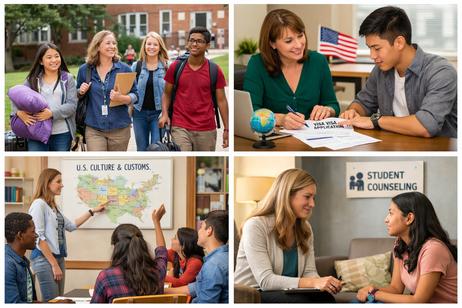
Boarding schools typically provide on-campus dormitories supervised by trained residential faculty. International student support services in private schools at boarding institutions usually include:
- Gender-separated dormitories with adult supervision
- Structured daily schedules and curfews
- Health services access and emergency response plans
- Residential advisors trained in cross-cultural communication
These features align with federal expectations for F-1 visa holders, which require schools to maintain oversight of student living arrangements. Boarding environments are often preferred for younger international students because international student support services in private schools are centralized and consistent.
Homestay and Guardian-Based Housing
Day schools offering international student support services in private schools often rely on homestay placements or local guardians. In these cases, schools coordinate with vetted host families and require legal guardianship arrangements.
Key elements of homestay-focused international student support services in private schools include:
- Background checks and home inspections
- Ongoing communication between school and host family
- Transportation coordination
- Emergency contact protocols
The U.S. Department of State emphasizes that housing stability is critical for international students adjusting to U.S. schools, particularly minors. Visa guidance for F-1 and J-1 students is available at https://travel.state.gov/content/travel/en/us-visas/study/student-visa.
Visa Assistance and Immigration Compliance
Visa support is a foundational element of international student support services in private schools. While schools cannot provide legal advice, they are responsible for guiding families through required documentation and maintaining compliance.
F-1 and J-1 Visa Support
Most private schools enroll international students under the F-1 visa program. International student support services in private schools typically include:
- Issuance of Form I-20
- SEVIS registration and monitoring
- Orientation on visa rules and travel restrictions
- Ongoing enrollment verification
Some exchange-based programs use the J-1 visa, which carries different requirements. Schools offering J-1 programs must partner with designated exchange organizations and ensure compliance with cultural exchange objectives outlined by the U.S. Department of State.
Ongoing Compliance Monitoring
International student support services in private schools extend beyond initial enrollment. Schools are required to track attendance, academic progress, and address changes in student status. Failure to comply can jeopardize a student’s visa.
This compliance role distinguishes international student support services in private schools from those in many higher education settings, where students manage more responsibilities independently.
Cultural Transition and Student Well-Being
Cultural transition support is increasingly central to international student support services in private schools. Adjusting to a new language, classroom norms, and social expectations can affect academic performance and mental health.
Orientation and Language Support
Most schools begin international student support services in private schools with pre-arrival orientations and extended onboarding programs. These often include:
- English language assessment and ESL support
- Academic integrity and classroom culture instruction
- U.S. social norms and safety training
Language and cultural adjustment challenges are well documented. University-based research and counseling resources note that international students may experience acculturative stress during their first year. The University of California, Berkeley outlines common adjustment challenges and support.
Mental Health and Counseling Access
Mental health access is now a standard expectation within international student support services in private schools. The Centers for Disease Control and Prevention emphasize the importance of early mental health intervention for adolescents, particularly during major life transitions. Current guidance is available at https://www.cdc.gov/healthyyouth/mental-health/index.
Private schools respond by offering:
- On-campus counseling services
- Referrals to multilingual providers
- Faculty training to recognize stress indicators
- Peer mentoring programs
These services are particularly important for students far from family support systems.
Comparing Support Services Across School Types
The scope of international student support services in private schools varies by school model. The table below summarizes typical differences.
| Support Area | Boarding Schools | Day Schools |
|---|---|---|
| Housing | On-campus dormitories | Homestay or guardian-based |
| Visa Oversight | Centralized SEVIS monitoring | Centralized, with guardian coordination |
| Daily Supervision | 24-hour residential staff | School-day supervision only |
| Cultural Programming | Integrated residential activities | School-based programs |
| Emergency Response | On-site medical and residential staff | Coordinated with host families |
Understanding these distinctions helps families evaluate how international student support services in private schools align with their child’s needs.
Evaluating a School’s Support Infrastructure
When assessing international student support services in private schools, families should ask detailed questions, including:
- Is the school SEVP-certified and experienced with F-1 students?
- Who oversees housing and student welfare after school hours?
- What counseling and language services are available?
- How does the school communicate with parents abroad?
Private School Review provides additional evaluation tools and checklists for families considering international enrollment at https://www.privateschoolreview.com/blog.
Policy Trends Shaping 2026 Support Models
In 2026, international student support services in private schools are influenced by tighter compliance monitoring and increased emphasis on student well-being. Federal agencies continue to stress documentation accuracy and student safety, while schools invest more heavily in cultural competency training for staff.
These trends reflect a broader recognition that international student support services in private schools are not optional add-ons but core institutional responsibilities.
Conclusion
International student support services in private schools encompass far more than admissions assistance. Housing oversight, visa compliance, and cultural transition programs work together to create a safe and supportive environment for students far from home.
For families navigating international enrollment, understanding international student support services in private schools is essential to making informed decisions. As private schools continue to welcome students from around the world, these services will remain central to educational quality, student well-being, and regulatory compliance in 2026 and beyond.