
Single-sex or Coeducation?

Updated
|
Single-sex or Coeducation?
Sooner or later you ought to consider a single-sex school as opposed to a traditional coeducational school. Why? For several reasons.

Sooner or later you ought to consider a single sex school as opposed to a traditional coeducational school. Why? For several reasons. First of all, coeducational schools have only become 'traditional' or commonly accepted in the last several decades. Private education has its roots in single sex education, both in this country and in England.

Indeed, if you look at the history of most of the legendary prep schools in America, you are likely to find that they began as a single sex institutions. For example, Phillips Academy Exeter began as a boys' school. It only began admitting girls in its summer sessions in 1961 which was fifteen years after it dropped the two year Latin requirement - horrible dictu! It would be another nine years before Exeter admitted girls in its regular sessions.

So, what's really happening here? American private schools like Exeter have always pretty much mirrored the society which they seek to serve. Back in the late 1700's and early 1800's when many of these schools got their start, educating girls was not considered as important as educating boys. Those views changed over the centuries as the young republic grew and matured. So did views about education. In the 1960's and '70's single sex schools gradually fell out of fashion. In order to survive, some boys' and girls' schools merged to form coeducational schools. Others, like Exeter, saw the handwriting on the wall and moved with the times by admitting girls.

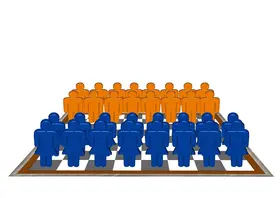
In the 21st century the pendulum has begun to swing the other way. Single sex schools are enjoying something of a come-back. Why? Simply because many researchers and educators and parents feel that boys and girls learn differently. To be sure, there are passionately held views on both sides of this argument. But, the reality is that there is room in the world of education for single sex schools.

Questions? Contact us on Facebook. @privateschoolreview

Frequently Asked Questions

When did Phillips Academy Exeter start admitting girls in its regular sessions?
Phillips Academy Exeter began admitting girls in its regular sessions nine years after 1961.
What was the status of coeducational schools before the 1960s?
Coeducational schools only became commonly accepted in the last several decades before the 1960s.
Why did some single sex schools merge or become coeducational in the 1960s and 1970s?
Some boys' and girls' single sex schools merged or became coeducational to survive as single sex schools gradually fell out of fashion in the 1960s and 1970s.
What historical trend did American private schools like Exeter reflect in their admissions policies?
American private schools like Exeter mirrored society by initially prioritizing boys' education over girls' education during the late 1700s and early 1800s.
Why are single sex schools experiencing a comeback in the 21st century?
Single sex schools are enjoying a comeback because many researchers, educators, and parents feel that boys and girls learn differently.

Recent Articles

Navigating Private School Finances 2026
Essential 2026 guide for parents on private school costs, financial aid, and planning strategies.
Preparation for Standardized Tests & College Admissions 2026
A 2026 guide for private school test prep and college admissions strategies, with insights, trends, and best practices for families and educators.
Mental Health & Wellness Support in Private Schools: Key Questions for Parents
Discover essential questions about mental health & wellness support in private schools before enrolling, with 2026 updates for informed decisions.

Premier School Models

SPECIALIZED INSTITUTIONS
This category covers schools designed to meet specific educational needs or interests, including military academies, special needs institutions, arts-focused programs, and international schools. It provides information on how these specialized environments cater to particular student populations or educational goals.
More Articles
Read more articles (20)
Traditional Private Schools (40) Alternative Approaches (20) Faith-Based Schools (7) Early Learning (20)