About Private Schools

An in depth look at private schools, including history, a comparison to public education, and a glimpse of what's being taught. Learn about the benefits of attending private school, to both students and parents. Explore private schools options when living abroad, and debunk many of the myths regarding private school education.

View the most popular articles in About Private Schools:

What’s a Private School? 2025 Guide for Parents

Updated
|
What’s a Private School? 2025 Guide for Parents
Explore what defines a private school in 2025—costs, diversity, programs, and admissions insights for families choosing the right education.

What’s a Private School?

A 2025 Parent and Educator Guide

Private schools have long been a cornerstone of American education, offering families choices beyond their local public district. But in 2025, the definition of “private school” is more diverse and dynamic than ever. With nearly 4.7 million students enrolled across more than 30,000 schools nationwide, private education spans independent, religious, boarding, Montessori, Waldorf, STEM-focused, arts-centered, and even hybrid online models.

For parents asking what’s a private school, the answer now includes both traditional institutions with deep histories and innovative schools that harness artificial intelligence and personalized learning. Understanding these differences is essential when evaluating whether private education is the right fit for your child.

Defining a Private School in 2025

At its core, a private school is an institution of learning independently funded through tuition, endowments, and donations rather than taxpayer dollars. Unlike public schools, which must follow state-mandated curricula, private schools enjoy greater flexibility in curriculum design, teacher hiring, and instructional methods.

This autonomy allows schools to specialize—whether in advanced college-prep programs, religious instruction, arts immersion, or individualized learning tracks. According to the National Association of Independent Schools (NAIS), more than 60% of private schools in 2024 adopted a hybrid or personalized learning model, blending in-person instruction with technology-driven tools.

Types of Private Schools

Private education is not monolithic. Parents exploring what a private school is will find a spectrum of options, including:

  • Independent Schools: Fully self-governed, often college-preparatory, and supported by tuition and endowment.
  • Religious
. . .read more

The A to Z of Private Schools 2025

Updated
|
The A to Z of Private Schools 2025
Explore the A to Z of private schools in 2025—from admissions to tuition—offering parents and educators clear insights into today’s options.

The A to Z of Private Schools (2025 Edition)

Private schools in the United States have long offered families an alternative to public education—emphasizing small class sizes, personalized instruction, and distinctive educational philosophies. But the landscape in 2025 looks different than it did even a decade ago. Rising tuition, new demographic shifts, and expanded program offerings make private education both more diverse and, in many cases, more accessible.

This A to Z guide walks you through the essentials of private schools in 2025, helping families and educators understand the key terms, trends, and opportunities that define the sector today.

A – Admissions

Private school admissions remain competitive, but many schools now emphasize “fit” over test scores. Some institutions have reduced reliance on entrance exams, instead considering teacher recommendations, student essays, and interviews. Waitlists are common at top-tier schools, particularly in urban centers.

B – Boarding Schools

Boarding schools are evolving. Once primarily East Coast institutions, they are now attracting international students and offering global curricula such as the International Baccalaureate (IB). In 2025, 20% of U.S. boarding school students come from outside the country, fostering diverse campus cultures.

C – Curriculum

Private schools often have flexibility beyond state-mandated requirements. Many emphasize STEM, arts integration, and experiential learning. Project-based learning and advanced electives—such as artificial intelligence or environmental science—are increasingly common.

D – Diversity

Diversity remains a priority. According to the National Center for Education Statistics, students of color now make up 38% of private school enrollment

. . .read more

Why Private School? (2025 Edition)

Updated
|
Why Private School? (2025 Edition)
Discover the benefits of private schooling. From academic rigor to personalized learning and community values, we explore the reasons why private schools might be the right choice for your child's education.

Private schools challenge their students academically

  • They expose their students to more explicit value systems.
  • They give their students greater access to well-qualified, experienced teachers.
  • Private schools allow their students to feel safer than at a local public school.

When you decide to pursue private schooling for your child, start the research process early.

  • Admission to private schools can be competitive.
  • Furthermore, finding a school that is a perfect fit for your child and where they will also be accepted takes some time.

Reasons To Look Into Private Schools

A Higher Bar

A major advantage of private education is that your child will likely be challenged to a higher academic standard.

  • Private schools tend to be more academically rigorous than public schools.
  • Private school students may have to meet more criteria to maintain their grade point averages.
"Private high schools typically have more demanding graduation requirements than do public high schools. Compared with public schools, private schools required more coursework (in 4-year high school programs)." Source: Private School Universe Survey (PSS) from NCES

Private school students can expect more regarding the quality of work, course workload, and special requirements, such as community service or arts participation.

  • In some schools, what would typically be considered extracurricular activities are prerequisites for graduation, which ultimately round out students' high school experience.
  • The push to meet this higher standard often results in greater student performance.
A 2022 NAEP report found that "Students in private schools scored significantly above the national average in
. . .read more

Books Set In Private Schools

Updated
|
Books Set In Private Schools
Enjoy a range of subject matter from recollections to murder mysteries, all set in private schools here at home and abroad.

It's exciting to discover a veritable treasure trove of books set in private schools published recently. The United States, United Kingdom, and Peru. You can find most books at your favorite bookseller or library in both traditional paperback and electronic format. In addition, I have given you links to the authors' websites wherever possible. Happy reading!

The Truly Devious Series by Maureen Johnson

Truly Devious
ASIN: B07252X6ZH

The Vanishing Stair
ASIN: B078LXZ8CS

The Hand On The Wall
ASIN: B07QVL5SLT

The Box In The Woods
ASIN: B08CRBSN2R

"The Agatha Christie-like ecosystem pairs with lacerating contemporary wit, and alternating past and present scenes makes for a multilayered, modern detective story." -- *New York Times Book Review*

From the pen of Maureen Johnson comes a series of murder mysteries set in famous Ellingham Academy in Vermont. Stevie Bell solves the murders with great aplomb.

This video offers a recap of Truly Devious.

Dark Rooms: A Novel by Lili Anolik

ASIN: B00KVI9DH2

Lili Anolik's first novel tackles a murder disguised as a suicide. The murder victim's sister signs on to teach at the prestigious Connecticut boarding school where the murder took place. We suspect that this will not be the only murder Grace solves.

Atlas of Men by David Sklar

ASIN: B07HGFSNC7

"…a haunting, mesmerizing story about coming-of-age, of innocence lost and the search for redemption." — Hedy S. Wald, PhD

I think the reason that this book is so intense is

. . .read more

Which Schools Did Our Presidents Attend? Part 2 - Johnson to Taft

Updated
|
Which Schools Did Our Presidents Attend? Part 2 - Johnson to Taft
Depending on their family circumstances, our Presidents received a wide range of primary and secondary schooling.

In the nineteenth-century education for several of our presidents was strictly hit or miss for a variety of reasons. On the other hand, a couple of presidents enjoyed what you and I know in the 21st century as Ivy League educations. Fortunately for our young nation, most of these men were leaders who were able to guide our country through so uncharted waters and perilous times.

17 - Andrew Johnson

President from April 15, 1865 to March 4, 1869
Born: December 29, 1808, Raleigh, North Carolina
Died: July 31, 1875, Carter County, Tennessee
Political party: Democratic Party

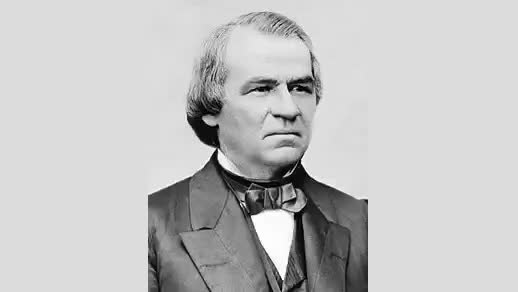
North Carolina native Andrew Johnson succeeded Abraham Lincoln. He had no formal schooling as his family was very poor. His meager educational background notwithstanding, Johnson apparently was a skilled public speaker.

Book Scrolling has a list of books about our 17th president.

18 - Ulysses S. Grant

President from March 4, 1869 to March 4, 1877
Born: April 27, 1822, Point Pleasant, Ohio
Died: July 23, 1885, Wilton, New York
Political party: Republican Party

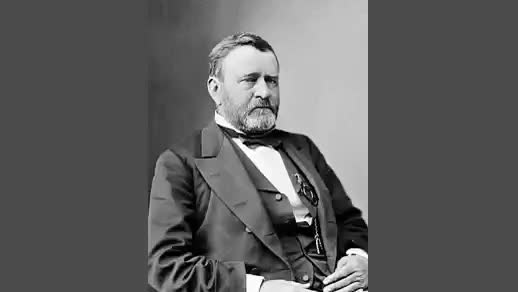
Ohio native Hiram Ulysses Grant appears to have had formal schooling from the age of five. He attended a subscription school, i.e., a school which his parents paid for him to attend, as well as two private schools, the Maysville Seminary, and John Rankin's Academy. He matriculated to West Point. Ron Chernow's book about President Grant was #1 on the New York Times

. . .read more

Recent Articles

Should Your Child Stay at the Same Private School K–12?
Explore whether your child should attend the same private school from kindergarten through graduation, weighing academic continuity, friendships, changing needs, tuition costs, and opportunities at different educational stages.
When Your Child's Closest Friends Leave Private School
Learn how to support your child when close friends leave private school, manage loneliness, maintain friendships, encourage new connections, recognize emotional challenges, and decide when additional school support is needed.
When Your Child Doesn't Connect With Their Teacher
Discover when parents should intervene if their child struggles to connect with a private school teacher, including warning signs, communication strategies, classroom concerns, and practical steps toward improving relationships.

Why Private School