Test Preparation

Standardized tests are a large part of the admission process at many private schools. Here you'll find information on the most commonly used exams and how to prepare for them. Explore the tests, what the scores mean, and how the schools will use them.

View the most popular articles in Test Preparation:

How To Read The Test Scores

Updated
|
How To Read The Test Scores
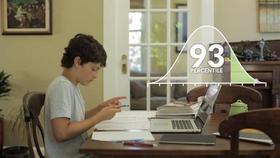
SSAT test scores can be mysterious to most parents. What do they mean? How does the admissions staff use them?

Your child has taken the SSAT as part of the admissions process for several schools. You have received the Scores Report. Now, what does it mean? How do you read the Scores Report?

Background

The first thing to remember about the SSAT is that each private school you are applying to views SSAT test scores through its own admissions lens, as it were. That means that your child's score won't necessarily mean the same thing in the various admissions offices. Why is that? The answer lies in the fact that each private school is an independent, legal entity. In other words, each school does its own thing. Each school has its own educational philosophy, its own idiosyncratic approach to teaching, and so on. Most schools also have had years of experience and tradition teaching young people. That means that their admissions officers know what kind of applicant will be successful in their educational and community setting.

So, where does a standardized admissions test like the SSAT fit in? It provides a common platform for assessing basic academic knowledge. Put another way, if Sally from Middle School A applies, she will be taking the same admissions test as every other applicant, regardless of where they go to school. Standardized testing provides a level playing field; at least, that is the theory behind standardized testing. Read Aaron Churchill's essay Bless the three reasons for standardized testing for an overview of the subject. Most standardized admissions tests used in

. . .read more

COOP, HSPT and TACHS

Updated
|
COOP, HSPT and TACHS
You will encounter COOP, HSPT and TACHS if you are applying to some Roman Catholic high schools.

This article has been updated to reflect 2026 data and recent developments.

Many Roman Catholic high schools don't use the SSAT or ISEE admissions tests as part of their admissions requirements. For instance, Roman Catholic high schools in the Archdiocese of New York and the Diocese of Brooklyn administer the Test for Admission Into Catholic High Schools or TACHS.

The entrance examination used by a Catholic high school often depends on its location and the admissions system established by the diocese or individual school. Parents applying for the 2026-27 admissions cycle should check the requirements of each school carefully, including registration dates, application deadlines, and testing procedures. Private School Review's Admissions 101 provides an overview of the private school admissions process and the steps families should expect.

Elsewhere in the country, you will find the Cooperative Admissions Examination Program (COOP) or the High School Placement Test (HSPT). What the admissions staff are looking for is readiness for high school-level academic work. The tests are generally given in the late fall of grade 8.

Although entrance tests vary, they commonly assess skills students have developed throughout elementary and middle school. Families should confirm which examination is required before beginning test preparation because a school may use a particular test as part of a larger regional or diocesan admissions process.

Parents can also review A Parent's Guide to Private School Entrance Exams for additional information about admissions testing. Becoming familiar with the

. . .read more

SSAT and ISEE

Updated
|
SSAT and ISEE
Most private schools use standardized tests as part of their admissions process. The SSAT and ISEE are the common tests you will encounter at independent schools.

This article has been updated to reflect 2026 data and recent developments.

Standardized testing is part of most private schools' admissions requirements. There are several reasons why schools use standardized admissions tests. The first reason is that they level the admissions playing field. Every candidate for admission must take the same admissions test. Fairness is the name of the game. The second reason is that schools want to be able to assess candidates' proficiency in core academic subjects. In other words, can the candidate who wants to come to my school do the work we do at our school? In 2026, families should verify each school's current requirements, since some private schools now use test-optional or test-flexible admissions policies.

The two most commonly used independent school tests are the SSAT or Secondary School Admission Test and the ISEE or Independent School Entrance Examination. Private School Review's Admissions Checklist For Private School Applicants provides additional guidance on standardized testing as part of the application process.

About the SSAT

From the SSAT handbook, page 12: "The SSAT is the required admission test at many of the best independent schools in the world. This test is one important step on the path to an independent school education. Your SSAT score is one part of your complete application to an independent school, and while it is important, it is not the only criteria for admission. The SSAT is designed for students in grades 3 through PG and is administered on

. . .read more

Recent Articles

Should Your Child Stay at the Same Private School K–12?
Explore whether your child should attend the same private school from kindergarten through graduation, weighing academic continuity, friendships, changing needs, tuition costs, and opportunities at different educational stages.
When Your Child's Closest Friends Leave Private School
Learn how to support your child when close friends leave private school, manage loneliness, maintain friendships, encourage new connections, recognize emotional challenges, and decide when additional school support is needed.
When Your Child Doesn't Connect With Their Teacher
Discover when parents should intervene if their child struggles to connect with a private school teacher, including warning signs, communication strategies, classroom concerns, and practical steps toward improving relationships.

Getting into Private School