Disclaimer: My eldest daughter attended the Waldorf School of Garden City back in the 70s. We liked the gentle approach that allowed children to explore and learn to think critically. ~Rob Kennedy
Waldorf schools offer a well-thought-out approach to K-12 education. Unlike Montessori schools, which focus on the primary grades, Waldorf schools cover all the grades. The Waldorf movement got its start with the writings and philosophy of Rudolph Steiner (1861-1925). Pictured on the right, Steiner was an Austrian-born philosopher who founded a movement known as anthroposophy.
One of the key aims of our method of educating is to help the child toward developing the faculty of free imagination. So, for example, we generally tell stories without offering printed pictures. Our words provide the raw materials. The child has to “clothe” the story with his or her own images. ( Mt Barker Waldorf School Parent Association 2001 )
This video from the Spring Garden Waldorf Schools gives an overview of a Waldorf education.
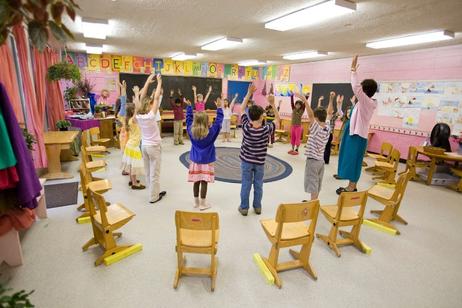
The essence of the Waldorf approach to education is its emphasis on developing a child's imagination and creative side. The Waldorf pedagogues prefer that young children never be exposed to popular entertainment such as television, popular music, and computers. Competition is replaced with cooperation. Eurythmy, an expressive music cum dance art form, plays a central role in developing a child's artistic expression. The whole child is engaged at his own pace instead of being entertained by media in one form or another.
Music, dance and theater, writing, literature, legends and myths are not simply subjects to be read about and tested. They are experienced. Through these experiences, Waldorf students cultivate their intellectual, emotional, physical and spiritual capacities to be individuals certain of their paths and to be of service to the world. Source: Waldorf Education
This video from Marin Waldorf offers another take on a Waldorf education.
Another unique concept is that a teacher moves with the class over a four-year cycle. Waldorf teachers are highly skilled and have the ongoing development of their young charges at heart. Standardized textbooks are rarely used. Students create their own beautifully written and illustrated course books. Bilingualism is encouraged. Specialized teachers are introduced in the high school years to teach advanced math, science, and languages.
A Waldorf education appeals to parents who embrace their responsibilities for their children's education. Rather than letting some government institution do the job, Waldorf parents are integral to the home, school, and child education triangle. Waldorf schools are located in major urban areas throughout the United States and Canada.
Suggested Reading
- Introduction to Steiner Education: The Waldorf School
- The Spirit of the Waldorf School
- Eurythmy: An Introductory Reader
Questions? Contact us on Facebook. @privateschoolreview