Advanced Learning Frameworks

This cluster highlights educational approaches, programs, and methodologies in private schools, offering insights into curricula, teaching philosophies, and standards shaping student experiences.

View the most popular articles in Advanced Learning Frameworks:

Executive Function Skills: The Key to Academic Success

Updated
|
Executive Function Skills: The Key to Academic Success
Learn why executive function skills are among the strongest predictors of academic success and how parents and schools can strengthen them.

For years, academic success was often associated with intelligence, test scores, or natural talent. Yet a growing body of educational research points to a different factor that may be even more important: executive function skills.

These cognitive skills help students manage their thoughts, emotions, attention, and behavior in pursuit of long-term goals. Whether a student is completing a science project, preparing for exams, managing extracurricular commitments, or navigating a challenging classroom environment, executive function skills are often the hidden engine behind success.

In 2026, as schools continue integrating technology, project-based learning, and personalized education models, executive function skills have become more critical than ever. Private schools, in particular, are increasingly investing in programs designed to strengthen these skills because educators recognize their direct connection to academic achievement, college readiness, and lifelong success.

What Are Executive Function Skills?

Executive function skills are the brain's management system. They help students plan, prioritize, organize, focus attention, regulate emotions, and complete tasks.

Researchers generally group executive function into three core areas:

Executive Function Skill Description
Working Memory Holding and manipulating information in the mind
Cognitive Flexibility Adjusting to new situations and shifting strategies
Inhibitory Control Managing impulses and maintaining self-control

These core functions support a broader set of academic behaviors, including:

  • Time management
  • Organization
  • Goal setting
  • Task initiation
  • Sustained attention
  • Emotional regulation
  • Self-monitoring
  • Study planning

According to research published by the Institute of Education Sciences, executive function plays a foundational role in school readiness, academic achievement, and long-term educational outcomes. Studies have found that executive function measured in

. . .read more

Study Skills Every Private School Student Should Master

Updated
|
Study Skills Every Private School Student Should Master
Discover the essential study skills private school students should master by age 12 to build confidence, organization, and long-term academic success.

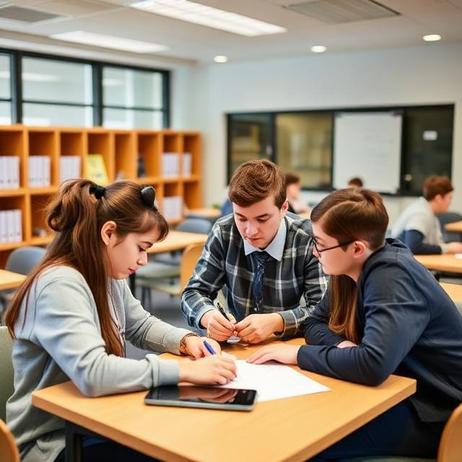
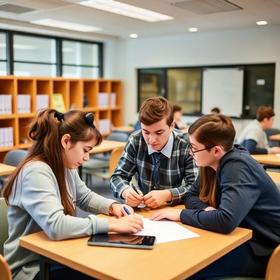
By age 12, many private school students are entering a critical academic transition period. Coursework becomes more demanding, expectations for independent learning increase, and students begin preparing for the rigor of middle school and eventually high school. While strong grades matter, long-term success often depends more on habits and learning strategies than raw academic ability.

Private schools are known for emphasizing intellectual curiosity, personal responsibility, and college readiness from an early age. As a result, families increasingly want to know which study skills students should develop before adolescence fully begins.

The most successful students are not necessarily the ones who spend the most time studying. Instead, they know how to manage time effectively, stay organized, process information actively, and recover from setbacks productively.

According to the National Center for Education Statistics, students who develop structured learning habits early tend to demonstrate stronger academic persistence and self-management later in secondary education and college (nces.ed.gov).

This guide outlines the most important study skills every private school student should master by age 12, along with practical strategies parents and educators can use to reinforce them.

Why Age 12 Matters Academically

Age 12 often marks the transition from teacher-directed learning to greater student independence. In many private schools, sixth and seventh grade students begin managing:

  • Multiple teachers and classrooms
  • Long-term assignments
  • Increased homework loads
  • Digital learning platforms
  • More advanced reading and writing expectations

This shift can challenge even high-achieving students if they lack strong study habits.

Many private schools

. . .read more

How Private Schools Handle Dual Enrollment Courses

Updated
|
How Private Schools Handle Dual Enrollment Courses
Learn how private schools manage dual enrollment programs, college partnerships, scheduling, credits, and student support in 2026.

Dual enrollment programs are becoming increasingly common in private schools as families seek more advanced academic opportunities and early college exposure for high-achieving students.

In 2026, many private schools now partner with colleges, universities, and online higher education providers to allow students to earn college credit while completing their high school education. These arrangements can help students challenge themselves academically, reduce future college costs, and gain experience navigating college-level coursework before graduation.

At the same time, dual enrollment introduces important logistical, academic, and social considerations for private schools and families alike. Schools must carefully balance high school graduation requirements, student wellness, scheduling flexibility, and college readiness while ensuring students remain engaged in the broader private school community.

As explored in Academic Programs in Private Schools 2025, many independent schools are expanding advanced academic pathways to meet growing demand for personalized and accelerated learning opportunities.

Why Dual Enrollment Is Growing in Private Schools

Several factors are contributing to the growth of dual enrollment programs in independent education.

Families increasingly want students to:

  • Access more rigorous coursework
  • Explore academic interests early
  • Earn transferable college credit
  • Strengthen college applications
  • Experience greater intellectual independence
  • Reduce future college tuition expenses

Private schools also recognize that advanced learners sometimes outgrow available high school coursework, particularly in specialized STEM fields, advanced mathematics, world languages, and niche humanities subjects.

According to Private School Curriculum in 2025: Key Courses and Trends, individualized academic pathways and college-level learning experiences are becoming more common in competitive private school environments.

How
. . .read more

Homework Policies in Private Schools: 2026 Guide

Updated
|
Homework Policies in Private Schools: 2026 Guide
Explore how homework policies in private schools are evolving in 2026, including workload trends, wellness initiatives, and parent expectations.

Homework policies in private schools have changed significantly over the past decade. While academic rigor remains a hallmark of many independent schools, educators in 2026 are increasingly balancing challenging coursework with student wellness, executive functioning skills, and family time.

Today’s private schools are moving away from a one-size-fits-all approach to homework. Some schools continue to emphasize nightly assignments and independent study, while others are experimenting with reduced homework loads, project-based learning, or structured study periods built into the school day.

For parents evaluating private school options, understanding how homework policies differ from school to school has become an important part of the admissions process.

Why Homework Policies Are Changing

The debate around homework is not new, but several recent developments have accelerated change in private education:

  • Growing concerns about student stress and burnout
  • Increased awareness of adolescent mental health
  • Expanded use of personalized learning models
  • Research questioning the effectiveness of excessive homework in younger grades
  • Greater emphasis on balance, extracurricular involvement, and sleep

Organizations such as the American Academy of Pediatrics and the National Education Association have continued encouraging schools to consider age-appropriate workloads and healthy time management practices.

In response, many private schools are reevaluating how much homework students receive and whether assignments meaningfully reinforce classroom learning.

Common Homework Models in Private Schools

Private schools now tend to follow one of several homework philosophies.

Homework Model Typical Features Common Grade Levels
Traditional Homework Nightly assignments, reading, problem sets, essays Middle and upper school
Reduced Homework Limited nightly work, focus
. . .read more

Curriculum Planning Strategies for Home-Educated Students

Updated
|
Curriculum Planning Strategies for Home-Educated Students
Learn effective curriculum planning strategies for home-educated students, including scheduling, assessment, flexibility, and 2026 learning trends.

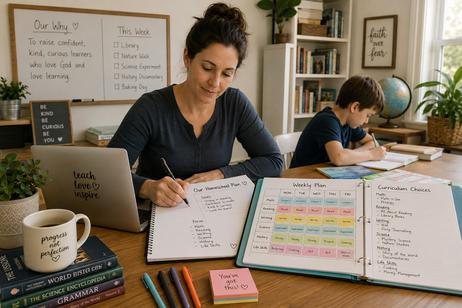
Homeschooling continues to evolve in 2026 as more families seek flexible, personalized educational pathways for their children. While home education offers significant freedom, successful outcomes often depend on thoughtful curriculum planning. Parents who approach homeschooling with a clear academic structure, realistic goals, and adaptable learning strategies are better positioned to create a consistent and enriching educational experience.

Curriculum planning strategies for home-educated students now extend far beyond selecting textbooks. Modern homeschooling frequently includes online learning platforms, project-based instruction, hybrid learning programs, dual enrollment opportunities, and AI-supported educational tools. Families also increasingly combine homeschooling with private school partnerships, microschools, or umbrella programs that provide accountability and support.

For many parents, the challenge is not whether to homeschool, but how to organize a curriculum that balances academic rigor, flexibility, and long-term goals.

Why Curriculum Planning Matters in Home Education

Unlike traditional schools that follow standardized district pacing guides, homeschooling families must independently determine:

  • Academic priorities
  • Grade-level expectations
  • Daily and yearly schedules
  • Assessment methods
  • Graduation requirements
  • College preparation pathways

Without a plan, homeschooling can become inconsistent or overly reactive. A structured curriculum framework helps students maintain academic progress while still benefiting from homeschooling flexibility.

According to the National Center for Education Statistics, homeschooling participation remains significantly higher than pre-pandemic levels, reflecting sustained parent interest in customized education models.

Well-designed curriculum planning strategies for home-educated students also reduce parental stress by creating predictable routines and measurable goals.

Start With Long-Term Educational Goals

Effective homeschool curriculum planning begins with the

. . .read more

Recent Articles

How Private Schools Are Preventing Student Burnout
Discover how private schools are addressing student burnout through wellness programs, balanced academics, and expanded mental health support.
How Private Schools Evaluate “Soft Skills” Like Leadership and Grit
Learn how private schools assess leadership, grit, resilience, and character, and why these soft skills are becoming increasingly important in admissions.
How Private Schools Handle Cell Phones: Why Phone-Free Campuses Are Growing
Discover how private schools manage cell phones, why phone-free campuses are growing, and how reduced social media access can benefit students.

Advanced Learning Frameworks

ACADEMIC PHILOSOPHIES
This subcategory delves into the different educational approaches and philosophies adopted by private schools, such as Montessori, Waldorf, International Baccalaureate (IB), and traditional curricula. It explores how these programs shape the learning environment and student outcomes.
SUBJECT SPECIALIZATION
Here, we examine the range of subjects and courses offered in private schools, including core academic subjects, electives, advanced placement (AP) courses, and specialized programs. This section highlights how schools cater to diverse interests and academic needs.
ASSESSMENT AND EVALUATION
This subcategory focuses on the various methods used to measure student progress and academic achievement in private schools. It covers topics such as standardized testing, alternative assessment methods, grading systems, and how schools track and report student performance.
EDTECH & INNOVATION
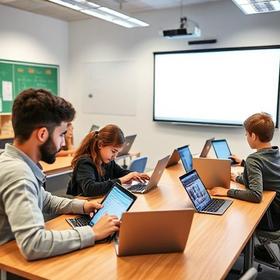
This section explores how private schools integrate technology and innovative teaching methods into their curriculum. It covers topics such as digital literacy, STEM/STEAM programs, project-based learning, and the use of educational technology to enhance the learning experience.
EARLY CHILDHOOD EDUCATION
Information about preschool and primary grades.