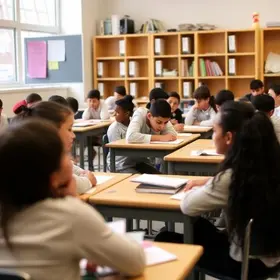

By age 12, many private school students are entering a critical academic transition period. Coursework becomes more demanding, expectations for independent learning increase, and students begin preparing for the rigor of middle school and eventually high school. While strong grades matter, long-term success often depends more on habits and learning strategies than raw academic ability.
Private schools are known for emphasizing intellectual curiosity, personal responsibility, and college readiness from an early age. As a result, families increasingly want to know which study skills students should develop before adolescence fully begins.
The most successful students are not necessarily the ones who spend the most time studying. Instead, they know how to manage time effectively, stay organized, process information actively, and recover from setbacks productively.
According to the National Center for Education Statistics, students who develop structured learning habits early tend to demonstrate stronger academic persistence and self-management later in secondary education and college (nces.ed.gov).
This guide outlines the most important study skills every private school student should master by age 12, along with practical strategies parents and educators can use to reinforce them.
Why Age 12 Matters Academically
Age 12 often marks the transition from teacher-directed learning to greater student independence. In many private schools, sixth and seventh grade students begin managing:
- Multiple teachers and classrooms
- Long-term assignments
- Increased homework loads
- Digital learning platforms
- More advanced reading and writing expectations
This shift can challenge even high-achieving students if they lack strong study habits.
Many private schools now incorporate executive functioning support and time-management coaching into middle school programs. Recent educational trends in 2025 and 2026 also show growing emphasis on digital organization, note-taking systems, and self-directed learning.
The Core Study Skills Students Should Master by Age 12
1. Time Management
One of the most important study skills every private school student should master by age 12 is effective time management.
At this age, students begin balancing academics with athletics, arts, clubs, and social commitments. Without structure, assignments can quickly pile up.
Students should learn how to:
- Use a planner or digital calendar
- Break large projects into smaller tasks
- Estimate how long assignments will take
- Prioritize responsibilities
- Avoid procrastination
Parents can support this process by helping students create weekly study schedules rather than relying on last-minute homework sessions.
Educational researchers at Harvard Graduate School of Education have consistently emphasized that time management and self-regulation are among the strongest predictors of long-term academic success (www.gse.harvard.edu).
2. Active Reading and Annotation
By middle school, students are expected to read more complex material independently. Passive reading is no longer enough.
Strong students learn to engage actively with text by:
- Highlighting key ideas selectively
- Writing questions in margins
- Summarizing sections
- Identifying main arguments
- Looking up unfamiliar vocabulary
These habits improve comprehension and retention significantly.
Private schools increasingly encourage annotation techniques across subjects, not just English classes. Students who can actively process information often perform better in discussion-based classrooms common in independent schools.
3. Organized Note-Taking
Organization becomes increasingly important by age 12, especially as students transition between subjects and teachers throughout the day.
Effective note-taking helps students:
- Retain information more efficiently
- Prepare for assessments
- Identify important concepts
- Develop stronger listening skills
Common systems include:
| Note-Taking Method | Best For |
|---|---|
| Cornell Notes | Lecture-heavy classes |
| Outline Method | History and reading-based subjects |
| Visual Mapping | Science and conceptual learning |
| Digital Notes | Tech-integrated classrooms |
Students should also learn to review notes regularly rather than only before tests.
As hybrid learning tools continue expanding in private education, digital organization has become especially important. Families interested in evolving classroom models can read more here: www.privateschoolreview.com/blog/hybrid-and-online-learning-options-for-private-school-students.
Developing Independent Learning Habits
4. Knowing How to Study for Different Subjects
One common mistake younger students make is using the same study strategy for every class.
By age 12, students should understand that subjects require different approaches.
For example:
- Math requires consistent practice and problem-solving repetition
- Science often combines memorization with conceptual understanding
- History benefits from timelines and thematic review
- English requires reading comprehension and analytical writing
Students who adapt their study methods based on the subject tend to retain information more effectively.
Teachers at many private schools now explicitly teach metacognitive strategies, helping students think about how they learn best.
5. Self-Advocacy
Strong study skills also include knowing when to ask for help.
Private school environments often encourage close teacher-student relationships, but students must learn to communicate proactively.
By age 12, students should feel comfortable:
- Asking clarifying questions
- Requesting extra help
- Communicating about missed assignments
- Participating in class discussions
- Seeking feedback before major assessments
Self-advocacy builds confidence and reduces academic anxiety over time.
Technology and Study Skills in 2026
Technology can either strengthen or weaken student learning habits depending on how it is used.
Many private schools now integrate:
- Learning management systems
- AI-assisted tutoring platforms
- Collaborative digital workspaces
- Online research databases
- Organizational apps
At the same time, digital distractions remain one of the biggest challenges for middle school students.
The American Academy of Pediatrics recommends structured screen-time boundaries and technology routines for adolescents to support attention and academic performance (www.aap.org).
Students should learn how to:
- Silence notifications during study sessions
- Avoid multitasking
- Use technology intentionally
- Organize digital files and assignments
- Verify reliable online sources
Digital literacy is increasingly viewed as a core academic skill rather than a separate competency.
Emotional Skills That Support Academic Success
6. Resilience and Recovery
Even high-performing students encounter academic setbacks. A disappointing test grade or difficult assignment should not derail confidence.
Students who succeed long term learn how to:
- Reflect on mistakes constructively
- Adjust study habits
- Maintain perspective
- Persist through challenges
Private schools increasingly emphasize social-emotional learning alongside academics, particularly in middle school advisory programs.
According to the Collaborative for Academic, Social, and Emotional Learning, resilience and emotional regulation strongly influence classroom performance and student well-being (casel.org).
7. Focus and Attention Management
Attention spans have become a growing concern among educators in 2026, especially as students navigate constant digital stimulation.
Students should practice:
- Studying in distraction-free spaces
- Using short, focused work intervals
- Taking intentional breaks
- Avoiding phone use during homework
- Building consistent routines
Even simple adjustments, such as maintaining a dedicated study space at home, can improve concentration significantly.
Signs a Student Has Strong Study Skills by Age 12
Parents and educators often wonder whether students are developing the right habits. Several indicators suggest strong academic readiness.
Students with healthy study skills typically:
- Complete assignments consistently
- Manage materials independently
- Prepare for tests without panic
- Ask thoughtful questions
- Recover quickly from setbacks
- Balance academics with extracurriculars
- Demonstrate curiosity and initiative
Importantly, these habits can be taught and reinforced over time. They are not fixed personality traits.
How Parents Can Support Strong Study Habits
Parents play an essential role in helping students build academic independence without becoming overly involved.
Helpful strategies include:
- Establishing consistent homework routines
- Encouraging planner use
- Modeling organization at home
- Praising effort and persistence
- Limiting distractions during study time
- Encouraging healthy sleep habits
Experts increasingly caution against over-managing students’ academic lives. By middle school, children benefit from gradually taking ownership of their schedules and responsibilities.
The goal is not perfection. The goal is developing sustainable habits that support confidence, independence, and long-term growth.
Conclusion
The study skills every private school student should master by age 12 extend far beyond memorization or test preparation. Strong learners develop organization, time management, resilience, self-advocacy, and focus.
As academic expectations continue evolving in 2026, these foundational habits matter more than ever. Students who learn how to manage responsibilities, engage actively with material, and adapt to challenges are better prepared not only for middle school, but for high school, college, and lifelong learning.
Private schools often provide excellent academic opportunities, but students benefit most when they possess the tools to navigate those opportunities independently. By helping children build these essential study skills early, parents and educators can support both stronger academic outcomes and healthier long-term confidence.