Running a Private School

Get help and guidance on running a private school. Find guidance and resources related to administration, fundraising and marketing. Explore strategic plan development, creative fundraising ideas and the latest technology uses in marketing.

View the most popular articles in Running a Private School:

Keeping In Touch With Your Graduates

Updated
|
Keeping In Touch With Your Graduates
You have many ways to keep in touch with your graduates. Each generation of graduates needs a method of communication which suits its expectations.

Keeping in touch with your graduates is not easy these days. In the old days, you sent a chatty snail mail letter to your graduates two or three times a year. It was full of news about marriages, grad school, jobs, and so on. Of course, it always had updates and information about goings-on at school, sports results and a word from your favorite teachers. Those kinds of newsletter mailings to alumni still go out. If you can afford them, your older graduates will most definitely appreciate them. The reality is that each generation of graduates needs a method of communication which suits its expectations.

Printed mailings have been largely supplanted by interactive school web sites where graduates can log on and keep in touch with their classmates whenever and wherever they choose.

Most alumni relations staff realize that their most recent classes don't stay in touch in the same ways their older graduates do. Snail mail and printed materials are fine for the class of '70 and earlier. Even Web portals may only be effective for the classes prior to '00. Our recent grads are a completely different beast.

The classes from 2001 onwards are the text, cellphone, YouTube, Twitter, Tumblr, and the Facebook crowd. They are all about social networking. Put a class reunion on YouTube and the response will be tremendous. When one of your alums creates a group on a social networking site, it will invariably draw other alums. They all love keeping in
. . .read more

Safe Schools: Ensuring a Secure Learning Environment

Updated
|
Safe Schools: Ensuring a Secure Learning Environment
In today's world, ensuring the safety of our children at school is more important than ever. This comprehensive guide explores the essential safety measures that schools implement to protect students from various threats, including violence, bullying, and emergencies. Learn how private schools leverage advanced technologies and community involvement to create secure environments. Plus, get practical tips for parents to assess school safety effectively. Discover how a safe school environment fosters academic success and emotional well-being for your child.

Safe schools are everybody's concern these days. Remember how years ago, we only worried about keeping the dormitory doors locked at night and ensuring the trip to New York City was properly chaperoned? It was so simple. But everything has changed. According to the National Center for Education Statistics, over 900,000 reported incidents of violence in U.S. public schools in a single school year. This statistic underscores the importance of understanding and ensuring school safety.

The Importance of School Safety

Now, parents, teachers, and students have to deal with cyber-security, stalking, substance abuse, bullying, suicide, and a host of other really tough issues. School safety is more than just preventing violence. School safety encompasses measures designed to protect students from threats, including bullying, natural disasters, and health emergencies. Parents and school community members expect us to provide a safe environment. That, after all, is essential for fostering the academic success of students and the emotional well-being of every member of the school community. When students feel secure, they are more likely to thrive academically and socially. How does a school community implement a robust, effective safety program? Let's take a look.

Improve your communications

In a very small school -100 students or less- you might be able to get away with the old-fashioned telephone tree where one person calls five others and so on. The problem with this method of alerting the community is that there are always a few people who don't get called. Install

. . .read more

School Strategic Planning - How To Ensure Success

Updated
School Strategic Planning - How To Ensure Success
Strategic planning is a disciplined effort to produce fundamental decisions and actions that shape and guide what an organization is, what it does, and why it does it, with a focus on the future.

Great Organizations have Great Plans

In simplest terms, an organization undertakes strategic planning to reaffirm or modify its mission – why it exists, what its purpose is, what it now does – and to agree on its vision – what it wants to be and do in the coming years. The purpose is not to decide what should be done in the future but to decide what should be done now to make desired things happen in an uncertain future.

In short, strategic planning is a disciplined effort to produce fundamental decisions and actions that shape and guide what an organization is, what it does, and why it does it, with a focus on the future.

The real value of strategic planning in a school is more than simply the outcome of having a blueprint that guides future leadership decisions. It is a powerful and effective way to build consensus and motivate resource support and is particularly useful in defining priorities for the Board, the Head of School, and the administrative team who are charged with the implementation of the plan.

Pitfalls of Strategic Planning

How many times has your organization embarked on a strategic planning process, only to build a plan that ends up on the shelf? If your organization is like many others, it's because they have failed to avoid the major pitfalls of strategic planning. The main pitfall of planning is falling into the delusion that

. . .read more

Technology in Private Schools

Updated
|
Technology in Private Schools
Private schools use technology to support and enhance their academic programs. Most of them have been doing this since the early 1990's.

What is the state of technology in private schools?

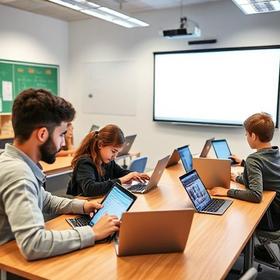
In most private schools teachers and students have been using computers since the mid 1990s. Tablets are the norm. Wireless networking and electronic presentation devices such as whiteboards, LCD displays, and projectors are all part of the private school teacher's bag of tricks. In the old days, technology was a curious somewhat fascinating add-on. You went to a computer lab and taught keyboarding or used programs such as MathBlaster. In the 21st century technology supports and enhances all aspects of the curriculum and teaching. Everybody has their own portable computer with the flexibility and efficiency such mobility encourages.

How important is technology in schools?

American University makes the case succinctly as follows: "How important is technology in education? The COVID-19 pandemic is quickly demonstrating why online education should be a vital part of teaching and learning. By integrating technology into existing curricula, as opposed to using it solely as a crisis-management tool, teachers can harness online learning as a powerful educational tool.

The effective use of digital learning tools in classrooms can increase student engagement, help teachers improve their lesson plans, and facilitate personalized learning. It also helps students build essential 21st-century skills."

This TEDTalk discusses how technology makes learning more dynamic and engaging.

Teaching the digital generation

Most students live in a digital world. They have never known analog devices such

. . .read more

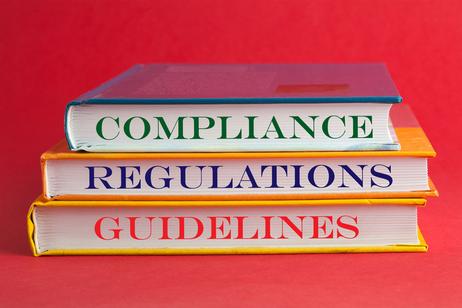
State Regulation of Private Schools

Updated
|
State Regulation of Private Schools
Learn how states regulate private schools in 2026, including accreditation, legal requirements, school choice, and parents' constitutional rights.

State regulation of private schools remains an important topic for parents, educators, policymakers, and school administrators. Every state establishes its own legal framework governing private education, resulting in significant differences in oversight, accreditation requirements, health and safety standards, and public benefits available to private school students.

This article summarizes the legal principles that continue to shape private school regulation while incorporating important developments through 2026. Readers seeking state-specific requirements should consult the latest resources published by the U.S. Department of Education Office of Non-Public Education and their respective state departments of education.

State Regulation of Private Schools

State Regulation of Private Schools provides a brief description, by state, of the legal requirements that apply to private schools. In addition, each state entry includes statistics on private schools by type in the state. This manual was originally intended to serve as a reference for public and private school officials, state policymakers, and researchers. While this publication updated a 1993 analysis prepared by the former Office of Private Education, readers should note that current guidance is now maintained by the U.S. Department of Education's Office of Non-Public Education (ONPE), which periodically updates state regulatory information.

To ensure the accuracy of the original analysis, contact persons in each state were designated by the Chief State School Officer. Each state summary was submitted to the appropriate state department of education for consideration and approval. The individuals who reviewed and amended these summaries contributed significantly to the publication's accuracy. The manual

. . .read more

Recent Articles

Should Your Child Stay at the Same Private School K–12?
Explore whether your child should attend the same private school from kindergarten through graduation, weighing academic continuity, friendships, changing needs, tuition costs, and opportunities at different educational stages.
When Your Child's Closest Friends Leave Private School
Learn how to support your child when close friends leave private school, manage loneliness, maintain friendships, encourage new connections, recognize emotional challenges, and decide when additional school support is needed.
When Your Child Doesn't Connect With Their Teacher
Discover when parents should intervene if their child struggles to connect with a private school teacher, including warning signs, communication strategies, classroom concerns, and practical steps toward improving relationships.

Running a Private School

ADMINISTRATIVE
Here you'll find information on the administrative side of running a private school. We'll cover strategic plan development, state regulations, human resources and school safety. Learn more about the obstacles of taking over a struggling school, get tips on hiring a headmaster, and receive expert advice on dealing with bad press.
FUND-RAISING
Private schools often need to be creative when it comes to funding. This section provides tools, tips and resources on fundraising. Learn more about supporting your school, how to handle major gifts, and why keeping in touch with graduates can benefit your budget.
MARKETING AND TECHNOLOGY
Advances in technology have changed the way businesses market themselves. This section provides tips on social media marketing, information on the latest technology being used and SEO basics for private schools.