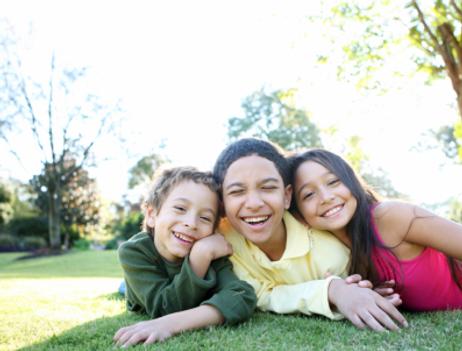
The answer to that questions hangs on whether you look at statistics or community. Having 10% of your student population from a certain ethnic group does not necessarily mean a diverse school community. Diversity is more than numbers and statistics. Diversity is an attitude.
Teaching children to be tolerant and accepting of people and views which are different from their own is a huge task. It requires teamwork. Parents, administration and teachers set the tone. Nothing will be accomplished without the cooperation of these three groups.
Teaching children to be tolerant means getting involved and setting the right kind of example. Getting involved is not the same as sitting on the sidelines and observing what children are saying and doing. Getting involved means addressing issues of tolerance and diversity in the home and in the classroom.
The Past
Decades ago private schools were infamous for being elitist and exclusive. If you were Jewish or if your skin color was something other than white, you probably were not going to be admitted to a private school if you even dared to apply. Fortunately that has changed. Private schools have come to understand their leadership role in creating an inclusive, accepting community of students, teachers, staff and parents. Now the push is on to heighten that understanding of others and how they live with many fine initiatives such as The Institute for Student Leaders sponsored by NAIS. Private schools are proud of their diversity which truly is fact and not just talk.
The Present
As Frank Ligtvoet wrote in HuffPost:
"Diversity is standard fare at private schools in urban areas. They all devote a part of their websites to their intentions and their efforts. The pictures on these sites show generally a lot of kids of color. And most schools have an officer like our director of diversity, who coordinates initiatives and informs and educates the wider school community. Seen from the outside the schools show convincingly their concern; they fit seamlessly in the liberal dream for a more diverse, just and equal society."
The National Center for Education Statistics issues a report entitled The Condition of Education. The following comes from the Private School Enrollment section:
"White students constituted the largest share of enrollment among Catholic (66 percent), other religious (73 percent), and nonsectarian schools (65 percent) in fall 2015. Black students made up the second-largest share of enrollment in other religious schools (11 percent), and Hispanic students made up the second-largest share of enrollment at Catholic schools (16 percent). A larger percentage of students were Asian at nonsectarian schools (9 percent) than at Catholic and other religious schools (5 percent each). Similarly, the percentage of students who were of Two or more races was larger at nonsectarian schools (6 percent) than at Catholic schools (4 percent) and other religious schools (3 percent). Pacific Islander and American Indian/Alaska Native students constituted 1 percent or less of enrollment at Catholic, other religious, and nonsectarian schools."
The National Association of Independent Schools offers Principles of Good Practice - Equity and Justice for its over 1,500 members.
"NAIS schools value the representation and full engagement of individuals within our communities whose differences include—but are not limited to—age, ethnicity, family makeup, gender identity and expression, learning ability, physical ability, race, religion, sexual orientation, and socioeconomic status. NAIS welcomes and celebrates the diversity of our member schools. We expect member schools to create and sustain diverse, inclusive, equitable, and just communities that are safe and welcoming for all. We recognize that to do so requires commitment, reflection, deliberate planning and action, and ongoing accountability."
Affordability
Until fairly recently you had to be able to afford a private school education. There have always been scholarships and several tuition free schools were founded to encourage children from low income families to attend. Now the move is on to remove the remaining financial barriers completely so that children from families with less than $75,000 annual income can attend. Because their are relatively small communities, private schools can effect change fairly quickly. All it takes is school leaders who have vision and the courage and good sense to implement those visionary ideals.
Questions? Comments? Contact us on Facebook. @privateschoolreview