
Specialized Institutions

This category covers schools designed to meet specific educational needs or interests, including military academies, special needs institutions, arts-focused programs, and international schools. It provides information on how these specialized environments cater to particular student populations or educational goals.

View the most popular articles in Specialized Institutions:

How Elite Private Schools Partner With Tech Companies

Updated
|
How Elite Private Schools Partner With Tech Companies
Discover how elite private schools are partnering with tech companies to reshape curriculum, STEM education, AI literacy, and career readiness.

Private schools have long been known for curricular flexibility and academic innovation. In 2026, that flexibility is increasingly expressed through partnerships with technology companies, AI organizations, and digital learning platforms that are reshaping what students learn and how they learn it.

Across the country, elite private schools are collaborating with tech firms to build advanced STEM programs, integrate artificial intelligence into classrooms, expand coding and robotics instruction, and prepare students for a workforce increasingly shaped by automation and digital fluency.

These partnerships are not simply about adding devices to classrooms. Instead, they represent a broader shift toward experiential, future-focused learning that blends traditional academics with emerging technologies and real-world industry exposure.

As discussed in Private School Curriculum in 2025: Key Courses and Trends, many private schools are redefining academic expectations through AI integration, coding, and interdisciplinary learning.

Why Private Schools Are Leading Tech Integration

Private schools often have advantages that make technology partnerships easier to implement than in many public school systems. These include:

  • Greater curriculum flexibility
  • Smaller class sizes
  • Faster administrative decision-making
  • Strong alumni and donor networks
  • Access to philanthropic funding
  • High parent demand for innovation

According to Technology in Private School Classrooms (2026 Guide), private institutions can adopt and adapt emerging educational technologies far more quickly than many district-operated schools.

This agility has allowed elite schools to move beyond traditional computer labs and toward integrated partnerships with companies specializing in AI, robotics, cybersecurity, cloud computing, and digital design.

How Tech Partnerships Are Changing Curriculum

Technology partnerships influence curriculum in several major ways.
1. AI Literacy and Machine Learning Courses

One

. . .read more

What’s a Private School? A 2025 Guide for Parents & Students

Updated
|
What’s a Private School? A 2025 Guide for Parents & Students
Explore what defines a private school, its tuition, enrollment trends, and how it differs from public options in 2025—clear, authoritative insights.

What Is a Private School? An Updated Guide for 2025

In a world where educational options continue to expand and evolve, many families are asking: what exactly is a “private school”? This article defines the term, explains how private schools operate, explores current data and trends through 2025, and offers guidance for parents and students trying to decide whether a private school is the right choice.

1. Defining a Private School

At its core, a private school is a non-public K-12 educational institution that is operated independently of the government’s direct management of public school systems. In the United States, private schools are typically funded through tuition payments, private contributions and endowments, rather than relying primarily on local property taxes and state funding that support public schools. They may be religious or non-sectarian, single-gender or co-educational, day schools or boarding schools.

Unlike public schools, which must admit all students within a district, comply with state board regulations, and offer tuition-free education, private schools often set their own admissions criteria, policies and fee structures. Nonetheless, many private schools still adhere to state accreditation requirements or national independent-school accreditation standards.

2. Key Features of Private Schools

When considering private education, families should know several distinguishing features:

  • Tuition and fees: Private schools charge tuition. According to recent data, average U.S. private K-12 tuition in the 2020-21 school year was approximately $12,790.More recent median estimates suggest private elementary tuition

. . .read more

Leadership, Legacy, and Learning: Pillars of Top Schools

Updated
|
Leadership, Legacy, and Learning: Pillars of Top Schools
We explore the key elements contributing to the success of leading private schools, highlighting the importance of strong leadership, a rich legacy, and a focus on comprehensive learning experiences.

Leadership, Legacy, and Learning: Pillars of Top Schools

Now and then, the question that occurs to me, as it should to you, is precisely why I think a particular school is one of the best.

  • I have to conclude that the best schools have all of the following characteristics. What's more, they have them in abundance.
  • Now, before you start thinking that I am only talking about older established schools, that ain't necessarily so.
  • I am aware of a couple of newer schools that fit neatly into the category of best schools simply because they have all of the characteristics explained below.

So let's look at what I think are the traits of the best schools:

  • Great Leadership
  • Solid financial backing by their graduates
  • Stellar faculty
  • Extensive academics
  • Extensive extracurricular activities
  • Superb facilities
  • Graduates accomplishing great things

Great leadership

The best schools have strong, dynamic, dedicated leaders.

  • They are led by women and men who envision their goals and have the experience to execute their plans to achieve that vision.
  • The head of the best school is a superb fundraiser, capable administrator, and leader by example.
  • She expects the best from everybody in her school community.

I know of several schools which could have been great. But they never made it because their fractious board of trustees kept getting in the way of progress.

  • Change is never easy. But it seems that boards often have
. . .read more

Schools For Children Who Sing

Updated
|
Schools For Children Who Sing
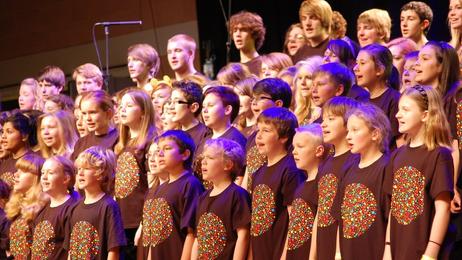
If you have a child who sings, you might want to consider a choir school. In the United States, most of these schools are day schools.

What is a choir school? It is a private school serving the choristers of a cathedral, college or large parish church. The choristers can be boys or girls or boys and girls depending on the institution with which the school is affiliated. The United Kingdom enjoys a long history of this genre of private school. As the Choir Schools Association notes:

"Choir Schools are amazing places where young choristers enjoy learning and playing. Their work takes them into stunningly beautiful buildings on a daily basis. There is no better educational and musical training start for boys and girls aged seven years and up who love to sing."

Residential and day choir schools have seen a steady decline in their numbers since the 1950s for three reasons. Two devastating world wars in Britain drastically altered the social and economic landscape in that country. Changing values in modern society throughout the world have seen parents choose alternative forms of education for their children. Finally, the tremendous cost of educating children in a choir school has forced many sponsoring institutions to close their schools.

Why send your child to a choir school?

I remember a parishioner years ago asking me to support her son's application to Saint Thomas' Choir School. He was an only child and, frankly, she was the quintessential velcro mother. I was pleasantly surprised that they were keen on the residential choir school at Saint Thomas Church in New York City. It was a good solution

. . .read more

Why Leave Public School for Private School?

Updated
|
Why Leave Public School for Private School?
This article explores the reasons parents choose private schools over public education. It highlights the advantages of private schools, including smaller class sizes, personalized attention, rigorous academic programs, and a wider range of extracurricular activities. The piece also discusses the potential drawbacks and considerations for families making this decision.

Parents have many reasons for deciding to take their children out of public school and enroll them in private school. This circumstance can happen at any stage of your child's education. You could face this issue as early as nursery school or as late as high school, or even somewhere in between.

A Real Situation

Recently, I spoke with a mother who had taken her son out of a Montessori school and put him in the local public school. The problem with the Montessori school was the teacher. The public school worked fine for one year. Her child loved his new teacher, who seemed to love her children. Ironically, the public school teacher did a better job following the child than the Montessori teacher did. Considering that following the child was one of Dr. Maria Montessori's principal tenets, you would have thought the Montessori teacher could have gotten that right. In any case, his mother reported that they had one good year. Her son was happy. The teacher was delighted. All was going well. Unfortunately, things began to unravel during the second year, largely due to an inflexible teacher who expected all the children in her rather large class of 25 first graders to march in lockstep.

Against that backdrop, let's you and I explore a couple of typical scenarios where a change of schools might be the only answer for your child.

Your child does not fit in.

So, you have determined that your child does not

. . .read more

Recent Articles

How to Stress-Test a Private School Budget Before Enrolling
Learn how to stress-test a private school budget before enrolling and avoid financial surprises that can affect your family's long-term plans.
When “Affordable Private School” Means Fewer Services
Learn what families may sacrifice when choosing an affordable private school and how to evaluate whether lower tuition still delivers long-term value.
Voucher Eligibility Fine Print Parents Miss
Learn the hidden voucher eligibility rules that can affect school choice decisions and how parents can avoid common application mistakes.