
Subject Specialization

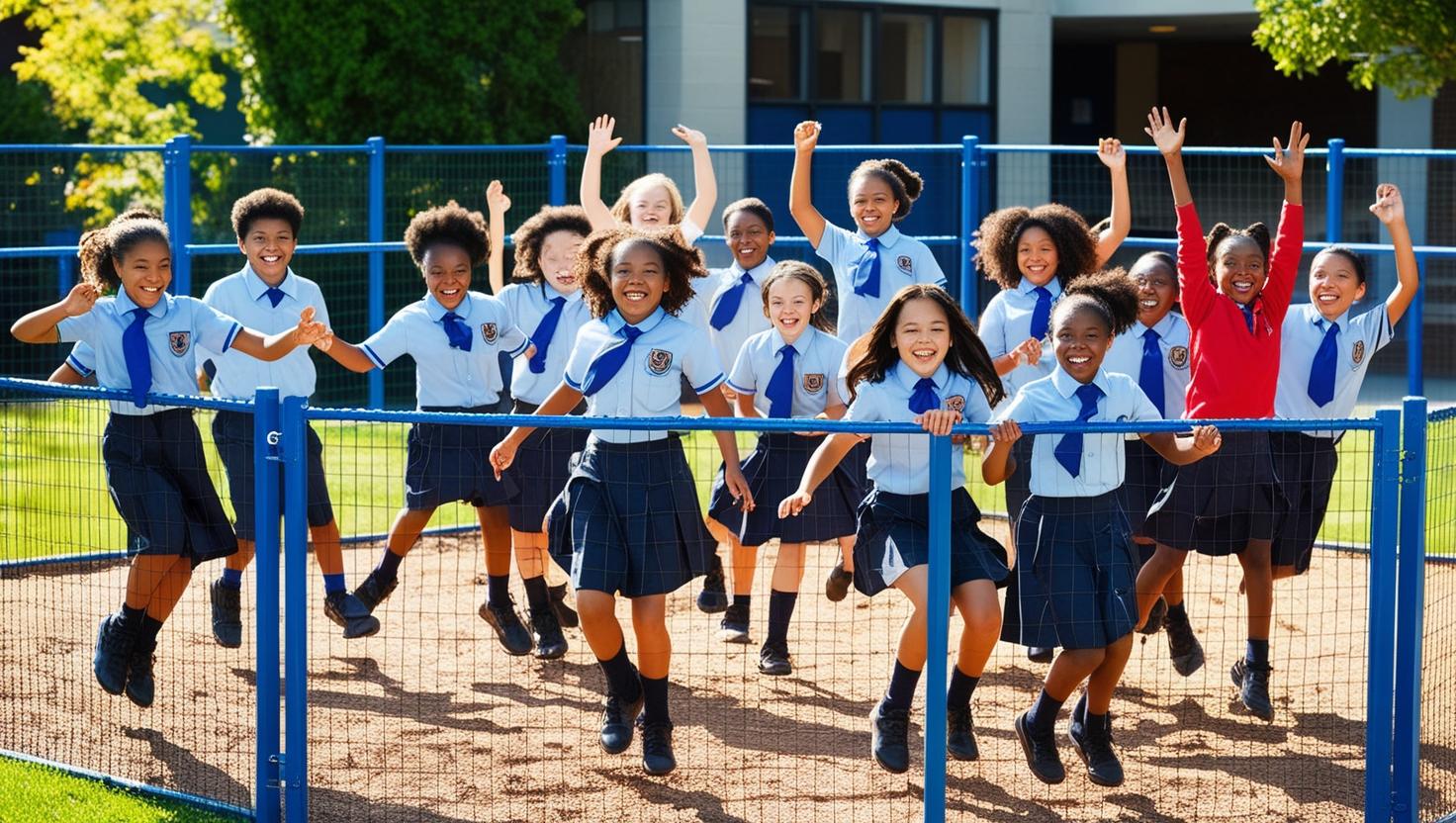
Here, we examine the range of subjects and courses offered in private schools, including core academic subjects, electives, advanced placement (AP) courses, and specialized programs. This section highlights how schools cater to diverse interests and academic needs.

View the most popular articles in Subject Specialization:

Single-Sex Education: An Overview

Updated
|
Single-Sex Education: An Overview
Sending your child to a single-sex school is one of several options you have when it comes to private schools.

When you think of single-sex education as a choice or an option when you are thinking about sending your child to private school, the subject becomes a little easier to understand in the 21st century. Historically private schools have offered single-sex education for decades. Indeed many of our older K-12 schools were founded with the purpose of educating boys or girls separately. That's the way things were done back in the 18th and 19th centuries. Colleges and universities were also set up as single-sex institutions. For example, Harvard University was an all-male university until 1977 when its sister college, Radcliffe, merged with it.

Characteristics of single-sex schools

How do we define a single-sex school? By definition, a single-sex school is a school which educates boys or girls exclusively. As a general rule classes will not be co-educational. On occasion, neighboring boys and girls schools which have an established relationship will host co-educational classes.

What grades do single-sex schools offer? Typically single-sex schools are high schools offering grades 9 through 12 and a Post Graduate year where available. A handful of single-sex schools offer the middle school grades 6 through 9. Even fewer schools offer PK-12. You will also notice that middle school grades go up to grade 9 and high school begins with grade 9 as well. Actually, grade 10 is probably the most common entry point for private high schools. That’s one reason for the overlap of the grades.

There are several different kinds of

. . .read more

A Look At An Athletic Academy

Updated
|
A Look At An Athletic Academy
Learn how modern sports academies balance rigorous academics, elite athletic development, NCAA preparation, and student support for aspiring athletes in 2026.

Editor's note: I recently asked Bobby Bossman, Director of SPIRE Academy, to explain and outline the kind of athletic programs and training the Academy offers. Specialized sports academies have expanded significantly over the past decade, giving young women and men the opportunity to pursue elite athletic development while maintaining college-preparatory academics. SPIRE Academy remains one of the leading examples of this model. ~Rob

For talented student-athletes, balancing academics and athletic development can be one of the greatest challenges of the high school years. SPIRE Academy was designed to address that challenge by combining flexible academic scheduling with individualized athletic training, sports performance programs, and college preparation.

Below, Bobby Bossman explains how the Academy approaches student-athlete development.

How Does a Specialty Institute Such as SPIRE Academy Handle the Balance of Academics and Athletic Training?

By having flexibility with each student's time and the ability to create custom daily schedules, our staff can plan the most appropriate training day unique to each student-athlete. Some athletes may require more or less time in academic training based on progress. We have the ability to accommodate accordingly by infusing more academic time when needed and allowing those who are ahead academically extra periods of athletic training.

This is versus the traditional high school setting that blocks students into a structured school day before athletic activities even begin.

SPIRE also has the ability to condense the academic portion of the day by removing some filler blocks such as study halls and physical education

. . .read more

What About A School For Gifted Children?

Updated
|
What About A School For Gifted Children?
As you begin to think about sending your child to private school, be sure to look at all your options.

Editor's note: I asked Melissa P. Earls, Head of School of Academy Hill School in Springfield, Massachusetts several questions about teaching gifted children. She very kindly offered the following answers. (I will disclaim that my youngest grandson attends Academy Hill School.) - Rob Kennedy

1. Why should parents consider sending their child to a school for gifted children?

Not every school is right for every child. And, even if a child is academically advanced, or gifted in any number of ways, a school that offers an enhanced, enriched curriculum with high expectations and increased rigor might not be the right fit. I would never push any school on any student. But, for our learners, and other students like them, Academy Hill is a terrific fit. We offer several programs that set us apart.

When looking for a school for a gifted child, it is critical that parents seek out an environment that will continuously engage the child in creative, student-driven tasks. It is important that the school allow core curriculum time and opportunities for students to pursue areas of interest in depth. It is imperative that the pace of instruction matches the student's ability to comprehend content, apply knowledge and acquire skills at faster speeds and with high proficiency. Because these children are usually eager learners, formative assessments, while necessary in any educational setting, may not be as frequent and certainly do not look the same as they would in other environments. For example, monthly,

. . .read more

What About a Foreign Language School?

Updated
|
What About a Foreign Language School?
A comprehensive guide to foreign language schools in the United States, exploring German, Japanese, French, and British educational options, with detailed listings of schools and insights into why families choose language-focused education.

In the United States, a foreign language private school is a school in which the primary language is not English. 80% of our population speaks English. Therefore, it follows that private schools that teach in other languages are few and far between.

I also want to point out the difference between a K-12 private school that uses a language other than English for teaching and intra-school communications and proprietary schools that offer instruction in foreign languages.

  • K-12 private schools that teach their students in German or French, for example, offer a comprehensive academic curriculum with specified goals and objectives for their graduates.
  • The proprietary foreign language schools generally aim to have their students achieve fluency at varying levels in a foreign language.
  • For example, you could learn how to speak Spanish in a business setting, starting at a beginner's level and working your way up to advanced proficiency.

Reasons Why You Would Consider Foreign Language Schools

Now, back to our original question.

  • Why would parents consider a foreign language school for their children?
  • For several reasons, the first of which is job-related.

Let's say that you are a German national who is an executive with a German firm with locations in the United States.

  • Your firm decides to post you overseas in the New York office.
  • Your children are ages 10 and 12.
  • What will you do about their schooling?
  • You know that the posting in New York is likely to be no more than three
. . .read more

Teaching Girls

Updated
|
Teaching Girls
Aren't girls more likely to succeed in a coeducational setting? Are there advantages to educating girls in a single sex setting? We look at some answers.

Why would anybody want to teach girls in a single sex setting? Aren't girls' schools quaint and out of touch? Aren't girls more likely to succeed in a coeducational setting? Are there advantages to educating girls in a single sex setting?

The answers to these and similar questions are varied, contradictory and subjective. Furthermore, the amount of research into girls' education is fairly limited. With those caveats in place let's explore some sources and resources for those special corners of the education world which are girls' schools.

Organizations which promote girls' schools

A good starting point for our exploration of girls' schools is the National Coalition of Girls' Schools. Just like the International Boys' Schools Coalition is one of the major umbrella organizations for boys' schools, so the National Coalition of Girls' Schools is one of the major umbrella organizations for girls' schools around the globe.

The NCGS champions girls' schools. And it champions them better and more vigorously than any other organization I know. The NCGS encourages research on the education of girls. It offers an Advanced Professional Certificate in Girls’ Education. "This unique blended learning program, which includes a separate track for STEM and for humanities faculty, helps teachers gain the expertise needed to forge a contemporary approach to teaching girls. It is intended for girls’ school educators who have distinguished themselves in classroom teaching and learning and wish to both learn from experts in the girls’ school community and connect with fellow learners."

. . .read more

Recent Articles

How Private Schools Handle Mid-Year Enrollment Changes and Tuition Refunds
Learn how private schools manage mid-year withdrawals, transfers, tuition refunds, enrollment contracts, and what families should expect financially.
Is Paying More Worth It? Mid-Tuition vs. Premium Private Schools
Compare academic outcomes, college admissions, class sizes, and value between mid-tuition and premium private schools to determine whether higher tuition delivers better results.
Financial Aid Appeals: When Should You Ask a Private School to Reconsider an Award?
Learn when and how to appeal a private school financial aid award, what documents to provide, and strategies that improve your chances of success.