Subjects

Updated
|
5 Facts About Waldorf Schools
Here are five facts about Waldorf schools to consider when choosing a private K-12 school for your child.

As you explore your elementary school options, take time to find out about Waldorf education. Waldorf schools, or Steiner schools as they are often called, had their genesis in the writings and philosophy of Austrian philosopher and social reformer Rudolf Steiner (1861-1925). To put Steiner into some sort of context, think of him as northern Europe's equivalent of Dr. Maria Montessori.

These two remarkable people shared something in common which would ultimately lead to the establishment of educational movements based on their philosophies and approaches: namely that children from the less-privileged stratae of society were capable of achieving the same levels of academic accomplishment as children from more privileged homes. The key to success was their approach to teaching children as well as their insistence that the traditional ways of educating children not be used. In addition, both Montessori and Steiner insisted on complete control of their schools. No state or local government interference would be tolerated.

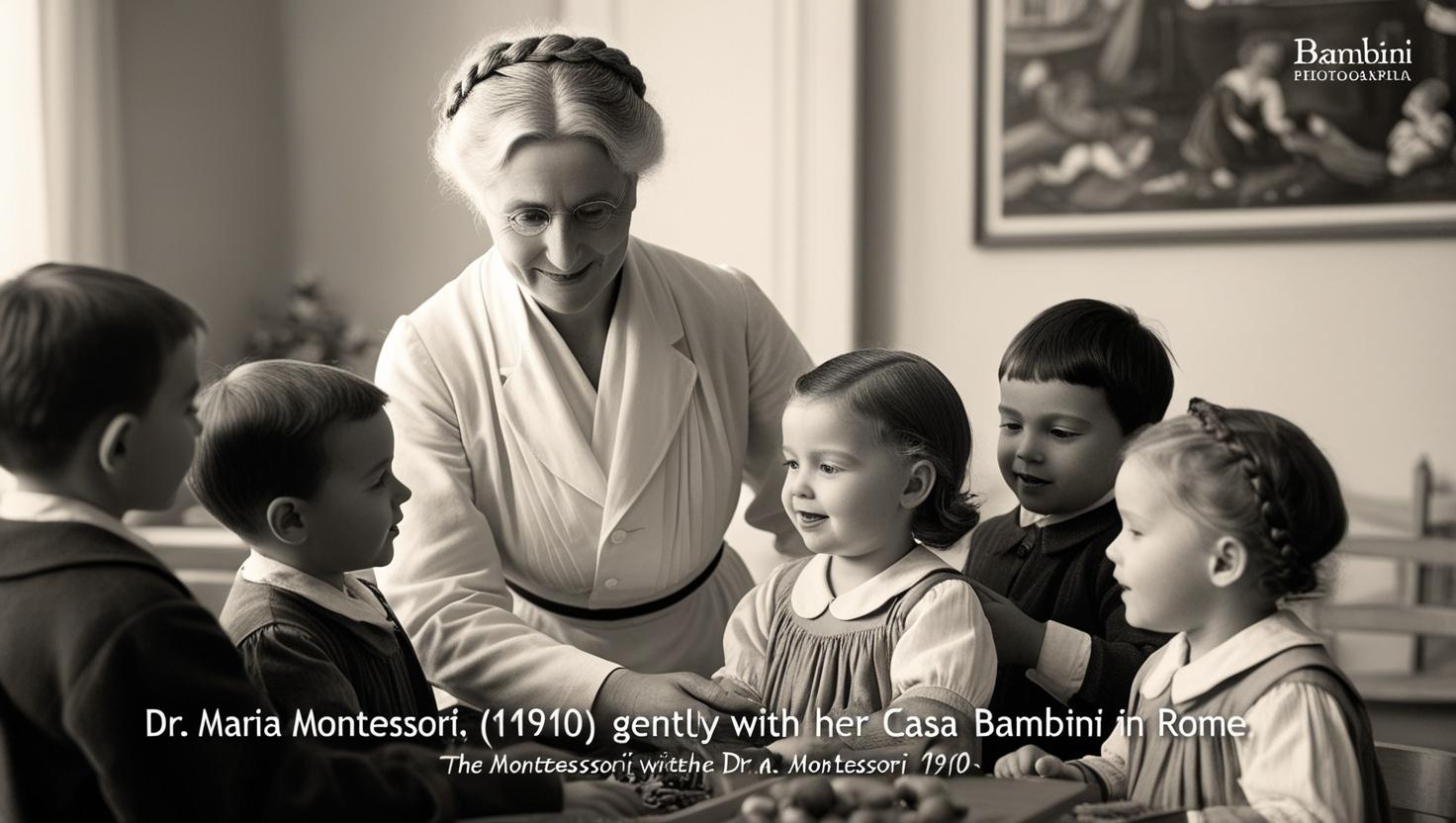
Maria Montessori established her school in the poorest neighborhood of Rome because she was convinced that every child, no matter what his social circumstances, was capable of learning. Dr. Montessori carefully observed the children in her school and recorded the results of her experiment.

Rudolf Steiner, like Dr. Montessori, earned a doctoral degree. He earned a Doctor of Philosophy from the University of Rostock in 1891 and established his first school for the children of factory workers in 1919.

Today Waldorf schools offer an alternative to traditional K-12 schools.
. . .read more

What Is A Montessori School? 5 Facts About Montessori Schools

Updated
|
What Is A Montessori School? 5 Facts About Montessori Schools
Wondering what a Montessori school is? If the school name says "Montessori", does that mean it is the real thing? Here are five facts about Montessori schools that parents of preschoolers want to know. We cover how the Montessori movement got started and explore some of its essential features.

5 Facts About Montessori Schools

What is Montessori?

Montessori is the name of a very popular approach for teaching preschool and primary-age children. We'll explore the reasons for its popularity later. First, let's examine how Montessori got its start. As with many great movements, Montessori began with an idea and some theories by one of those remarkable visionaries who dot the pages of history.

Life and Work of Dr. Montessori

Dr. Maria Montessori (1870-1952) was born and raised in Italy.

  • She came from a family of modest means.
  • Her father did not approve of her desire to be educated, much less to become a doctor.
  • Women didn't do such things back at the end of the 19th century.
  • Despite the many obstacles that stood in her way, Maria earned her degree from the University of Rome in 1896.
  • Her specialty was pediatric medicine.

While Dr. Montessori worked towards her degree, she studied and worked with mentally disabled children. She got her chance to put her experience, observations, and theories into practice when she was invited to open a school for the children of working-class families in 1907.

  • The school was located in a low-income housing project in Rome.
  • The first Casa dei Bambini was a traditional school with desks, chalkboards, and all the other accouterments of classrooms of the day.
  • Dr. Montessori herself did not teach.
  • She left that task to the building porter's daughter.

. . .read more

Choosing an Elementary School

Updated
|
Choosing an Elementary School
You would think it would be easier to get your child into an elementary or primary school than into a prep school. But in fact it is almost as complicated.

You would think it would be easier to get your child into an elementary or primary school than a prep or high school, right? Not exactly. Depending on where you live, demand for places in elementary schools may be greater than the supply. The other issue frequently encountered is the style of teaching. With all of these things and more in mind, let's explore what's involved in getting your child into private elementary school.

Supply and demand

Places for the best elementary schools are always going to be in demand. What do I mean by best schools? Mostly 'best' is a subjective description because there are no rankings of private schools available. Much of a school's reputation rests on things like its campus and facilities as well as the quality of the curriculum and teaching. It is amazing how word gets around about such things but it does.

If you live in cities like New York, Boston or Washington, you literally will need to put your child's name on the list shortly after birth in order to even get an interview at some of the most sought after schools. Well, I am exaggerating a tad. Perhaps not that soon, but don't delay calling the schools and finding out their admissions procedures. Do it well in advance. Two years ahead of time is not too early.

Determine the kind of school you want

This part of the process is the toughest. It is also probably the most important. It

. . .read more

5 Clues That It Might Not Really Be Montessori School

Updated
|
5 Clues That It Might Not  Really Be Montessori School
This article outlines five key indicators to help parents identify authentic Montessori schools. It emphasizes the importance of self-directed learning, multi-age classrooms, cultural emphasis, and proper teacher credentials in genuine Montessori environments.

Dr. Maria Montessori founded Casa de Bambini in a poor neighborhood of Rome, Italy, in 1906. She blazed new trails in early education by believing in the innate goodness of children, encouraging them to be curious and explore, and creating a teaching environment that followed the child.

Dr. Montessori's experiments and research ultimately produced a worldwide movement. Over 100 years later, her findings and research have stood the test of time and have been validated by modern analysis and investigation. Montessori schools have multiplied like rabbits in the United States from the 1960s onwards. Unlike Dr. Montessori's schools, which served poor children, most Montessori schools in North America educate children from the middle classes. Indeed, the Montessori approach has been used with children in all kinds of situations. It is very adaptable to the needs of a wide range of children.

Dr. Montessori never trademarked the name Montessori, nor did she claim any patents on her methodology. The result is that many Montessori schools out there claim to be the real thing. Some schools may include elements of Dr. Montessori's methods and philosophy in their teaching. Other schools quietly sublimate the parts of Dr. Montessori's thinking that may be inappropriate in their setting. In short, there are almost as many flavors of Montessori as there are schools. Not a bad thing in itself, but as always, do your due diligence. Caveat emptor!

Five Things to Look For

Here are five things you should look for

. . .read more

The Scramble for Places in Primary Schools

Updated
|
The Scramble for Places in Primary Schools
This article discusses the competitive nature of securing spots in primary schools. It likely addresses the challenges parents face, strategies for successful enrollment, and the factors contributing to the high demand for quality primary education.

This article has been updated to reflect 2026 data and recent developments.

If you live in New York or San Francisco, you probably already know how difficult it is to get your toddler into a good primary school. You almost have to register for a place before she is born. The problem is that primary schools are extremely limited in places in most major metropolitan areas. Consequently, parents will do almost anything to get their children into a desirable school. Back in the 50s and 60s, when I was growing up, pre-schools and nurseries were hard to find. That's because most mothers were stay-at-home mothers. Looking after the children was just part of the job description of a mother then. That began to change as more mothers began to work outside the home. In the 70s and 80s, preschools and nursery schools became a hot commodity. So, how do you position your child so she has the best chance of getting into a good primary school?

In 2026, the basic advice remains the same, although admissions procedures vary widely by school and market. Families should check each school's current age requirements, application dates, interview or observation procedures, and admissions priorities. Private School Review's Private School Admission Process: 2026 Complete Guide provides a current overview of the process.

In this video, Denise Pope offers advice on finding an elementary school.

1. Make sure your
. . .read more

Recent Articles

Should Your Child Stay at the Same Private School K–12?
Explore whether your child should attend the same private school from kindergarten through graduation, weighing academic continuity, friendships, changing needs, tuition costs, and opportunities at different educational stages.
When Your Child's Closest Friends Leave Private School
Learn how to support your child when close friends leave private school, manage loneliness, maintain friendships, encourage new connections, recognize emotional challenges, and decide when additional school support is needed.
When Your Child Doesn't Connect With Their Teacher
Discover when parents should intervene if their child struggles to connect with a private school teacher, including warning signs, communication strategies, classroom concerns, and practical steps toward improving relationships.

Elementary School