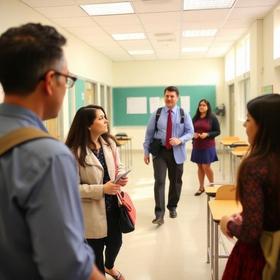
An open house is an excellent way to begin evaluating a private school, but it is only the first step in making one of the most important educational decisions for your child. Schools understandably put their best foot forward during these events. Tours are organized, faculty members are available to answer questions, and student ambassadors help create a welcoming atmosphere.
A second visit offers something different. Without the structure of a formal admissions event, families have the opportunity to see the school in its everyday rhythm. Classrooms are operating normally, students are interacting naturally, and faculty members have more time for meaningful conversations. These observations often provide the confidence needed to make a final enrollment decision.
If you have narrowed your choices to two or three schools, scheduling a follow-up visit can help confirm whether the school truly aligns with your child's academic, social, and personal needs.
Why a Second Visit Matters
Open houses are designed to introduce prospective families to a school. Because many visitors attend at once, conversations tend to focus on broad topics such as curriculum, extracurricular activities, admissions requirements, and campus facilities. While these events are informative, they rarely allow families to experience daily school life.
A second visit shifts the focus from presentation to observation. Instead of listening to prepared remarks, you can watch classrooms in action, notice how teachers interact with students, and experience the atmosphere during a typical school day.
Private School Review's article on Private School Admissions: Open Houses explains how open houses introduce families to a school while individual visits provide opportunities for more personalized evaluation.
Observe the School Between Classes
Some of the most revealing moments occur outside the classroom. Hallways, common areas, and transitions between classes offer valuable insight into the school's culture.
Notice whether students greet teachers comfortably or simply hurry past them. Observe whether younger students appear supported by older classmates. Watch how faculty members interact with students when they are not formally teaching. These small moments often reveal far more about a school's environment than carefully prepared presentations.
According to the National Association of Independent Schools, school culture and community play a significant role in student success and long-term engagement.
Spend Time Inside Real Classrooms
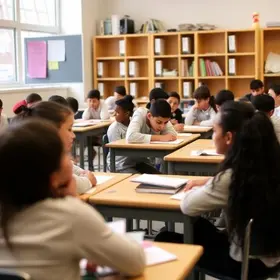
Whenever possible, ask whether you may quietly observe several classes in progress. Every school has impressive facilities, but the classroom remains the heart of the educational experience.
Pay attention to how students participate in discussions, whether teachers encourage questions, and how actively students engage with the material. Consider whether the classroom feels collaborative, respectful, and intellectually curious.
Private School Review's guide, The Visit, encourages parents to focus on classroom interactions rather than simply evaluating buildings or technology.
Look Beyond Facilities
Beautiful campuses often make a lasting first impression, but impressive architecture alone does not guarantee an outstanding educational experience.
Instead of concentrating solely on modern buildings or athletic complexes, consider how those spaces are actually being used. A library filled with students studying independently may say more about a school's academic culture than a recently renovated science building.
Likewise, notice whether common areas encourage collaboration, whether classrooms feel welcoming, and whether students appear comfortable using campus resources throughout the day.
Private School Review discusses balancing facilities, academics, and culture in its article on Evaluating and Choosing a Private School.
Talk With Teachers, Not Just Admissions Staff
Admissions professionals are excellent resources for explaining the application process, financial aid, and academic programs. However, teachers provide an entirely different perspective on the student experience.
Ask faculty members about their classroom philosophy, how they support struggling students, and how they communicate with parents. Their responses often provide insight into the school's priorities and educational values.
Notice whether teachers speak enthusiastically about their students. Genuine passion for teaching is difficult to manufacture and often reflects a healthy school culture.
Ask More Meaningful Questions
Because your first visit likely covered basic admissions information, use your second visit to explore deeper topics.
Rather than asking about test scores or graduation requirements, ask questions that reveal how the school operates on a daily basis. You might inquire how new students adjust during their first semester, what support systems exist when academic challenges arise, or how teachers help students develop independence and confidence.
The Enrollment Management Association recommends that families learn as much as possible about a school's student support systems before making enrollment decisions.
Evaluate Communication
Strong schools recognize that education is a partnership between teachers and families.
Ask administrators how parents receive updates throughout the school year and how concerns are addressed. Find out whether teachers communicate regularly through conferences, digital platforms, or personal emails. Schools that prioritize clear communication often build stronger relationships with families and respond more effectively when challenges arise.
Equally important is observing how staff members communicate during your visit. Are questions answered thoughtfully? Does everyone seem approachable? These impressions often reflect the school's overall organizational culture.
Speak With Current Parents
One of the most valuable sources of information is a parent whose child currently attends the school.
Their experiences can help you understand what daily life actually feels like beyond the admissions process. Parents can often discuss homework expectations, communication with teachers, extracurricular participation, and how well the school supports students during transitions.
While every family's experience will differ, speaking with several parents can provide a balanced perspective that complements information shared by admissions staff.
Pay Attention to Your Child
Parents naturally evaluate academic quality, financial considerations, and long-term outcomes. Children, however, often notice different aspects of the school.
After your visit, encourage your child to describe specific observations rather than simply asking whether they liked the campus. Ask which classroom seemed most interesting, whether they could picture themselves making friends there, and how comfortable they felt interacting with teachers and students.
These conversations often reveal concerns or excitement that might otherwise remain unspoken.
Compare Schools While the Experience Is Fresh
Once you have completed second visits, take time to compare your observations before memories begin to blur.
| Evaluation Area | Questions to Consider |
|---|---|
| Classroom Environment | Were students actively engaged? |
| Teacher Relationships | Did faculty seem approachable and supportive? |
| Student Culture | Did students appear respectful and welcoming? |
| Communication | Were administrators transparent and responsive? |
| Overall Fit | Could your child genuinely thrive here? |
Recording your impressions shortly after each visit helps separate objective observations from emotional reactions.
Private School Review's article, What Is Really Important in Choosing a School?, encourages families to focus on finding the right educational fit rather than relying solely on rankings or reputation.
Look for Consistency
Perhaps the greatest value of a second visit is confirming whether your initial impressions remain consistent. Schools that demonstrate warmth, engagement, and academic excellence on an ordinary school day are often those that deliver a strong educational experience over the long term.
If your first visit left you excited, the second visit should reinforce those feelings through authentic interactions rather than polished presentations. Conversely, if new concerns emerge during a typical school day, they deserve careful consideration before making a final decision.
Final Thoughts
Selecting a private school involves far more than comparing tuition, facilities, or academic rankings. The best choice is one where your child will feel challenged, supported, and genuinely connected to the school community.
A thoughtful second visit allows families to move beyond first impressions and evaluate the qualities that matter most over the course of many school years. By observing everyday interactions, speaking with teachers and current parents, and involving your child in the evaluation process, you will be better equipped to choose a school with confidence and clarity.