Elementary School

Teaching methods, admissions processes and resources relevant to private elementary schools. Learn the difference between Montessori and Waldorf approaches. Get great tips on choosing an elementary school. And find tips and resources to aid you in the admissions process.

View the most popular articles in Elementary School:

Enrichment Resources For Children Ages 10-14

Updated
|
Enrichment Resources For Children Ages 10-14
Here are some apps, YouTube Channels, and podcasts suitable for enriching the studies of students ages 10-14.

As I was doing my research for this article, I found myself thinking back to when I was 12 years old. My folks were good parents, but they didn't have the means to enrich my elementary and junior high school education. I always did my homework and practiced piano pieces, but I wanted more. That's why the Westmount Public Library became one of my favorite after-school haunts. I could explore anything and everything, and I did. That was then. Now, look at the resources my grandchildren have in a device that fits in their hands.

So, with that in mind, here are some apps, YouTube Channels, and podcasts suitable for enriching the studies of students ages 10-14. (We'll look at resources for younger and older students in another article.)

Apps

You can find most of these apps in your smartphone's store. Most are free. Take time to review and sample these apps yourself. Doing so will lead to some interesting conversations with your child. Exchanging ideas and opinions will help forge a strong relationship with your young person.

  • Khan Academy : This app provides a wide range of free lessons on various subjects, including math, science, history, and more.
  • Duolingo : Duolingo is a language learning app that can help students to learn a new language in a fun and engaging way.
  • Quizlet : This app allows students to create flashcards and study sets for various subjects, including math, science, history, and more.

. . .read more

Student Health Records: Vaccinations

Updated
|
Student Health Records: Vaccinations
Most parents have questions about vaccinations. We look at the big picture and offer some sources for you to do your own research.

I grew up when polio, whooping cough, and chicken pox were the diseases parents dreaded. I remember getting shots in August before school started. That doctor's visit always seemed to be combined with visits to the shoe store for a new pair of black leather school shoes, the department store for a new pair of grey dress shorts, white shirts, and a school tie. Yes, the Westmount Public Schools had a uniform code back then.

Fast forward to the 21st century when 99% of private schools will require your children to be vaccinated. I was curious about where things stand. Here's what I discovered.

What entity requires vaccinations?

The department of health in each state publishes a list of vaccinations required by law for children. It also will list recommended immunizations. The wording will vary from state to state, of course. For example, North Carolina's K-12 School Requirements spells out the vaccinations required at each age level. It also provides details about why a particular vaccination is required and links to further information from authoritative sources such as the Centers for Disease Control.

This video reports on the vaccinations required for children attending school.

Which vaccinations are commonly needed?

The major Los Angeles healthcare organization Cedars-Sinai offers a list of immunizations needed for students ages 7 to 12.

  • 4 doses diphtheria, tetanus and pertussis (DTaP, DTP, DT, Tdap or Td); 3 doses OK if
. . .read more

How To Have Successful Parent-Teacher Conference

Updated
|
How To Have  Successful Parent-Teacher Conference
The parent-teacher conference is a wonderful opportunity to discuss your child's progress. Make the most of it by preparing yourself both emotionally and intellectually for this special, brief time with your child's teacher.

As a parent and a teacher, I have been on both sides of the parent-teacher conference. Sometimes I have wondered whether we were discussing the same child. Most of the time, parents have listened intently as I pointed out their child's strengths and weaknesses. Occasionally I have had to deal with defensive parents and parents with unreasonable expectations.

Read the excellent article entitled Tips for Parents on Parent-Teacher Conferences on the National Education Association site. Against this backdrop, here are a few suggestions to help you have a successful parent-teacher conference.

This video offers an example of a parent-teacher conference.

Show up.

You have to show up to have a successful meeting with your child's teacher. That sounds so obvious, doesn't it? I can clearly remember times when the parents with whom I wanted to meet were no shows. Perhaps there was a good reason why they missed their parent-teacher conference. However, in most of those cases, I don't recall receiving a phone call or a note explaining what happened. As soon as you receive your parent-teacher conference appointment, save it in your smartphone's calendar and Google calendar. If you cannot attend for some valid reason, text, or email your child's teacher as soon as possible. Ask to re-schedule the conference.

Arriving for the conference.

Arrive at the school at least 10 minutes early for your conference. If the conference before yours was canceled

. . .read more

Summer Programs

Updated
|
Summer Programs
A long summer break offers plenty of time for a wide range of activities for every age group. Here are some of the options available.

A long summer break has been a fixture of the schedule in most private schools seemingly forever. Three months or more offers plenty of time for a wide range of activities for every age group. Here are some of the options available.

Sports camps

Many private schools rent out their facilities to outside organizations which run sports camps. The last time I checked, there seemed to me to be a camp available for almost any sport you could imagine. And they were offered at various age levels too.

Tech summer sessions

Ages ago we called these computer camps. Nowadays they are called tech camps. They will teach your daughter robotics, code, game development, design and much more. IDTech and Emagination Tech camps are just two of the commercial companies offering tech courses on college campuses here in the United States and abroad.

This video offers a peak at an IDTech summer tech camp.

Your local community college probably has tech camps too. Wake Tech in my area has fifteen tech camp options including such popular offerings as drones, video game design and more. Our sister site, Community College Review has a powerful search tool which will help you find a community college near you.

Day and overnight camps for children with special needs

Your child attends a school for children with special needs. What will

. . .read more

5 Facts about Montessori, Waldorf & Reggio Emilia Schools

Updated
|
5 Facts about Montessori, Waldorf & Reggio Emilia Schools
We take a detailed look at the three popular early childhood methods to help you determine which one best suits your needs and requirements.

Montessori, Waldorf, and Reggio Emilia-inspired schools are three highly-regarded early education methods. Here are five facts about each method together with links and videos to additional materials which I have selected to enhance your research. Choosing the right school for your child is a process. Follow all the steps in that process and you will be rewarded with a good result. Cutting corners or waiting until the last minute will stress you out and not produce the intended results.

Five Facts about Montessori

Montessori is the name of a very popular approach for teaching preschool and primary age children. We'll explore the reasons for its popularity later. First, let's examine how Montessori got its start. As with many great movements, Montessori began with an idea and some theories put forth by one of those remarkable visionaries who dot the pages of history.

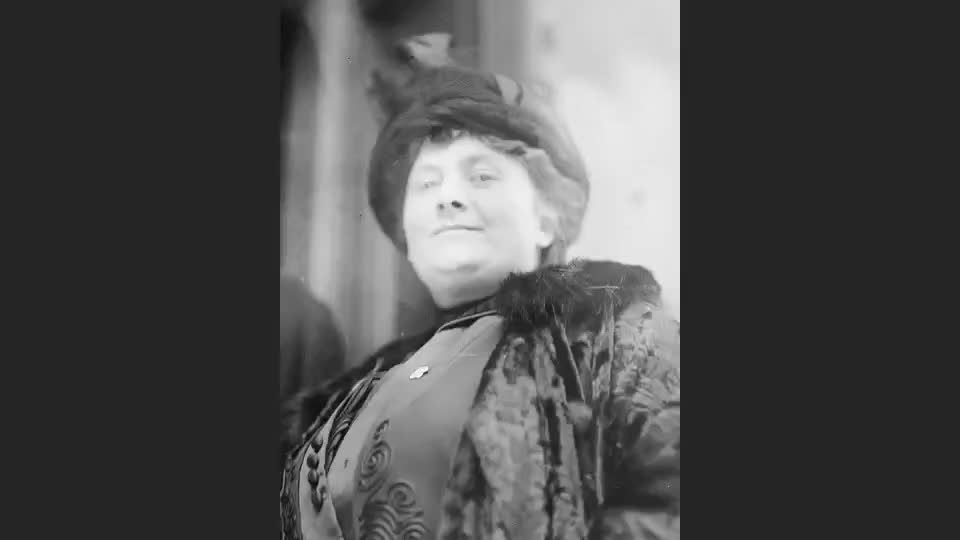
Dr. Maria Montessori (1870-1952) was born and raised in Italy. She came from a family of modest means. Her father did not approve of his daughter's desire to be educated much less to become a doctor. Women didn't do such things back at the end of the 19th century. Despite the many obstacles which stood in her way Maria earned her degree from the University of Rome in 1896. Her specialty was pediatric medicine.

While Dr. Montessori was working towards her degree, she had studied and worked with mentally disabled children. She got her chance to put her

. . .read more

Recent Articles

Should Your Child Stay at the Same Private School K–12?
Explore whether your child should attend the same private school from kindergarten through graduation, weighing academic continuity, friendships, changing needs, tuition costs, and opportunities at different educational stages.
When Your Child's Closest Friends Leave Private School
Learn how to support your child when close friends leave private school, manage loneliness, maintain friendships, encourage new connections, recognize emotional challenges, and decide when additional school support is needed.
When Your Child Doesn't Connect With Their Teacher
Discover when parents should intervene if their child struggles to connect with a private school teacher, including warning signs, communication strategies, classroom concerns, and practical steps toward improving relationships.

Elementary School