
Getting into Private School

Here we cover the private school admissions process from the application to the interview. Get information on how admissions works, when and how to apply, and tips on preparing for testing and interviewing. Learn what you should look for on a school visit and questions you should ask during the interview.

View the most popular articles in Getting into Private School:

Applications - The Parent's Statement

Updated
|
Applications  - The Parent's Statement
Learn how to write an effective Parent's Statement for private school admissions in 2026. Discover what admissions teams want to learn about your child, how to answer thoughtfully, and how to strengthen your family's overall application.

I wrote this article and its companion article Applications - The Candidate's Statement to explain how to understand and complete these important forms. The problem with these parts of the application is that they require you and your child to express your thoughts in your own words. You won't be able to check any boxes to select from prepared answers. You will have to write out responses to the school's questions in any way you choose.

In 2026, most private school applications are completed online, but the purpose of the Parent's Statement remains the same. The school wants thoughtful, specific answers that help it understand your child and your family's expectations.

Many schools require a statement from the applicant's parents. After all, you probably know your child better than anybody. The school also wants to know what your concerns and educational objectives are. The goal here is to make sure that everybody's expectations are the same. For example, if you want your son to play on a varsity hockey team and the school offers limited hockey time, you need to deal with that before you decide to send your son to that school. Perhaps your daughter finds math challenging. You will want to point that out so that the school can discuss how it might deal with that concern.

The following questions posed by McCallie School and The Hun School are
. . .read more

Do Your Child's SSAT or ISEE Scores Really Matter?

Updated
|
Do Your Child's SSAT or ISEE Scores Really Matter?
This article examines the significance of SSAT and ISEE scores in private school admissions. It discusses how schools use these scores, their impact on applications, and provides context on their importance relative to other admission factors

This article has been updated to reflect 2026 data and recent developments.

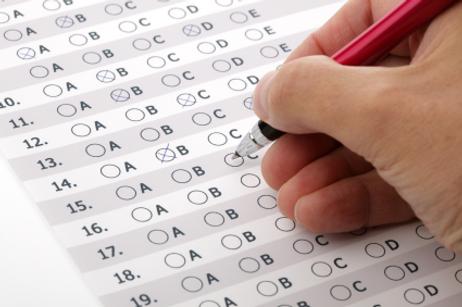
Standardized admissions tests are part of the drill in most private school admissions offices. You may well be wondering why your child's academic transcripts and teacher recommendations from her current school are not sufficient. Why is it necessary to prepare and register for a standardized admissions test? The results of a standardized admissions test indicate to the school what your child knows and doesn't know academically. Essentially, it would serve no purpose to accept your child only to have her flounder academically. You would be unhappy. Your child would be miserable. The school would also be in a difficult position of being unable to deliver the academic results it can achieve. To avoid this losing situation, most private schools will insist on all applicants taking a standardized admissions test. In 2026, requirements vary by school, so families should confirm each school's current admissions testing policy.

SSAT and ISEE

The two most commonly used admissions tests are the SSAT and ISEE. These tests measure your child's language and math skills. How do the admissions offices use the test scores the testing organizations send them? Primarily for comparison purposes. For example, if a school has an applicant pool with an average verbal score of 600 and yours is 700, you will be at the top of the list in that one aspect of all the factors the school looks at. Conversely, if your quantitative score is 550 and

. . .read more

Admissions Test Preparation: 2 Strategies

Updated
|
Admissions Test Preparation: 2 Strategies
Admissions tests are supposed to measure accomplishments. But what if your child has serious problems in math or English? What do you do then?

Admissions tests in private schools are supposed to measure your child's aptitude and readiness for the work in a serious private prep school. They are merely one tool for assessing a child's progress to date. Some children have learned their lessons well. Some children take tests well. Other children have deficiencies in certain skill areas. Still, others do not test well.

Long-term Test Preparation

In a perfect world, every child would master all the skills necessary to succeed academically. But children learn differently. Their teachers teach the same material differently. The school expects certain results in certain subject areas. That's why a standardized admissions test is a critical part of most private school admissions requirements.

If you can take the long-term approach to admissions test preparation, it certainly is the ideal. But you need to start a few years out from the actual admissions test itself. Here's what to do:

  1. Monitor your child's progress carefully.

    Identify any deficiencies and remediate them. Hire tutors if necessary. Create and maintain a climate for academic success. Set expectations accordingly.

  2. About eighteen months before the admissions test date, purchase the test preparation materials which are so widely available.

    Read about the test your child will be taking. Understand what is required. Then have your child take at least 2 practice tests six months before the actual test date. That will give you enough time to tweak any parts of the test

. . .read more

5 Tips for a Successful Admissions Interview

Updated
|
5 Tips for a Successful Admissions Interview
When you meet with the admissions staff, create a favorable impression by following these tips.

When you and your child visit schools that you are seriously interested in, you will also have an appointment with the admissions staff. Depending on the school, you might even meet with a dean or perhaps the head of school. Obviously, when you meet with these people, you will be trying to put your best foot forward. However, you will be in unfamiliar surroundings. So, my advice is simply to relax. Stay calm. Above all don't let your nerves get the better of you. Follow these tips for a successful admissions interview.

1. Don't draw attention to any minor learning issues.

I am not for a minute advocating that you cover anything up. Nor am I suggesting that you dissemble. What I am reminding you of is the fact that admissions staff are professionals. They have reviewed hundreds, even thousands of applications over the years. They know how to interpret test scores and transcripts. So let the test scores and academic records speak for themselves. Blurting out that your son has a slight learning difficulty is not going to enhance your chances of his getting into schools. It will not matter much in others. On the other hand, if he has been diagnosed with dyslexia or ADD, or some other learning difficulty, then you need to be applying to a school that has qualified staff and programs in place to address those learning issues. But your son's B grade in mathematics or his lack of prowess

. . .read more

What If You Cannot Visit The School?

Updated
|
What If You Cannot Visit The School?
Distance and finances may preclude your actually visiting schools. But you have some other options.

Many applicants live at great distances from the schools which they would like to visit. If you live in Asia or Europe, for example, it is not always financially or logistically possible to visit schools in person. What alternatives exist for those situations? Actually several. Off campus, school visits come in a couple of flavors.

Admissions Staff Visits Overseas

Many private schools send their admissions staff overseas to major cities in countries where they have a substantial applicant pool. Ask for details of visits in your area. While you will have to rely on the school's video and web presentations of its school life and activities, at least you will have a live person to whom you can pose questions. If English is not your first language, this meeting with school officials will give you a deadline to meet. After all, you are planning to attend school in a country where English is the instructional language used in most classes. You will be expected to have your interview in English.

This video describes the features of private schools.

Interviews With Local Alumni

Just like many universities and colleges do, private schools also will arrange an interview with an alumnus or alumna who lives in your local area. This is a quite common practice for meeting candidates who live here in the United States. Remember that most schools are looking for qualified candidates who may not have

. . .read more

Recent Articles

Private School Tuition Insurance: Is It Worth Buying?
Is private school tuition insurance worth buying? Learn what policies cover, compare costs and exclusions, and decide whether protecting your tuition investment makes financial sense for your family.
Medical Leave and Private School Tuition: Parent Guide
What happens to private school tuition during medical leave? Learn about refunds, tuition insurance, enrollment contracts, financial aid, and protecting your child's education while managing unexpected medical expenses and recovery.
Private School Commute: Is the Travel Time Worth It?
Is the commute to private school worth it? Learn how to calculate travel time, protect family routines, assess student well-being, and decide whether a longer journey makes educational sense.

Getting into Private School

HOW ADMISSIONS WORKS
The private school admissions process can be competitive. Explore the process, compile your profile and submit your application with help from our tips and tools. Explore the challenges of getting into private school and the most common mistakes made during the admission process.
APPLICATIONS
An in depth look at the private school application process. From teacher recommendations to the acceptance letter, we'll explore some of the most crucial aspects of applying to private school. Learn more about when and how to apply, why the deadlines are important and what to do when your child is accepted.
TEST PREPARATION
Standardized tests are a large part of the admission process at many private schools. Here you'll find information on the most commonly used exams and how to prepare for them. Explore the tests, what the scores mean, and how the schools will use them.
SCHOOL VISITS AND INTERVIEWS
School visits and interviews are an integral part of applying to private school. Learn why it's important to visit and what to do if that is not possible. Explore school visit options like open houses and shadowing. Get valuable tips on a successful interview and learn what questions you should be asking.