Pathways to Elite Colleges

Navigate the journey to higher education with expert guidance. From academic preparation and testing to applications and financial planning, explore tailored insights to ensure a seamless transition from private school to elite institutions.

View the most popular articles in Pathways to Elite Colleges:

Reevaluating the Path: Private School Graduates and Alternative Post-Secondary Options

Updated
|
Reevaluating the Path: Private School Graduates and Alternative Post-Secondary Options
How private school families in 2025 assess community college, gap years, and transfer pathways while planning for post-secondary success.
Navigating Post-Secondary Choices for Private School Graduates in 2025Introduction

Private School Review’s mission is to help families understand, evaluate, and navigate K–12 private education. A significant part of that journey involves preparing for what comes next. While many families associate private education with a traditional four-year university trajectory, today’s post-secondary landscape is more diverse. Community colleges, structured gap years, transfer pathways, and early college programs have become relevant options for some graduates who seek flexibility, affordability, or a more personalized transition into higher education.

This updated article focuses specifically on how private school students and their families can evaluate community college as one of several legitimate post-secondary choices. Although Private School Review does not rank or promote specific institutions, understanding motivations, outcomes, and planning considerations helps families make informed decisions aligned with their child’s goals.

Why Some Private School Graduates Consider Community CollegeCost-Efficiency and Financial Strategy

Even families who invest significantly in private school tuition may look for ways to manage future financial commitments. Community colleges offer accessible entry points into post-secondary study at far lower cost than four-year institutions. For students who want to complete foundational coursework before transferring, this approach can preserve family resources for later years when major-specific programs become more expensive.

Academic Reset and Transition Support

Private schools vary in rigor, pace, and structure. Some graduates feel academically stretched or uncertain about their long-term goals. Community colleges often provide supportive environments with smaller introductory classes,

. . .read more

Expelled for Smoking Pot: What Parents Need to Know

Updated
|
Expelled for Smoking Pot: What Parents Need to Know
We explore the consequences of marijuana use in private schools, discussing expulsion policies, legal implications, and impacts on college admissions. This Q&A format article provides insights for parents navigating disciplinary actions and offers advice on prevention and support for students.

Expelled for Smoking Pot: What Parents Need to Know

Most private schools have Codes of Discipline that will not tolerate substance abuse. Smoking pot or drinking alcohol are common examples of substance abuse. I am bringing this up because many parents think that they can appeal disciplinary action a school brings against students. The problem is that students attending a private school are covered by what is known as contract law. In a public school they would have rights. That is not the case in a private school. Students' rights are clearly spelled out in the contract parents and the school sign.

Here, then, are some common questions parents have about private school discipline and how infractions of the school's discipline code are usually handled.

Parent: My child has been expelled for smoking pot at their private school. I'm shocked and don't understand why the consequences are so severe. Can you explain?

School: We understand this is a difficult situation. Private schools have strict policies regarding substance abuse, including marijuana use. When students break these rules, they face immediate consequences, often including expulsion. This is because private schools operate under contract law, which allows them to take action in disciplinary matters compared to what can happen in public schools.

Basically, it means that if you go to a private school, you are not covered by the same laws as you were when you attended public school. Private schools are covered by something called contract law. It

. . .read more

How to Study for an Exam

Updated
|
How to Study for an Exam
Practical advice for parents guiding children through exam preparation, featuring proven study methods and age-appropriate learning techniques.

How to Study for an Exam

Exams can be nerve-wracking at any age. So, show your child where exams fit in and, more importantly, how to prepare for them. From early grades, teachers evaluate your child's learning through different methods.

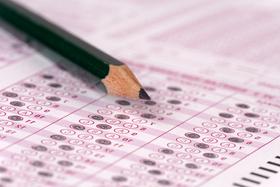
Canva generated this picture of a student studying for an exam.

The Purpose of Exams

Exams are a formal, structured method of assessment.

  • Unfortunately, what makes exams stressful in high school, college, and in our professional lives is that so much is riding on them.
  • For example, you must pass the LSAT to get into law school.
  • Then, you must pass a state bar exam to practice law.
  • The pressure to succeed is enormous.

That's why I recommend you tell your child how you handled preparing for and taking the exam. The more your child understands how exams work and how to handle them, the more successful she is likely to be.

Exams and tests are a great way to assess what the students have learned with regards to particular subjects. Exams will show what part of the lesson each student seems to have taken the most interest in and has remembered. Source: Edu-Quip

Understand Your Learning Style

As soon as you can, identify your child's learning style.

  • Observe her preferences and tendencies in how she processes and retains information.
  • Contrast that with how you learn
. . .read more

Volunteering at Your Children's Private School

Updated
|
Volunteering at Your Children's Private School
This article emphasizes the importance of parental involvement in private schools, highlighting various ways parents can contribute to their child's educational experience. From joining the Parent-Teacher Association (PTA) to offering specialized skills, volunteering not only enhances the school community but also sets a positive example for children. The article explores opportunities such as classroom assistance, technology support, music and arts programs, alumni engagement, fundraising, and event coordination.

Volunteering at Your Children's Private School

Private schools thrive on the active involvement of parents in various aspects of their children's educational experience.

  • These institutions greatly value the contributions of parents in creating a vibrant and supportive community.
  • Volunteering at your child's private school fosters a stronger connection with the institution.
  • It also sets an excellent example for your child.

As a parent who volunteered and supported my child's PTA, I'll share various ways you can get involved and make a meaningful impact on your children's educational journey.

Canva generated this picture of a PTA meeting.

Parent-Teacher Associations (PTA)

Most private schools have a Parent-Teacher Association (PTA) that plays a crucial role in building a strong school community.

  • Joining the PTA provides parents with opportunities to participate in school-wide initiatives, fundraisers, and events.
  • These organizations often serve as a bridge between parents, teachers, and school administrators.
  • A well-organized, well-run PTA can also become one of your school's most effective marketing tools.
  • Satisfied parents talk and spread the word about the school, which means so much to them.

This video explains why it is important to be involved in your school's parent-teacher organization.

Classroom Assistance

Offering to assist in your child's classroom is an excellent way to get directly involved in their education.

  • Teachers
. . .read more

Demystifying College Admissions Tests

Updated
|
Demystifying College Admissions Tests
This in-depth article explores the key differences and common features among the three prominent college admissions tests: SAT, ACT, and CLT. As an expert analysis, it provides a comprehensive comparison of the test structure, content coverage, scoring mechanisms, and interpretation. The article also examines why college admissions staff use these tests as part of the admissions process and discusses the role of standardized testing in college admissions. By understanding the nuances of each test, students can navigate the testing landscape more effectively and make informed decisions.

As you evaluate private high schools, review the kind of standardized college admissions tests on which they base their curricula and teaching. College admissions tests play a significant role in the admissions process, providing colleges and universities with standardized measures of academic preparedness. This article aims to delve into the similarities and differences between the three prominent college admissions tests: SAT (Scholastic Assessment Test), ACT (American College Testing), and CLT (Classic Learning Test).

Test Structure and Format

The SAT is a widely recognized college admissions test the College Board administers. It consists of sections in Reading, Writing and Language, Math, and an optional Essay. The SAT is scored on a scale of 400-1600, with an additional essay score (if taken). The test allows approximately 3 hours without the Essay and 3 hours and 50 minutes with the Essay.

The ACT, developed by ACT, Inc., consists of sections in English, Math, Reading, Science, and an optional Essay. The ACT is scored on a scale of 1-36, with an additional essay score (if taken). The test allows approximately 2 hours and 55 minutes without the Essay and 3 hours and 35 minutes with the Essay.

The CLT, offered by the Classic Learning Test organization, features sections in Verbal Reasoning, Grammar/Writing, Quantitative Reasoning, and an optional Essay. The CLT is scored on a scale of 0-120, with an additional essay score (if taken). The test allows approximately 2 hours and

. . .read more

Recent Articles

How to Start a Private School in 2025: Complete K–12 Guide
A practical, updated guide to starting a private K–12 school in 2025, covering legal steps, planning, finance, and enrollment strategy.
Why Private School? Key Considerations for Families in 2025
Learn why families choose private school in 2025, including academics, class size, safety, tuition trends, and admissions guidance.
Scholarships & Financial Aid for 2026 Entry
A comprehensive guide to scholarships, bursaries, and financial aid options for 2026 entry at U.S. private schools.

Pathways to Elite Colleges

ACADEMIC READINESS
This section covers various standardized tests required for college admissions, offering insights into preparation strategies and the role these tests play in the application process.
COLLEGE PLANNING AND DECISION MAKING
This section offers advice on choosing the right college, financial planning for higher education, and making informed decisions about the college experience.
STANDARDIZED TESTING AND ADMISSIONS EXAMS
This section covers various standardized tests required for college admissions, offering insights into preparation strategies and the role these tests play in the application process.