Academic Readiness

This section covers various standardized tests required for college admissions, offering insights into preparation strategies and the role these tests play in the application process.

View the most popular articles in Academic Readiness:

Student Success Predictors in Private K–12 Schools: A Guide for Families and Advisors

Updated
|
Student Success Predictors in Private K–12 Schools: A Guide for Families and Advisors
A practical guide to student success predictors at community colleges for private school advisors helping graduates navigate two-year pathways.

Student Success Predictors in Private K–12 Schools: A Guide for Families and Advisors

Families evaluating private K–12 schools often look for reliable indicators of student success. While each independent school offers a distinct mission, culture, and instructional model, certain predictors consistently correlate with strong academic growth, social development, and long-term readiness for higher education.

This guide synthesizes current practices within private elementary, middle, and high schools. It highlights the student success predictors that most strongly influence academic progress, engagement, and overall well-being. It also offers guidance for advisors and families who want to assess how well a school supports students at each developmental stage.

Private School Review’s mission is to offer clear, impartial information to families without ranking schools. In this spirit, the following framework is designed to help families understand what to look for as they compare options, visit campuses, and interpret school profiles.

Why Student Success Predictors Matter for Families Choosing a Private School

Private schools vary widely in size, philosophy, curriculum design, and support systems. When families understand key predictors of student success, they can:

• Identify schools with strong academic foundations and supportive learning environments
• Evaluate whether a school’s structure aligns with a student’s learning style, interests, and needs
• Understand how well a school prepares students for the next level, whether that is kindergarten, middle school, high school, or college
• Make informed decisions using neutral, research-informed criteria rather than marketing language alone

Families can review detailed

. . .read more

Supporting First-Generation Students in Private K–12 Schools

Updated
|
Supporting First-Generation Students in Private K–12 Schools
A detailed look at how first-generation students from private schools navigate community colleges, the challenges they face, and the supports that help them succeed.

Supporting First-Generation Students in Private K–12 Schools

First-generation students, defined as learners whose parents did not complete a college degree, represent a growing segment of private K–12 school populations. These students bring strong motivation and resilience but often face gaps in college knowledge, family familiarity with independent schooling, and access to long-term planning resources. Private schools have an opportunity to create environments that help first-generation students thrive academically, socially, and emotionally while preparing them for postsecondary pathways.

This revised article aligns with the mission of PrivateSchoolReview.com by focusing exclusively on private elementary, middle, and high schools and by providing impartial, practical information for families evaluating private school options.

The Evolving Landscape for First-Generation Students in Private Schools

Private schools traditionally emphasize individual attention, structured academic programming, and strong college counseling. As more first-generation families consider these schools for academic rigor and personalized learning, administrators and counselors are working to understand the unique strengths and needs these students bring to campus.

Many first-generation families enroll in private schools seeking smaller classes, secure learning environments, or specialized programs. However, because parents may not have attended college or independent schools themselves, they often have limited experience with selective admissions, financial aid processes, and long-term academic planning. These differences can influence how students navigate the private school environment.

Families beginning to explore school options may benefit from broader guidance in articles such as Understanding Private School Tuition and Why Private School on PrivateSchoolReview.com.

Why

. . .read more

Reevaluating the Path: Private School Graduates and Alternative Post-Secondary Options

Updated
|
Reevaluating the Path: Private School Graduates and Alternative Post-Secondary Options
How private school families in 2025 assess community college, gap years, and transfer pathways while planning for post-secondary success.
Navigating Post-Secondary Choices for Private School Graduates in 2025Introduction

Private School Review’s mission is to help families understand, evaluate, and navigate K–12 private education. A significant part of that journey involves preparing for what comes next. While many families associate private education with a traditional four-year university trajectory, today’s post-secondary landscape is more diverse. Community colleges, structured gap years, transfer pathways, and early college programs have become relevant options for some graduates who seek flexibility, affordability, or a more personalized transition into higher education.

This updated article focuses specifically on how private school students and their families can evaluate community college as one of several legitimate post-secondary choices. Although Private School Review does not rank or promote specific institutions, understanding motivations, outcomes, and planning considerations helps families make informed decisions aligned with their child’s goals.

Why Some Private School Graduates Consider Community CollegeCost-Efficiency and Financial Strategy

Even families who invest significantly in private school tuition may look for ways to manage future financial commitments. Community colleges offer accessible entry points into post-secondary study at far lower cost than four-year institutions. For students who want to complete foundational coursework before transferring, this approach can preserve family resources for later years when major-specific programs become more expensive.

Academic Reset and Transition Support

Private schools vary in rigor, pace, and structure. Some graduates feel academically stretched or uncertain about their long-term goals. Community colleges often provide supportive environments with smaller introductory classes,

. . .read more

How to Study for an Exam

Updated
|
How to Study for an Exam
Practical advice for parents guiding children through exam preparation, featuring proven study methods and age-appropriate learning techniques.

How to Study for an Exam

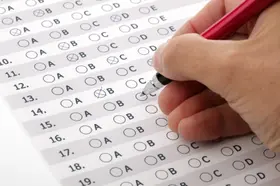
Exams can be nerve-wracking at any age. So, show your child where exams fit in and, more importantly, how to prepare for them. From early grades, teachers evaluate your child's learning through different methods.

The Purpose of Exams

Exams are a formal, structured method of assessment.

  • Unfortunately, what makes exams stressful in high school, college, and in our professional lives is that so much is riding on them.
  • For example, you must pass the LSAT to get into law school.
  • Then, you must pass a state bar exam to practice law.
  • The pressure to succeed is enormous.

That's why I recommend you tell your child how you handled preparing for and taking the exam. The more your child understands how exams work and how to handle them, the more successful she is likely to be.

Exams and tests are a great way to assess what the students have learned with regards to particular subjects. Exams will show what part of the lesson each student seems to have taken the most interest in and has remembered. Source: Edu-Quip

Understand Your Learning Style

As soon as you can, identify your child's learning style.

  • Observe her preferences and tendencies in how she processes and retains information.
  • Contrast that with how you learn and what has worked for you.
  • Sharing how you learned
. . .read more

Contract Cheating

Updated
|
Contract Cheating
Contract cheating is more common than most of us realize. Finding somebody online to write essays or term papers is fairly easy to do. The way we parents counter immoral behavior like this is to discuss it frequently with our children.

The 2019 college admissions scandal proved that cheating is endemic throughout the secondary and tertiary levels of education. Cheating is not restricted to college admissions tests and applications. We find examples in the classroom, on term papers, projects, and more. I will omit a discussion of cheating in elementary school in this essay and cover it in another article.

In 2011, when I read about students paying another person to take their SATs, I was appalled. What were they thinking? And how did they pull it off? Looking back on my high school and university years, I realize now that it was tough to cheat in the 50s and 60s. That was because all of my examinations required us to write out our answers in pen. We didn't have multiple choice exams. No punch cards. I did occasionally hear of students who wrote out formulas on their palms or who looked over at a neighbor's answer book. But that was about it. Fast forward to the age of smartphones, and cheating has gone digital.

This video explains what contract cheating is and how it works.

Our role as parents

I will confess that I was, and, indeed, still am, a somewhat naive parent. I assume good things will happen. I also believe that my children will do the right thing. For the most part, and I can say this after long years

. . .read more

Recent Articles

Financial Aid 101 for Private School Families 2026
Guide to private school financial aid in 2026, with current costs, key planning timelines and practical steps parents need to maximize aid options.
Why Extracurricular Activities Matter in 2026
Discover why extracurricular activities remain essential in 2026, with updated research, costs, and admissions insights for parents and students.
How to Appeal for Financial Aid After Admission
Learn how to appeal for financial aid after admission to a private school, with expert steps, timelines, and 2026 updates for families.