


Updated
|
Small Is Good
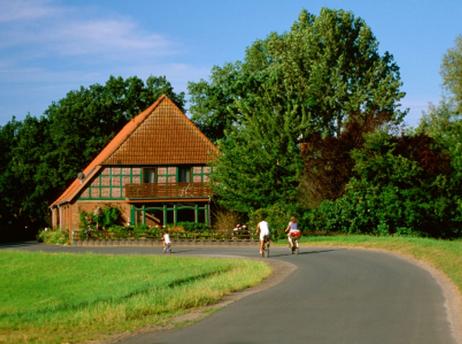
Private schools offer individualized attention to their students because their class sizes are generally small.

Private schools learned a long time ago that small is good. Why? Because parents wanted more personal attention for their children than they could get in most large public schools. They didn't want their children to be a number. They didn't want their children to be anonymous. So in small schools teachers and all the other staff members would know students by name.

The Institute for Local Self-Reliance offers more reasons in support of small schools: "One of the most effective ways to improve student achievement and curb school violence is to reduce the size of the nation's schools. Hundreds of studies have found that students who attend small schools outperform those in large schools on every academic measure, from grades to test scores. They are less likely to drop out and more likely to attend college. Small schools also build strong communities. Parents and neighbors are more likely to be actively involved in the school. The students benefit from community support and the school, in turn, fosters connections among neighbors and encourages civic participation."

This TEDx talk describes using innovative teaching methods in the K-12 classroom.

Low Student-to-teacher Ratio

Most prep schools or schools offering Grades 9 through 12 have a student population of about 300-400 students. Some schools are even smaller. As well, most PK-6 elementary schools tend to be small. Of course, you will find larger and smaller

. . .read more

Guides To Private Schools

Updated
|
Guides To Private Schools
Do you prefer to peruse a book rather than going online to find private schools? If so, there are some excellent guides to private schools available.

Do you prefer to peruse a book rather than going online to find private schools? If so, there are some excellent guides to private schools available. While most of the information contained in these guides can be found online, the truth is that most of us do not have the time nor the expertise to do all that research involved. If you are beginning a serious search for private schools for your children, then buy one of these guidebooks. Use it as a reference tool.

Besides the cost factor, the only real disadvantage to this method of researching schools is that the information is frequently out of date.

Uniforms and Dress Codes

Updated
|
Uniforms and Dress Codes
This article explores the trend of private schools adopting dress codes over traditional uniforms. It discusses how dress codes balance self-expression with maintaining dress standards, and provides examples of typical dress code requirements from various private schools, including guidelines for formal occasions and sports uniforms.

Uniforms and Dress Codes

More and more private schools are adopting dress codes as opposed to uniforms. You will still find uniforms in religious, parochial, and military schools. Perhaps the most famous school uniform is the one worn by boys at Eton College. While it is still worn every day, the uniforms worn in American schools are a lot less formal if, indeed, a uniform is worn at all.

One of the reasons a dress code is more popular is that it gives some modicum of self-expression while at the same time maintaining a standard of dress. Oversized clothing, all-black outfits, extreme hairstyles, and other symbols of gangs and fringe activities are simply not on.

This dress code from Foxcroft School is typical of the sort of dress code you can expect at a girls' school:

"Foxcroft's dress code is fairly simple – khaki or black pants or skirts with solid-colored, collared blouses which are tucked in. Shoes (which may not be athletic shoes) must have closed toes and backs. Dress code is required during the Academic Day."

McCallie School offers a pretty detailed description of what's acceptable and what's not at that fine all-boys school in a Dress Code Letter:

"Regular school dress requirements/prohibitions are as follows:

  1. Students are expected to wear a solid-colored dress shirt with a tie (the tie should be within one inch of the top button on the shirt), long pants with a belt,
. . .read more

Your Admissions Profile

Updated
|
Your Admissions Profile
The admissions process can seem confusing, even intimidating. In reality all the admissions staff want to do is to get to know you.

Many people find the admissions process to private schools intimidating, confusing, complicated and, perhaps, a tad invasive. "Why do they have to know so much about me?" is the question which keeps popping up as you peruse all those admissions materials.

The truth is that admission is more than test scores and a faultless transcript. The school wants to get to know you as much as possible. Who are you? What subjects do you like? What sports do you enjoy? What is your favorite pastime? Behind all those recommendations and test scores is a real person with dreams, aspirations and hopes. A private school wants to encourage you and help you be all you can be.

The other thing which the admissions staff looks for is the fit. Are you a good fit for their school? Can you do the academic work? Will you be a congenial member of the school community? Yes, those are the same questions which you and your parents have been asking as you evaluate schools. Your admissions profile offers the school a fairly complete picture of you, your academic strengths and weaknesses, the sports you like, your hobbies, and so on.

While this video describes a college admissions profile, private school admissions profiles are very similar.

What Are They Looking for?

The admissions staff are not looking for geniuses or stars. If you have good math grades and think that

. . .read more

The PG Year

Updated
|
The PG Year
A PG or Post Graduate year offers time to mature and time to perfect a sport or other interests.

Many students find that a PG or Post Graduate year is a beautiful solution to several situations. Perhaps they feel that they are too young to go to college. As Kim Chorosiewski points out, a PG year offers time to grow and develop without taking a year off. Maybe they want to perfect a sport or artistic activity. A PG year offers a well-focussed period in which to accomplish that perfecting. A PG year also allows you to remediate small gaps in your high school transcript. Or maybe you want a year before you head off for five years of pre-med or bio-kinetic science. The PG year can suit a variety of purposes.

The PG Year is sometimes called a Gap Year or a year off. From my point of view, either description implicitly implies that a PG Year is a structured program of study, not simply a year off where you sit around and do absolutely nothing. Over one hundred private day and boarding schools offer PG Years. It will be worthwhile to explore a couple of programs to see if they fit your requirements.

There is a big push in high school to complete your academic studies with the best results possible to get into the college you want to attend after high school. A gap year gives you an extra year to develop a skill for which you didn't have much time while studying for SATs or doing your IB papers. That skill

. . .read more

Recent Articles

Understanding Private School Tuition in 2025
Explore updated private school tuition trends, costs, policy shifts, and financial planning insights for 2025 families considering private education.
Private School Curriculum in 2025: Key Courses and Trends
Explore what private schools are teaching in 2025, from core subjects and AI to global studies and tuition trends shaping private education today.
Sliding-Scale & Income-Based Tuition Models for Private Schools
Learn how sliding-scale and income-based tuition models work and whether they are right for your family. Compare costs, eligibility, and school options.