
Private School Review Blog

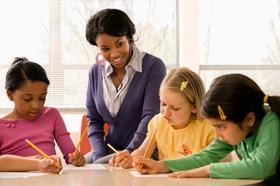
How Much Unstructured Time Does Your Child Have? - Learn why unstructured time matters during a private school day, how recess, lunch, free periods, and transitions affect students, and what parents should evaluate before enrolling. (Updated Oct. 6, 2026)
What Happens When Bullying Continues Outside School? - Learn how private schools may respond when bullying continues through social media, texts, gaming, and off-campus activities, and what parents should document, report, and expect. (Updated Oct. 6, 2026)
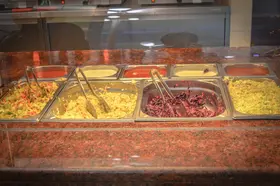
How Private Schools Handle Food Allergies - Learn how private schools manage food allergies, from emergency plans and epinephrine access to cafeteria procedures, staff training, field trips, and the questions parents should verify before enrolling their child. (Updated Oct. 6, 2026)

Quick Facts (26-27)

Updated
|
What Do They Teach?
This article explores the diverse curricula and teaching methods employed in private schools. It covers various educational stages from toddler to high school, discussing core subjects, specialized programs, and different educational philosophies

This article has been updated to reflect 2026 data and recent developments.

This article is a companion article to How Do They Teach?, which discusses what goes on in private school classrooms. It explores the academics and other material that schools teach.

When we parents start thinking about sending our children to private schools, one of the first questions that comes to mind is the teaching content. What exactly will the schools you are looking at teach? Obviously, with thousands of private schools, I cannot address all the permutations and variations. So, I thought it might make sense to look at several educational approaches and methods and see what they teach. That will at least give you a starting point for some in-depth exploration of what they teach at schools you might be interested in.

Toddler

The wee ones won't be at school for very long each day. Apart from that, the teachers will create a rich environment to pique a child's interests. The development of fine and gross motor skills, as well as language and speech skills, is a focus. In 2026, these priorities remain consistent with guidance from the National Association for the Education of Young Children, which emphasizes developmentally appropriate, play-based learning that supports children's development across multiple domains.

Prekindergarten

Most prekindergarten programs focus on preparing their students for kindergarten. Look for the development of motor skills and teaching children how to socialize. Also, look for play-based lessons with an

. . .read more

What Do I Do When....? Part 2

Updated
|
What Do I Do When....? Part 2
Here are some more answers and resources to help you deal with tough questions such as "What do I do when my child doesn't test well?"

I wrote Part 1 of What I Do When...? a few years ago. It contained eight questions and my answers. Here are another ten questions. If you think of any other questions you would like answered, all you have to do is message me on Facebook @privateschoolreview. I will give them my best shot.

So, here goes Part 2 of What Do I Do When....?

What do I do when...

I can't decide whether to send my child to private school for the early years or high school. Which is more important?

There are two schools of thought on this subject. Some parents feel that the early years give their children a solid educational foundation and love of learning, which is desirable. Other parents think that an intense three or four years of high school and college preparation is what their children need. And others send their children right through from prekindergarten through to twelfth grade.

I want my child to have a religious education.

Our faith means so much to us. We have raised our children to be observant and to practice our religion. I hear you, and in this situation, your best option would probably be a private religious school. The biggest obstacle that you will face has to do with the available options in your area. Private schools exist in just about any faith you can think of. They also exist in various levels of orthodoxy within those faiths. Most religious schools will be

. . .read more

Paying for Private School: 7 Options

Updated
|
Paying for Private School: 7 Options
Don't assume you cannot afford private school. Don't assume that you make too much money to be eligible for financial aid. Ask. Always ask.

I am always sad to hear parents rule out sending their children to private school because it is too expensive. The conversation usually begins with one of these facts as the reason for considering private school:

  • Their child is gifted.
  • Class sizes in the local public school are way too large.
  • Their child has a learning disability.

Any one of these reasons is a valid reason for considering private school. Unfortunately, that is as far as considering a private school gets in most cases.

  • Why? Because either the parents assumed that they could not afford private school.
  • Or, perhaps, they looked at the tuition and fees page on a school's website, and they panicked.

Considering sending your child is a major decision.

  • As with any major decision, it makes sense to do your due diligence before ruling anything out.
  • When you take time to do a thorough investigation of the facts, as opposed to your assumptions, you just might be pleasantly surprised at what you discover.

That applies equally to paying for private school.

Here are seven ways you can pay for a private school education. One might prove to be the answer you are looking for.

1. Write a check.

Some people can afford to write a check for their children's private school tuition. If you are in a position in life where you can do this, don't forget to ask about a cash discount. Most schools will be thrilled to get their money
. . .read more

Cristo Rey Schools: A Different Kind of School

Updated
|
Cristo Rey Schools: A Different Kind of School
Cristo Rey schools are a unique blend of academic rigor, Catholic values, and practical work experience. They serve low-income students in urban areas by combining a quality education with a work-study program. This innovative approach allows students to gain real-world experience while offsetting tuition costs, providing them with a comprehensive educational experience that prepares them for future success.

Cristo Rey schools are unabashedly Roman Catholic. Through and through.

  • They teach Catholic values and religious beliefs.
  • However, they do something more unusual and significant.
  • Cristo Rey schools serve students from low-income families in urban areas who could not otherwise afford a private school education.
  • The way the Cristo Rey schools do this is to combine a work-study program with the academics, sports and extracurricular activities the schools offer.
  • Simply put, the Cristo Rey schools offer quality education with a work-study component.

History

The Cristo Rey schools got their start back in the 90s in Chicago.

  • The Catholic academic scene was a familiar, though depressing one.
  • The diocesan high schools were facing serious financial challenges.
  • Those schools had always been the ray of hope for struggling lower-income families who dreamed of an education for their children.
  • The Catholic schools run by various orders were in good shape because they attracted a clientele that could afford the substantially higher tuition that those schools charged.
  • The Jesuits met with parishioners in the Pilsen neighborhood of Chicago and asked what they needed most.
  • "A good high school" was the unequivocal response.

This short video clip shows what the Jesuits did.

The Program

As noted above, Cristo Rey schools have a work-study program, which is an integral part of the life and rhythm of each school.

  • Students work the equivalent of 5 days a month.
  • The school arranges the students' work-study assignments
. . .read more

Homeschool or Private School?

Updated
|
Homeschool or Private School?
Compare homeschool vs private school in 2026, including academics, flexibility, socialization, costs, and outcomes to help families choose the best fit for their child.

Choosing between homeschooling and private school is one of the most significant educational decisions families face. Both options offer distinct advantages, and the right choice depends on a student’s learning style, family priorities, and long-term academic goals.

In recent years, this decision has become more nuanced. Homeschooling surged during the pandemic and has remained a viable long-term option for many families, while private schools have expanded offerings in areas such as personalized learning, mental health support, and college preparation.

This guide provides a clear, updated comparison to help families make an informed decision in 2026.

Key Differences Between Homeschool and Private School

At a fundamental level, homeschooling and private schooling differ in structure, oversight, and daily experience.

FeatureHomeschoolingPrivate School
Learning EnvironmentHome-based, parent-directedStructured campus setting
CurriculumFlexible, customizableStandardized with enrichment options
Social InteractionParent-arrangedBuilt-in peer community
Teacher QualificationParent or tutor-ledCertified and experienced educators
ScheduleFlexibleFixed academic calendar
CostVaries, often lowerTuition-based

Families weighing these differences may also benefit from broader comparisons, such as https://www.privateschoolreview.com/blog/private-school-vs-public-school-key-differences-2026-guide.

Academic Structure and Rigor

Homeschooling

Homeschooling allows for a highly individualized curriculum. Students can move at their own pace, spend more time on challenging subjects, and explore personal interests in depth.

This flexibility is especially beneficial for:

  • Students with unique learning needs
  • Advanced learners seeking acceleration
  • Families prioritizing customized education

However, academic rigor depends heavily on the parent’s ability to design and deliver instruction or source high-quality materials.

Private School

Private schools offer structured, research-based curricula taught by experienced educators. Many schools provide:

  • Advanced Placement (AP) or International Baccalaureate (IB) programs
  • Specialized STEM, arts, or language tracks
  • College-preparatory
. . .read more

Recent Articles

How Much Unstructured Time Does Your Child Have?
Learn why unstructured time matters during a private school day, how recess, lunch, free periods, and transitions affect students, and what parents should evaluate before enrolling.
What Happens When Bullying Continues Outside School?
Learn how private schools may respond when bullying continues through social media, texts, gaming, and off-campus activities, and what parents should document, report, and expect.
How Private Schools Handle Food Allergies
Learn how private schools manage food allergies, from emergency plans and epinephrine access to cafeteria procedures, staff training, field trips, and the questions parents should verify before enrolling their child.