Finding Schools

Learn more about how to find and evaluate private schools. Find out why price should not be your only consideration. Get valuable advice on how to save time and money when choosing a school. Learn more about ranking schools and why it may not work.

View the most popular articles in Finding Schools:

What About a Foreign Language School?

Updated
|
What About a Foreign Language School?
A comprehensive guide to foreign language schools in the United States, exploring German, Japanese, French, and British educational options, with detailed listings of schools and insights into why families choose language-focused education.

In the United States, a foreign language private school is a school in which the primary language is not English. 80% of our population speaks English. Therefore, it follows that private schools that teach in other languages are few and far between.

I also want to point out the difference between a K-12 private school that uses a language other than English for teaching and intra-school communications and proprietary schools that offer instruction in foreign languages.

  • K-12 private schools that teach their students in German or French, for example, offer a comprehensive academic curriculum with specified goals and objectives for their graduates.
  • The proprietary foreign language schools generally aim to have their students achieve fluency at varying levels in a foreign language.
  • For example, you could learn how to speak Spanish in a business setting, starting at a beginner's level and working your way up to advanced proficiency.
Reasons Why You Would Consider Foreign Language Schools

Now, back to our original question.

  • Why would parents consider a foreign language school for their children?
  • For several reasons, the first of which is job-related.

Let's say that you are a German national who is an executive with a German firm with locations in the United States.

  • Your firm decides to post you overseas in the New York office.
  • Your children are ages 10 and 12.
  • What will you do about their schooling?
  • You know that the posting in New York is likely to be no more than three
. . .read more
Religious Schools: An Overview

Updated
|
Religious Schools: An Overview
Your religion matters to you. You want your child to attend a school which will combine academics and religious education. Here is an overview of what is available together with some links to denominational web sites.

One of the main reasons many of us parents look at private schools is because we want our children to receive a religious education. I define a religious education for the purposes of this article as an education which adheres more or less to the religious beliefs which we hold dear. In other words if you are Roman Catholic, you will want to think seriously about educating your child in a Roman Catholic school.

It has been several years since I examined the data on religious schools in the National Center for Education Statistics Private School Universe Survey. This survey covers academic year 2011-2012. So I was fascinated to see that out of the 30,000 private schools in the United States approximately 21,000 were described as religiously-oriented schools. About 9,000 schools were what we call non-sectarian or not affiliated with any specific religion. By comparison there were approximately 99,000 public schools in the 2011-2012 academic year. That would mean that private K-12 schools are educating approximately 30% of school-age children.

Religious Categories in Private Schools

Let's review the 25 religious categories which the Private Universe Survey documents.

Roman Catholic

The Roman Catholic Church has always taken its educational mission seriously. As a result about 7,000 K-12 schools educate 1.9 million students. Catholic schools include parochial schools which are largely K-8 schools and diocesan high schools. These schools are mostly organized and administered at the local and regional level. Add to this mix hundreds of

. . .read more

Your Child Isn't Happy at His Preschool?

Updated
|
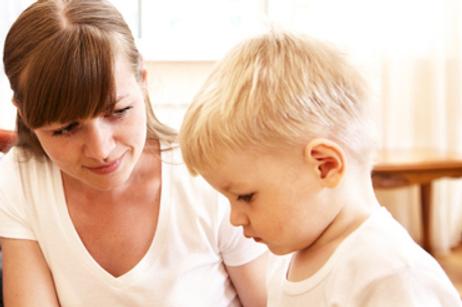
Your Child Isn't Happy at His Preschool?
Learn the warning signs that a private school may be the wrong fit for your child and how parents can respond thoughtfully in 2026.

Despite your best efforts, in-depth interviews, and hours of due diligence, you may eventually realize that the school you thought was perfect for your child is, in fact, the wrong fit.

This can be one of the most stressful situations a parent experiences during the educational journey. Families invest significant emotional energy, time, and financial resources into choosing a private school, which makes recognizing a mismatch especially difficult.

In 2026, parents also face a more complicated educational landscape that includes hybrid learning options, personalized academic programs, evolving social dynamics, and increasing mental health considerations.

As discussed in Hybrid and Online Learning Options for Private School Students, many schools are continuing to expand flexible learning environments and individualized student support systems.

The Warning Signs

The warning signs of a poor school fit are often subtle at first.

Your child may:

  • Come home frustrated or withdrawn
  • Suddenly resist going to school
  • Show increased anxiety
  • Lose confidence academically
  • Exhibit behavioral changes
  • Complain regularly about classmates or teachers

For younger children, especially, emotional distress may appear gradually over weeks or months rather than through one dramatic incident.

An isolated difficult day is usually not cause for alarm. However, a pattern of persistent unhappiness deserves careful attention.

Organizations such as the American Academy of Pediatrics and the Child Mind Institute continue emphasizing the importance of monitoring school-related stress and emotional well-being in children.

What Do You Do?

Once you recognize that there may be a problem, it is important to address it thoughtfully

. . .read more

When Should You Consider a Military School?

Updated
|
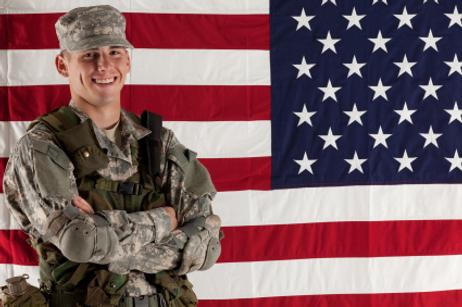
When Should You Consider a Military School?
If you are looking for a college preparatory education with a military emphasis, then take a look at military schools.

This article has been updated to reflect 2026 data and recent developments.

One of the best things about private schools is that there is a school out there somewhere which is just right for your educational objectives, whatever those might be. As you begin to draw a picture of the kind of school which you would like your child to attend, you just might discover that the structured environment and leadership training military schools are well known for is just what you are looking for.

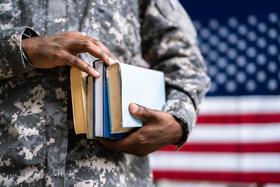
So, what about military schools? When might you consider sending your son or daughter to a military school? Let’s settle a couple of things before we proceed: military schools are not places you send a child with discipline or other issues. They are not reform schools or schools for troubled youth. If a professional such as a psychologist or psychiatrist recommends your child attend a therapeutic school, you will have plenty of options for that purpose. Military schools are genuine institutions of learning with a specific focus: military training. Second, military service is not required when you attend a military high school. If your child decides that military service is a career path which she wants to pursue, then a military school will have given her a good start.

Discipline

In life just about anything worth doing well requires lots of discipline. Discipline takes hard work, persistence, stamina, and time. In an era when instant gratification seems endemic, good

. . .read more

Your Options for Child Care and Preschool

Updated
|
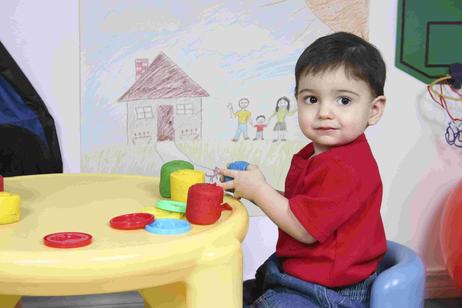
Your Options for Child Care and Preschool
Beginning to think about your child care and preschool options? Some thoughts and guidance here.

You and I are going to take a quick look at the options available to us for educating our preschooler. The first thing to remember is that you are not alone. Tens of thousands of other parents are in the exact same situation you are in. You know that you have to find a safe, reliable, trustworthy preschool or child care center for your precious toddler. You are not quite sure how to assess and evaluate all the preschool and daycare options in your area. With these concerns and requirements on the table let's discuss how to proceed.

First, a factoid for you:

"According to the 1995 U.S. Census Bureau Survey of Income and Program Participation (SIPP), over thirty-six percent of families of preschoolers with working mothers primarily relied on child care in the home of a relative, family day care provider or other non relative. Almost twenty-six percent of families used organized child care facilities as their primary arrangement."

Child Care Centers (Day cares): A widely available option

Decades ago when you had a child, mother stayed home and looked after the baby. Father went to work. In the 21st century that model seems so quaint. Also not viable. Most families need two or more incomes just to stay afloat these days. That's where daycare comes in. A good child care center will allow both parents to manage their busy schedules without too much worry.

How do child care centers work?

Most child care centers take infants

. . .read more

Recent Articles

Should Your Child Stay at the Same Private School K–12?
Explore whether your child should attend the same private school from kindergarten through graduation, weighing academic continuity, friendships, changing needs, tuition costs, and opportunities at different educational stages.
When Your Child's Closest Friends Leave Private School
Learn how to support your child when close friends leave private school, manage loneliness, maintain friendships, encourage new connections, recognize emotional challenges, and decide when additional school support is needed.
When Your Child Doesn't Connect With Their Teacher
Discover when parents should intervene if their child struggles to connect with a private school teacher, including warning signs, communication strategies, classroom concerns, and practical steps toward improving relationships.

Choosing a Private School