Finding Schools

Learn more about how to find and evaluate private schools. Find out why price should not be your only consideration. Get valuable advice on how to save time and money when choosing a school. Learn more about ranking schools and why it may not work.

View the most popular articles in Finding Schools:

A Guide To Schools Within 10 Miles Of Philadelphia

Updated
|
A Guide To Schools Within 10 Miles Of Philadelphia
Philadelphia is home to some of the oldest K-12 schools in the nation.

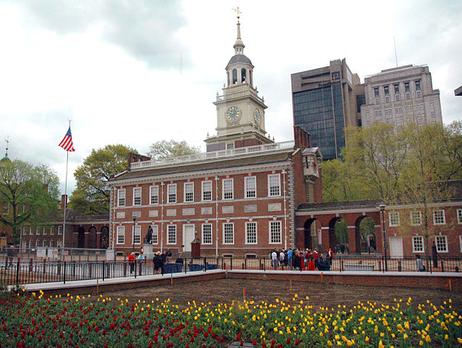
Philadelphia is home to some of the oldest K-12 schools in the nation. Located strategically on the east coast on the main transportation routes between New York City and Washington, DC, Philadelphia itself offers a wealth of commercial and cultural activities for families. And if the city doesn't have what you are looking for, Delaware, New Jersey, and Maryland are just minutes away. The following school profiles spotlight private K-12 schools within 10 miles of Philadelphia. Of the 73 schools shown in the search results, I included schools which offer instruction up to Grade 12 and have a student population of over 200 in most cases.
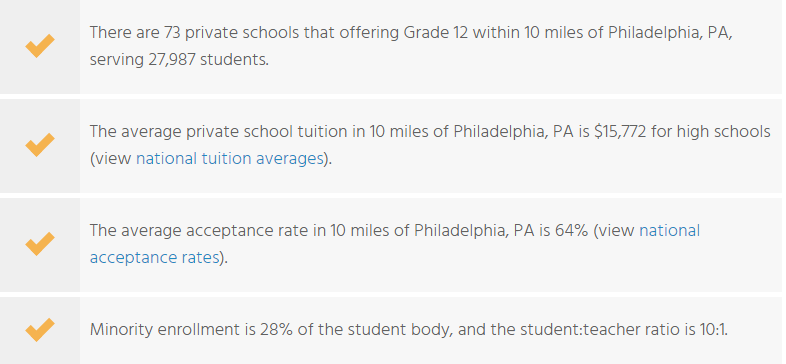
Private schools within 10 miles of Philadelphia

International Christian High School, Philadelphia, PA

  • Miles from Philadelphia: 6
  • Founded in 1968
  • Number of students: 123
  • Grades 9-12, day. Coeducational
  • Religious Affiliation: Christian
  • Student-teacher ratio: 11:1

The course catalog lists 5 AP courses. For complete details regarding curriculum, sports, extracurricular activities, costs, and other information, see the International Christian High School profile.
The Haverford School, Haverford, PA

  • Miles from Philadelphia: 8.6
  • Founded in 1884
  • Number of students: 981
  • Grades PK-12, day. Boys
  • Religious Affiliation: Non-sectarian
  • Student-teacher ratio: 9:1

For complete details regarding curriculum, sports, extracurricular activities, costs, and other information, see The Haverford School profile.

Friends Select School, Philadelphia, PA

  • Miles from Philadelphia: 0.3
  • Founded in 1689
  • Number of students: 971
  • Grades PK-12, day. Coeducational
  • Religious Affiliation: Quaker
  • Student-teacher ratio: 10:1

For complete details regarding curriculum, sports,
. . .read more

A Guide to the Cleveland Council of Independent Schools

Updated
|
A Guide to the Cleveland Council of Independent Schools
The Cleveland Council of Independent Schools is an organization which currently has thirteen member schools in the greater Cleveland area.

The Cleveland Council of Independent Schools currently has thirteen member schools in the Greater Cleveland metropolitan area. On the list below are schools which offer a variety of programs including college prep, Montessori, and special needs. The CCIS website is informative and useful. It also has an employment section worth bookmarking if you are looking for a teaching or administrative position in one of their member schools.

Andrews Osborne Academy, Willoughby, OH

Founded in 1910
Number of students: 336
Grades PK-12, day. Grades 7-12, boarding. Coeducational
Religious Affiliation: Nonsectarian

Andrews Osborne Academy is situated on a 330 acre campus about 20 miles east of Cleveland just outside the charming suburban city of Willoughby. The school offers a 6:1 student-teacher ratio. The course catalog lists 104 academic courses and 11 AP courses. For complete details regarding curriculum, sports, extracurricular activities, costs, and other information, see the Andrews Osborne Academy profile.
Birchwood School, Cleveland, OH

Founded in 1984
Number of students: 202
Grades PK-8, day. Coeducational
Religious Affiliation: Nonsectarian

Birchwood School is located in Cleveland convenient to I-90, I-480 and I-71. The school offers gifted education as well as a comprehensive series of signature programs such as Speech Fest and Woodmath. For complete details regarding curriculum, sports, extracurricular activities, costs, and other information, see the Birchwood School profile.

Gilmour Academy, Gates Mills, OH

Founded in 1946
Number of students: 653
Grades PK-12, day. Coeducational
Religious

. . .read more

The Search Process: A 5 Point Checklist

Updated
|
The Search Process: A 5 Point Checklist
Use this five-point checklist to keep your search for private schools organized.

Use this five-point checklist to keep your search for private schools organized. If you ask your friends and family who have gone through the process of finding private schools for their children about their experiences, you will probably hear that the search is not difficult. On the other hand, it is time-consuming, has several deadlines, and can be demanding, particularly if you and your spouse have full-time careers. Before long, somebody will create an app to help you keep your private school search in order. In the meantime, use this simple checklist.

1. Look at schools.

"Cast your net as wide as you can." "Think outside the box." Sorry to bombard you with cliches, but they are the best suggestions which I can offer. Thinking outside the box is not always easy for us parents to do. We know our children so very well. That's a given. But some of us tend to be overly-protective, and we worry a lot. "She'll never do well in that school. Helen's son had a terrible time there." Force yourself to explore schools that you might not have put on your list, for one reason or another.

As the following video illustrates, schools will put their best foot forward as they want you to consider them and, better yet, visit them.

This part of the school search process can be great fun. Why? Because most private schools have excellent

. . .read more

What Strength Do You Want Your Child's Religious Education To Be?

Updated
|
What Strength Do You Want Your Child's Religious Education To Be?
Many parents search for an answer to the question "How do I provide the kind of religious education I want for my child?" Religious education is a very personal, subjective matter. We explore some of your options.

Many parents search for an answer to the question "How do I provide the kind of religious education I want for my child?" Religious education is a very personal, subjective matter. When it comes to religious education one size most definitely does not fit all. Each of us has a very clear idea of what we expect. Much of our thinking is driven by the obvious reality that religious education is not an option in our public schools. Religion and Public Schools from the Center for Public Education explains the legal reasons why. So, with this requirement in mind let's explore your options.

Three Categories of Religious Schools

I have been in your shoes when it comes to deciding what kind of religious education our children should have. We are Episcopalians so we wanted schools which embraced that denomination's teachings. Kent School fit the bill for eldest daughter. Youngest daughter attended Westminster School which again fit our needs at the time. Our sons attended St. Anne's School in Nassau, Bahamas when we lived there. That was an Anglican school, Anglican being the British version of the Episcopal church.

To make things a little easier for you I have divided religious schools into three broad categories or strengths if you will: light, medium and strong. Essentially all I am doing is categorizing the intensity of the religious instruction and observances which schools in each category offer. Obviously there will be some overlap because private schools are intrinsically unique. That's

. . .read more

Facts About Private Schools You May Not Have Known

Updated
|
Facts About Private Schools You May Not Have Known
Myths, urban legends and just plain misinformation abound concerning private schools. We shed some light on the facts you may not have known.

Myths, urban legends, and just plain misinformation abound concerning private schools. That doesn't help parents who are thinking about sending their children to private school. So, let's shed some light on the facts you may not have known about private schools.

1. Private schools existed before public schools.

That's right! Back in colonial times, education varied from colony to colony. The common thread that I was able to find is that education was stratified along class lines. Children from poor families were taught skills so that they could do a manual job and survive. Children from the upper classes received a basic education in literature, mathematics, and religion. If their families could afford it, the boys might be sent off to boarding school in England. This stratification of education persisted until the late 19th century.

This video looks at the beginnings of Colonial education: dame schools, Latin grammar schools, church schools, and pauper schools.

In those times upper-class girls were given enough education to be able to run a household. But amazingly enough colonial families did have daycare. They could leave their children at Dame schools, so-called because a dame or lady would teach their children the basics such as their letters and some prayers while she tended to her household chores.

2. Private schools are set up in three main ways.

Many parents assume that all private schools are set up in the

. . .read more

Recent Articles

Should Your Child Stay at the Same Private School K–12?
Explore whether your child should attend the same private school from kindergarten through graduation, weighing academic continuity, friendships, changing needs, tuition costs, and opportunities at different educational stages.
When Your Child's Closest Friends Leave Private School
Learn how to support your child when close friends leave private school, manage loneliness, maintain friendships, encourage new connections, recognize emotional challenges, and decide when additional school support is needed.
When Your Child Doesn't Connect With Their Teacher
Discover when parents should intervene if their child struggles to connect with a private school teacher, including warning signs, communication strategies, classroom concerns, and practical steps toward improving relationships.

Choosing a Private School