Teaching Career Development

This subcategory covers topics related to professional growth, skill enhancement, and career progression for teachers in private schools.

View the most popular articles in Teaching Career Development:

Industry Partnerships & Community College Internships 2025

Updated
|
Industry Partnerships & Community College Internships 2025
How community colleges partner with private-industry firms for internships—strategies, benefits, recent examples for 2025.

Industry Partnerships: How Community Colleges Partner with Private School Firms for Internships

Community colleges are increasingly playing a pivotal role in bridging education and employment, especially through internship partnerships with private-industry firms. In 2025, these collaborations are more important than ever. This article explores how such partnerships work, why they matter for students, parents and educators, and what best practices and fresh examples are emerging this year.

1. Why Internship Partnerships Matter

Internships provide real-world exposure that complements classroom learning. For community colleges, partnering with private firms allows students to develop workplace-ready skills, build professional networks, and transition more smoothly into careers or further education. For firms, these partnerships offer a pipeline of emerging talent and an opportunity to shape training in line with their business needs.

According to a national “playbook” on business–community college collaboration, community colleges are well placed to be reliable sources of talent, thanks to their adaptability and local economic focus. Additionally, guidelines emphasise that paid internships boost accessibility and equity, particularly for underserved students. foundationccc.org

2. Models of Partnership

Here are several typical models through which community colleges partner with firms for internships:

  • Credit-bearing internships embedded in curricula – Students receive academic credit for working with a firm while still enrolled.

  • Co-designed programs and apprenticeships – Firms help shape the curriculum; students alternate between work and study.

. . .read more

Career Outcomes from Community Colleges Parents Must Review

Updated
|
Career Outcomes from Community Colleges Parents Must Review
Understand career outcomes from community colleges in 2025—what private-school parents should know about credentials, earnings, transfer rates and student success.

Career Outcomes from Community Colleges: Data Every Private School Parent Should See

When parents invest in private-school education, the goal is often clear: setting their child on a path to success, meaningful career options and strong outcomes. But it is worth considering the realities of the broader higher-education ecosystem, including what happens when students choose or transition into two-year institutions. This article explores career outcomes from community colleges, providing data and insights every private-school parent should have in mind.

Why Private-School Parents Should Care About Community College Outcomes

Even for families committed to a private-school journey, it is useful to understand the role of community colleges for a number of scenarios:

  • A student may attend a private high school then enroll at a community college for affordability or flexibility.

  • Some students transfer from a community college into four-year institutions; others use them as workforce-entry points.

  • Understanding data about community college outcomes bridges the conversation about value, credential relevance and career preparation.

  • Insight into workforce credentials and transfer pathways can inform parents’ discussions about major choice, credential value and long-term plans.

Thus, examining career outcomes from community colleges is not a niche topic—it is part of a full picture of higher-education planning.

Key Outcomes: Completion, Transfer and Earnings

Here are several essential data points from recent research on community colleges:

. . .read more

Private School Teacher Survival Guide 2025

Updated
|
Private School Teacher Survival Guide 2025
Practical strategies for private school teachers in 2025 to thrive, balance workloads, and connect with students and school communities.

The Private School Survival Guide for Teachers (2025 Edition)

Teaching in a private school can be immensely rewarding. Small class sizes, supportive families, and the opportunity to shape a school community are powerful draws for many educators. At the same time, the role comes with unique expectations—balancing high parental involvement, rigorous academic standards, and often a broader teaching load than in public schools.

This updated 2025 guide offers practical strategies to help teachers not just survive, but thrive, in today’s private school environment.

Understanding the Private School Context

Private schools serve about 10% of U.S. K–12 students as of 2024, according to the National Center for Education Statistics. While tuition ranges widely—from under $10,000 at some parochial schools to over $60,000 at elite boarding schools—families increasingly expect a return on that investment.

That means teachers are often seen not only as classroom instructors, but as mentors, advisors, and role models. Many schools also expect faculty to contribute outside the classroom through coaching, residential life, or extracurricular programs.

“Private school teaching demands flexibility. You’re not just teaching English or math—you’re helping build a culture,” notes Dr. Sarah Williams, Director of Faculty Development at a leading independent school in New England.

Managing Workload and Expectations

Private school teachers often enjoy smaller class sizes—averaging 15 students per class compared with 24 in public schools—but the trade-off is a heavier overall workload. Many faculty wear multiple hats, from

. . .read more

5 Most Important Soft Skills to Have on Your Resume

Updated
|
5 Most Important Soft Skills to Have on Your Resume
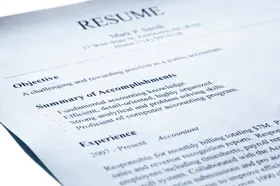
Want to be a private school teacher? Highlight your soft skills as well as technical skills in your resume.

When you apply for a teaching position, the technical and soft skills you offer are high on the list of prerequisites. We'll cover technical skills in another article. But first, look at soft skills and learn why they are the backdrop against which you will be assessed both as a teacher and an individual. Listing your soft skills on your resume identifies you as a candidate who will be a good fit in the classroom and the larger school community.

The importance of soft skills

Soft skills are crucial in an interview because they are the traits that can set you apart from others with similar technical abilities. After all, you will not be the only applicant for the position you have applied for. Your soft skills can and should drive you to the top of the list. Why? Because schools want to know that a potential teacher has the following soft skills:

  1. work well with others
  2. communicate effectively
  3. adapt to new situations

Soft skills like problem-solving, teamwork, and leadership can make you stand out in an interview. These skills can also demonstrate your ability to handle stress, work under pressure, and think critically. In many cases, your soft skills can be just as essential as your technical skills regarding hiring decisions. That's why it's always a good idea to focus on developing your soft skills alongside your technical abilities.

What are soft skills?

Soft skills are those personal attributes, habits, and social behaviors

. . .read more

What A Teacher Does

Updated
|
What A Teacher Does
A teacher wears many hats. Here's a look at her duties and responsibilities.

In all the years I have written about private schools, I have never written anything about what a teacher does. This year after the pandemic, I feel that it is even more critical than ever to encourage and attract people to the profession. Let me preface my remarks by noting that teaching in a private school is somewhat different from teaching in a public school. The only exception to that statement that I can think of would be teaching in rural schools or other places where the school district is very small. Private schools are free-standing entities. There's no such thing as a district of private schools. As a result, a small PK-6 private school could have twelve teachers or less and a correspondingly tiny administrative staff. So, if small-sized schools appeal to you and prefer being in a situation where your voice can be heard, I recommend that you explore teaching in a small school. Of course, there are large PK-13 private schools with 1,000 or more students. Explore working in one of those if that's your thing.

Something which may appeal to those of you thinking about becoming a teacher later in life is that most private schools will accept your credentials without a teaching certificate. They will generally insist that you earn your teaching certification within a fixed period of a year or so. Most private schools focus on the quality of your tertiary education. So, if you did a bachelor of science

. . .read more

Recent Articles

Student Success Predictors at Community Colleges
A practical guide to student success predictors at community colleges for private school advisors helping graduates navigate two-year pathways.
Career Pathways with Community College for Private School Grads
Explore top career pathways with community college for private school graduates, including high-demand jobs, transfer options, and 2025 workforce trends.
Navigating the FAFSA & Financial Aid Timeline for Community College
Learn how to navigate FAFSA and financial aid timelines when starting at community college — from application to disbursement in 2025.