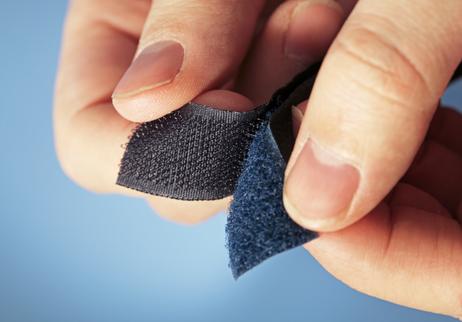
Velcro is a hook-and-loop fastener that sticks things together. It also has become a popular term for describing a certain kind of overprotective parent. The other term used to describe such parents is helicopter parent. The term drone is also used. I was curious about the phenomenon as I don't recall that Nancy or I were that over-protective with our children. My research indicates that hovering came into vogue with the advent of smartphones. Today, smartphones, school communication apps, and text messaging make it easier than ever for parents to stay constantly connected with their children. While these tools can strengthen communication, they also make it easier to become too involved. That is not good for your child, and her school will not appreciate your Velcro tendencies. There has to be a balance between hands-on involvement and a hands-off approach. Private School Review discusses this partnership between schools and families in Parent Engagement in Private Schools in 2026. So, let's approach the issue from that perspective. We will look at how this applies to each grade level as your children progress through their schools.
Pre-school
I was one of those lucky fathers who drove my daughters to their pre-schools. In those days, back in the 70s, I was on the staff of a large Episcopal church on Long Island. Our house was about 2 miles from my eldest daughter's preschool. The preschool was located in the Sunday School classroom wing of the church. The school had just been established because of the strong demand for pre-schools in that South Shore community.
Literally, the two of us would get out of the car and enter the front door of the church complex. She would walk off eagerly down the hall to her classroom. We waved goodbye to each other. That was it. I did not see or hear from her until noon when the morning session was finished. The teachers and headmistress all knew me. They knew I was in the building. But I rarely heard from them. Occasionally, I saw the children playing outside or sneaking in to watch a rehearsal in the auditorium. The most I ever got from my daughter was a smile. She was focused on whatever her class was doing. So, yes, I was not a Velcro parent back then. Nor was I ever an over-protective parent. It never made sense to us to be over-protective parents. We were engaged parents, but we trusted both our daughters and the schools to which we entrusted their education.
The American Academy of Pediatrics continues to recommend encouraging age-appropriate independence in young children while maintaining a secure and supportive home environment.
This video offers a look at a Montessori classroom.
Elementary School
The elementary school years require more parental engagement for two reasons.
The first reason is that our children are beginning to interact socially regularly. As toddlers, you can put them in one place and let them play. As children age, they wander further afield in all sorts of ways. We always hoped that our daughters' classmates would come from homes like ours where the parents were actively engaged with their children all the time. You and I both know that some parents let television or handheld devices raise their children these days.
Today, many parents face the additional challenge of managing smartphones, social media, streaming services, and online gaming. Back then, we only had television to contend with. We controlled TV watching strictly. Sesame Street and Mr. Rogers were favorites, and cartoons on a Saturday morning for an hour or two. Otherwise, we read to our children and encouraged them to read.
Being involved at school does not mean supervising every interaction. Many schools encourage parents to participate through volunteer opportunities and school events while allowing teachers to manage the classroom. Private School Review explores this balance in Volunteering at Your Children's Private School.
Middle School
The middle school years presented concerns for the first time. We would hear reports of so-and-so doing this or saying that, and the teacher is not approving. That would allow us to discuss handling those awkward situations that are part of everyday life. That, to me, is the most effective antidote to being a Velcro parent. Taking time to show your children how to deal with situations logically and in accordance with their value systems is an essential part of being a good parent. Yes, they may not get it right the first time, but after a while, they will know what to do and say. However, if you jump in and control the situation directly, your children will never learn. I am not talking about life-threatening or mission-critical scenarios. Jump in with both feet when those arise. Have serious discussions and even do a bit of role-playing as needed. The difference between being a Velcro parent and an engaged parent is that we must allow our children to make mistakes. After all, that's how we learned.
The Child Mind Institute notes that allowing adolescents to solve age-appropriate problems with parental guidance helps build resilience and confidence, reinforcing the distinction between engaged parenting and overprotective parenting.
High school
Having taught middle school and high school, there were many times I wished that I had been born with an extra set of eyes and ears. There was so much to watch out for. Where were their friend's parents? Should we allow our children to drive with a teenage driver? What about curfews? Today, parents are also navigating smartphones, social media, location-sharing apps, and online communication. We earnestly hoped and prayed that the lessons which we had been teaching our children since infancy would stick. Most of the time, our children make the right choices and decisions. Sometimes, we held our breath while awaiting a good outcome. Occasionally, we lowered the boom and said that such and such was unacceptable. There would be a bit of blowback and a few tears, but a few hours later, things were back to normal.
The secret to avoiding the temptation to be a Velcro parent when you have high-school-age children is to try very hard not to be judgmental. You have to let the reins go and remind them they are responsible and accountable for their words and actions.
Private School Review's article, The Private School Survival Guide for Parents, offers additional suggestions for supporting teenagers while allowing them to become increasingly independent. Likewise, the Harvard Graduate School of Education continues to encourage parents to balance guidance with opportunities for adolescents to develop independence and decision-making skills.
This video offers a look at Germantown Academy in Fort Washington, Pennsylvania.
An Appropriate Degree of Involvement
Most private day and boarding schools expect parents to be involved with their children's education. If being a chaperone will relax your worries and concerns about what your child's classmates are like, then get involved. For more serious problems, arrange a conference with your child's teacher (or teachers). Meeting face-to-face and discussing your concerns will usually resolve the issues. Private School Review's article, How To Have a Successful Parent-Teacher Conference, offers practical advice on making those meetings productive for both parents and teachers.
But if, despite your best efforts, you cannot resolve your concerns, then you must exercise the option that all of us parents have, namely, to look for another school for the next academic year. Don't fret about doing that. Finding the school that is the best fit for your child is something that takes time. Your child's happiness is at stake, as you know full well.
The National Association of Independent Schools also encourages families to consider a school's mission, culture, and overall fit when evaluating educational options, recognizing that the strongest parent-school partnerships are built on trust, communication, and shared expectations.
One of our Presidents said it aptly: "Trust but verify." Do that with your children at every stage of their growth, and you will avoid being a Velcro parent.