About the School
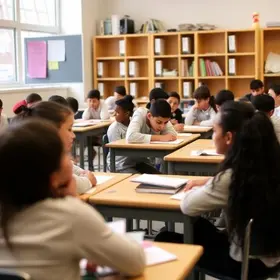
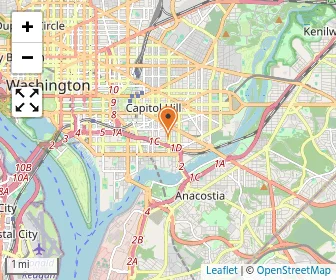
- Capitol Learning Academy is a nonsectarian, co–ed alternative school located in the Capitol Hill neighborhood of Washington, DC, serving kindergarten through 4th grade in a city setting.
- The school has a total enrollment of 6 students with a student–teacher ratio of 6:1, supported by one full–time teacher.
- Student diversity includes 50 percent students of color, reflecting the demographics of the surrounding Washington community.
- Capitol Learning Academy operates in a large city locale and offers an educational option for families seeking small class sizes in the Washington, DC area.
- Nearby private schools include Waterfront Academy and Capitol Hill Day School, which serve larger student populations with similar grade spans in the Washington city area.
School Facts
School Type
Religious Affiliation
Grades Offered
Grades Kindergarten-4
Students By Grade
Student Body
Total Students
6 students
Student Body Type
Co-ed
% Students of Color
50%
State avg.: 50%
Academic Profile
Total Classroom Teachers
1 teacher
Student-Teacher Ratio
6:1
National avg.: 11:1
Tuition & Financial Aid
Admission Deadline
None / Rolling
Frequently Asked Questions
When is the application deadline for Capitol Learning Academy?
The application deadline for Capitol Learning Academy is rolling (applications are reviewed as they are received year-round).
In what neighborhood is Capitol Learning Academy located?
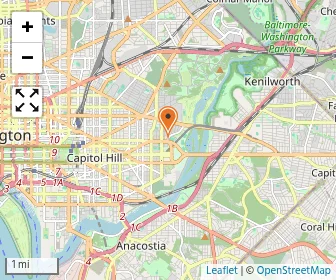
Capitol Learning Academy is located in the Capitol Hill neighborhood of Washington, DC. There are 1 other private schools located in Capitol Hill.
Nearby Private Schools
The nearest high school to Capitol Learning Academy is Gonzaga College High School (1.7 miles away)
The nearest elementary school and preschool is Waterfront Academy (0.2 miles away)
Show me:
Distance: 0.2 mi
Gr: PK-8 | 55 students
Extracurriculars: 7
Montessori School (Catholic)
703 D Street SE
Washington, DC 20003
(202) 484-0044
Distance: 0.4 mi
Gr: PK-8 | 227 students
Avg. class size: 22 students
Sports: 3 | Extracurriculars: 8
210 South Carolina Avenue SE
Washington, DC 20003
(202) 355-4498
Distance: 0.4 mi
Gr: PK-8 | 233 students
Avg. class size: 22 students
Sports: 3 | Extracurriculars: 10
Catholic
422 3rd Street SE
Washington, DC 20003
(202) 544-1618
Distance: 0.7 mi
Gr: PK-K | 51 students
Montessori School
301 A St Se
Washington, DC 20003
(202) 294-4799
Distance: 0.9 mi
Gr: PK-8 | 150 students
Catholic
1503 East Capitol St.
Washington, DC 20003
(202) 547-7556
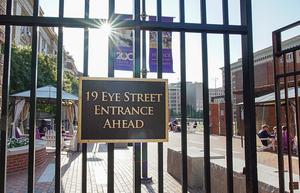
Distance: 1.7 mi
Gr: 9-12 | 962 students
Avg. class size: 20 students
Sports: 19
All-boys (Catholic)
19 I Street NW
Washington, DC 20001
(202) 336-7100
Distance: 1.7 mi
Gr: 9-12 | 101 students
Special Education School
800 Florida Ave Ne
Washington, DC 20002
(202) 651-5000
Distance: 1.8 mi
Gr: 6-12 | 81 students
Avg. class size: 10 students
Extracurriculars: 9
406 7th Street NW
Washington, DC 20003
(202) 847-0779
Distance: 2.4 mi
Gr: 9-12 | 373 students
Specialized Curriculum (Catholic)
1010 Larch Ave
Takoma Park, MD 20912
(301) 891-4750
Distance: 2.5 mi
Gr: K-12 | 134 students
Avg. class size: 15 students
Sports: 4 | Extracurriculars: 2
Christian
3742 Ely Pl SE
Washington, DC 20019
(202) 575-0027
Distance: 0.2 mi
Gr: PK-8 | 55 students
Extracurriculars: 7
Montessori School (Catholic)
703 D Street SE
Washington, DC 20003
(202) 484-0044
Distance: 0.4 mi
Gr: PK-8 | 227 students
Avg. class size: 22 students
Sports: 3 | Extracurriculars: 8
210 South Carolina Avenue SE
Washington, DC 20003
(202) 355-4498
Distance: 0.4 mi
Gr: PK-8 | 233 students
Avg. class size: 22 students
Sports: 3 | Extracurriculars: 10
Catholic
422 3rd Street SE
Washington, DC 20003
(202) 544-1618
Distance: 0.9 mi
Gr: PK-8 | 150 students
Catholic
1503 East Capitol St.
Washington, DC 20003
(202) 547-7556
Distance: 1.4 mi
Gr: K-8 | 172 students
Catholic
320 21st Street Ne
Washington, DC 20002
(202) 397-3897
Distance: 0.2 mi
Gr: PK-8 | 55 students
Extracurriculars: 7
Montessori School (Catholic)
703 D Street SE
Washington, DC 20003
(202) 484-0044
Distance: 0.4 mi
Gr: PK-8 | 227 students
Avg. class size: 22 students
Sports: 3 | Extracurriculars: 8
210 South Carolina Avenue SE
Washington, DC 20003
(202) 355-4498
Distance: 0.4 mi
Gr: PK-8 | 233 students
Avg. class size: 22 students
Sports: 3 | Extracurriculars: 10
Catholic
422 3rd Street SE
Washington, DC 20003
(202) 544-1618
Distance: 0.7 mi
Gr: PK-K | 51 students
Montessori School
301 A St Se
Washington, DC 20003
(202) 294-4799
Distance: 0.9 mi
Gr: PK-8 | 150 students
Catholic
1503 East Capitol St.
Washington, DC 20003
(202) 547-7556
School
(Math and Reading Proficiency)
(Math and Reading Proficiency)
Location
Miles
Quick Facts
John F. Pattie Sr. Elementary School
Magnet School
(Math: 85% | Reading: 72%)
Rank:
Rank:
8/
Top 30%10
16125 Dumfries Road
Dumfries, VA 22025
(703) 670-3173
Dumfries, VA 22025
(703) 670-3173
9211.8 miles
Gr: PK-5 | 906 students Student-Teacher Ratio: 20:1 Minority enrollment: 72%
Montclair Elementary School
Magnet School
(Math: 82% | Reading: 69%)
Rank:
Rank:
7/
Top 50%10
4920 Tallowwood Dr
Dumfries, VA 22025
(703) 730-1072
Dumfries, VA 22025
(703) 730-1072
9211.9 miles
Gr: PK-5 | 588 students Student-Teacher Ratio: 16:1 Minority enrollment: 72%
A. Henderson Elementary School
Magnet School
(Math: 77% | Reading: 80%)
Rank:
Rank:
8/
Top 30%10
3799 Waterway Dr
Dumfries, VA 22025
(703) 670-2885
Dumfries, VA 22025
(703) 670-2885
9212.1 miles
Gr: PK-5 | 815 students Student-Teacher Ratio: 16:1 Minority enrollment: 66%
Enterprise Elementary School
Magnet School
(Math: 70-74% | Reading: 50-54%)
Rank:
Rank:
4/
Bottom 50%10
13900 Lindendale Rd
Woodbridge, VA 22193
(703) 590-1558
Woodbridge, VA 22193
(703) 590-1558
9212.3 miles
Gr: PK-5 | 414 students Student-Teacher Ratio: 14:1 Minority enrollment: 92%
George M. Hampton Middle School
Magnet School
(Math: 43% | Reading: 61%)
Rank:
Rank:
2/
Bottom 50%10
14800 Darbydale Avenue
Woodbridge, VA 22193
(703) 670-6166
Woodbridge, VA 22193
(703) 670-6166
9212.4 miles
Gr: 6-8 | 893 students Student-Teacher Ratio: 12:1 Minority enrollment: 92%
Recent Articles
When Your Child Struggles in One Private School Subject
Learn what to do when your child struggles in one private school subject, including identifying causes, working with teachers, evaluating support, tutoring, progress, and next steps effectively.

Is Your Child Challenged or Just Given More Work?
Learn how to distinguish meaningful academic rigor from excessive workload by evaluating assignments, feedback, classroom expectations, assessments, and intellectual challenge when comparing private schools for your child.

Private School Extra Help: Evaluating Teacher Access
Learn how to evaluate private school extra-help systems, including teacher availability, scheduling, advising, response times, and access, so your child can receive meaningful academic support when needed most.