Running a Private School

Get help and guidance on running a private school. Find guidance and resources related to administration, fundraising and marketing. Explore strategic plan development, creative fundraising ideas and the latest technology uses in marketing.

View the most popular articles in Running a Private School:

Private School Governance Structures Explained

Updated
|
Private School Governance Structures Explained
Learn how private school governance structures, board roles, and transparency shape school quality and accountability.

Private school governance structures play a central role in shaping the quality, accountability, and long-term success of independent schools. For families evaluating private education options, understanding how these institutions are governed offers valuable insight into decision-making, financial stewardship, and institutional integrity.

Unlike public schools, which are overseen by elected school boards and government agencies, private schools operate under independent governance systems. These typically involve boards of trustees or directors who are responsible for guiding the school’s mission, ensuring financial sustainability, and supporting leadership.

In recent years, governance transparency and board accountability have become increasingly important. As of 2024 and 2025, several national accreditation bodies and education associations have updated governance standards to emphasize ethical oversight, diversity in leadership, and clear communication with stakeholders. This shift reflects growing expectations among parents and educators for openness and responsible management.

This article explores how private school governance structures work, what responsibilities boards hold, and why transparency matters when choosing a school.

Understanding Private School Governance Structures

At most private schools, governance is separated from day-to-day management. This distinction ensures that strategic oversight remains independent while operational leadership is handled by school administrators.

Key Components of Governance

A typical private school governance structure includes:

  • A board of trustees or directors
  • A head of school or principal
  • Committees focused on finance, academics, development, and governance

The board is responsible for setting the strategic direction, while the head of school implements policies and manages daily operations.

This structure is designed to maintain checks and balances. According
. . .read more

Private Schools & Sustainability in 2026

Updated
|
Private Schools & Sustainability in 2026
Explore how private schools are advancing sustainability in 2026 through green campuses, eco-curriculum, and climate leadership initiatives.

Private Schools & Sustainability: Green Campuses, Eco-Curriculum & What to Expect in 2026

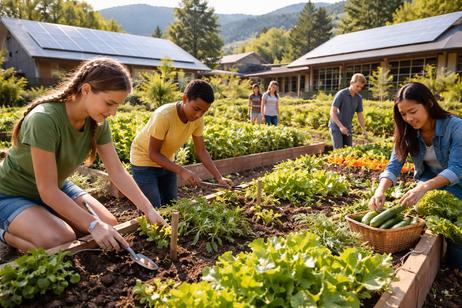
Sustainability is no longer a peripheral initiative at independent schools. In 2026, environmental responsibility is shaping campus design, curriculum planning, student leadership programs, and long-term strategic goals. For families evaluating private education options, understanding how schools approach environmental stewardship is increasingly important.

This article explores Private Schools & Sustainability: Green Campuses, Eco-Curriculum & What to Expect in 2026, highlighting the trends, standards, and expectations shaping the independent school landscape.

Why Sustainability Is a Defining Priority in 2026

Parents and students are placing greater emphasis on climate literacy and environmental responsibility. According to the United Nations Sustainable Development Goals, climate action and responsible consumption remain global priorities, influencing educational frameworks worldwide.

Independent schools, with their flexibility and mission-driven governance models, are often able to implement sustainability initiatives more rapidly than large public systems. In 2026, sustainability is not only about recycling programs or Earth Day events. It encompasses infrastructure investment, interdisciplinary coursework, and institutional accountability.

Forward-thinking private schools now integrate sustainability into:

  • Strategic planning documents
  • Campus master plans
  • Capital campaigns
  • Community partnerships
  • Student leadership initiatives

The result is a holistic approach that touches nearly every aspect of school life.

Green Campuses: What Sustainable Infrastructure Looks Like

One of the most visible elements of Private Schools & Sustainability: Green Campuses, Eco-Curriculum & What to Expect in 2026 is the physical campus itself.

Energy-Efficient Buildings

Many private schools pursuing renovation or new construction are seeking LEED certification through the

. . .read more

Parent Engagement in Private Schools in 2026

Updated
|
Parent Engagement in Private Schools in 2026
Explore how parent engagement in private schools builds strong communities, support networks, and student success in 2026.

Parent Engagement in Private Schools: Building Support Networks and Community in 2026

Parent engagement in private schools has long been a defining strength of independent education. In 2026, parent engagement in private schools is more intentional, data informed, and community focused than ever before. Families are no longer viewed only as supporters on the sidelines. Instead, parent engagement in private schools is recognized as a strategic partnership that strengthens academic outcomes, social development, and institutional stability.

For prospective parents, understanding parent engagement in private schools can clarify whether a school’s culture aligns with family values. For educators and administrators, effective parent engagement in private schools helps build trust, improve communication, and foster resilient communities. This article examines how parent engagement in private schools is evolving in 2026, why it matters, and how schools are building strong support networks that benefit students and families alike.

Why Parent Engagement in Private Schools Matters More Than Ever

Parent engagement in private schools directly influences student success and school culture. Research consistently shows that engaged families contribute to higher academic achievement, stronger student well-being, and improved school retention. In 2026, parent engagement in private schools is also linked to enrollment stability, alumni relations, and philanthropic support.

Unlike public systems, private schools rely heavily on relationships. Parent engagement in private schools strengthens these connections by encouraging shared responsibility between home and school. According to the National Association of Independent Schools, meaningful family-school partnerships improve both student outcomes and institutional health, a trend

. . .read more

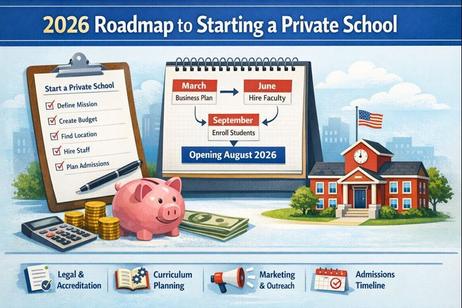
2026 Roadmap to Starting a Private School

Updated
|
2026 Roadmap to Starting a Private School
A 2026 guide to launching a private school, covering planning, costs, admissions timing, governance, and trends parents care about now.

2026 Roadmap to Starting a Private School, Guide and Strategy

Launching a private school in 2026 requires more than a compelling educational vision. Founders must respond to shifting parent expectations, rising operational costs, evolving regulations, and increasingly competitive admissions cycles. Families are asking sharper questions about value, access, outcomes, and timing. At the same time, schools face pressure to differentiate while remaining financially sustainable.

This updated roadmap retains the strategic structure of prior guidance while reflecting current academic cycles, cost realities, and policy considerations. It is designed for founders, board members, and education leaders planning a new private school opening in the 2026 to 2027 academic year or beyond.

Clarify Your Mission and Market Position

Every successful private school begins with a clear mission that addresses a specific educational need. In 2026, that need is often tied to academic rigor, student well-being, and future readiness. Parents increasingly seek schools that balance strong academics with social-emotional learning, experiential programs, and transparent outcomes.

Market research should go beyond identifying nearby competitors. Analyze enrollment trends, tuition ranges, grade-level demand, and unmet needs in your region. Consider whether your school will serve a niche population, such as language immersion, STEM-focused learners, or students seeking smaller class environments, or whether it will compete directly with established independent schools.

Expert perspective from school consultants suggests that new schools with clearly differentiated missions reach enrollment stability faster than generalist models. Clarity also strengthens fundraising, admissions messaging, and faculty recruitment.

Build Governance and Legal Foundations Early

. . .read more

How to Start a Private School in 2025: Complete K–12 Guide

Updated
|
How to Start a Private School in 2025: Complete K–12 Guide
A practical, updated guide to starting a private K–12 school in 2025, covering legal steps, planning, finance, and enrollment strategy.

How to Start a Private School in 2025: A Complete Guide

Starting a private K–12 school in 2025 requires thoughtful planning, compliance with state laws, strong community insight, and a sustainable operational model. This updated guide reflects the latest regulatory expectations, enrollment trends, tuition insights, and best practices to help founders create a thriving private school that serves families and students effectively.

  1. Understand the Role and Value of Private Schools

Private schools play a unique role in the U.S. education landscape. Unlike public schools, private schools are funded primarily by tuition, donations, and fundraising rather than government tax dollars. In 2025, about 9–10% of U.S. students attend private schools, equating to roughly 4.6 million learners nationwide. Private schools often offer smaller class sizes, specialized programs, mission-driven curricula, and unique educational environments that families seek as alternatives to public schooling. Public School Review+1

Private schools vary widely in focus, from faith-based missions to secular independent schools with rigorous academics. Most families choose private education for personalized attention, strong community expectations, and specific pedagogical approaches.

  1. Legal Requirements and State Regulations

### Know Your Regulatory Landscape

Private schools in the U.S. are regulated primarily at the state and local level. The U.S. Department of Education does not require federal permission to open a private school, but state departments of education and local authorities set the requirements for registration, reporting, health and safety inspection, teacher qualifications, and compulsory attendance compliance.

### State Registration and Compliance

Each state differs

. . .read more

Recent Articles

Should Your Child Stay at the Same Private School K–12?
Explore whether your child should attend the same private school from kindergarten through graduation, weighing academic continuity, friendships, changing needs, tuition costs, and opportunities at different educational stages.
When Your Child's Closest Friends Leave Private School
Learn how to support your child when close friends leave private school, manage loneliness, maintain friendships, encourage new connections, recognize emotional challenges, and decide when additional school support is needed.
When Your Child Doesn't Connect With Their Teacher
Discover when parents should intervene if their child struggles to connect with a private school teacher, including warning signs, communication strategies, classroom concerns, and practical steps toward improving relationships.

Running a Private School

ADMINISTRATIVE
Here you'll find information on the administrative side of running a private school. We'll cover strategic plan development, state regulations, human resources and school safety. Learn more about the obstacles of taking over a struggling school, get tips on hiring a headmaster, and receive expert advice on dealing with bad press.
FUND-RAISING
Private schools often need to be creative when it comes to funding. This section provides tools, tips and resources on fundraising. Learn more about supporting your school, how to handle major gifts, and why keeping in touch with graduates can benefit your budget.
MARKETING AND TECHNOLOGY
Advances in technology have changed the way businesses market themselves. This section provides tips on social media marketing, information on the latest technology being used and SEO basics for private schools.