Running a Private School

Get help and guidance on running a private school. Find guidance and resources related to administration, fundraising and marketing. Explore strategic plan development, creative fundraising ideas and the latest technology uses in marketing.

View the most popular articles in Running a Private School:

Starting a Private School: 2025 Guide

Updated
|
Starting a Private School: 2025 Guide
Discover how to start a private school in 2025, from legal requirements to tuition planning, accreditation, and real-world success stories.

Introduction

Starting a private school has always been both ambitious and rewarding. In 2025, the path is clearer than ever—but it is also more complex, shaped by state regulations, rising tuition, community needs, and growing expectations for technology and inclusivity. For educators, entrepreneurs, or mission-driven leaders, starting a private school requires vision, meticulous planning, and a strong understanding of today’s educational landscape.

This guide offers a step-by-step look at how to start a private school in 2025, with insights into legal structures, accreditation, funding, tuition, staffing, and sustainability.

1. Clarify Your Mission and Model

The very first step in starting a private school is defining your mission. Are you launching a Montessori-inspired early childhood center, a college-preparatory high school, or a faith-based academy? A well-defined mission not only guides your curriculum and culture but also attracts families aligned with your vision.

Your educational model—whether traditional, project-based, or a micro-school approach—should be clear from the beginning. Schools that thrive are those that can articulate not just what they teach, but why they exist.

2. Legal Structure and Regulation

Starting a private school in the U.S. requires compliance with state—not federal—law. The U.S. Department of Education provides a useful overview of state regulations for private and home schools.

Key decisions include whether your school will operate as a nonprofit 501(c)(3), a for-profit corporation, or a limited liability company. Nonprofits benefit from tax-exempt status and eligibility for grants, while for-profit schools may allow greater flexibility but face different financial


. . .read more

A Roadmap For Starting A Private School

Updated
|
A Roadmap For Starting A Private School
Use this roadmap as a set of talking points with your trusted mentors and professionals to start the private school of your dreams. You're not alone. Over the years, hundreds of folks like you have had the same dream. From Quintilian to Maria Montessori to Lucy Madeira Wing, visionary educators have established schools to teach according to their beliefs and methodologies.

Disclaimer: I am not an attorney. I offer this information solely to give you an idea of the kind of questions and issues you need to be discussing with professionals such as your attorney and your accountant. Finally, there are about 11,000 private schools that are not members of any private school association. You won't have to reinvent the wheel when you belong to a private school association. Hopefully, my suggestions in this article will encourage you to take advantage of the wealth of knowledge and experience in these associations. ~Rob Kennedy

Chapter 1: Choosing Your School's Legal Structure

Been there. Done that. Yes, I was actually involved in starting a private school. R-E-S-P-E-C-TAcademy in Nassau, The Bahamas was the brainchild of Senator Elliston Rahming. He hired me to be his assistant principal or deputy director as the position was styled. He charged me with organizing the admissions and academic side of the operation in four months so that we could open the school in the fall of 1994.

Starting a school requires one of your earliest decisions to be its legal structure. While you excel at education, this business decision needs professional legal guidance to protect your dream. Think of legal fees as an investment in your school's future. A qualified education law attorney will help you navigate complex regulations and prevent costly mistakes that could threaten your school's survival.

Now, let's look at the two forms of incorporation commonly used by

. . .read more

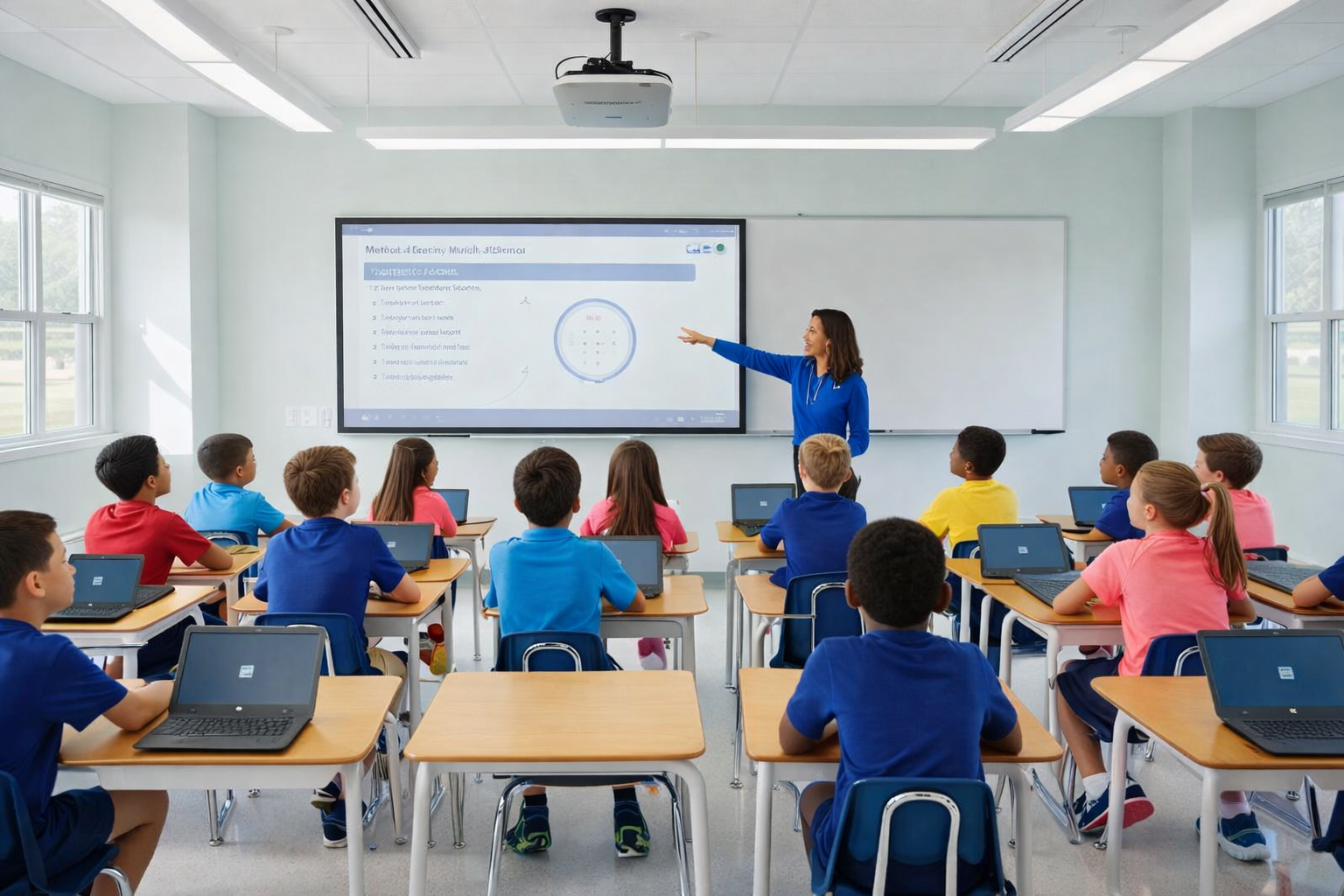
Overcoming the Tech Divide

Updated
|
Overcoming the Tech Divide
We offer insights and strategies for educators, administrators, and policymakers to bridge the technology gap in education, ensuring that all students have access to high-quality, tech-enabled learning experiences.

The Tech Divide

Simply put, the tech divide I am referring to deals with schools that have robust technology and those that don't.

  • K-12 education in the second decade of the 21st century needs five well-developed components to be successful.
  • These components are not stand-alone items.
  • They are linked and complement each other.
  • The entire package is essential to overcome the tech divide in many parts of America.

If you've read this far, you're probably wondering why I am stating the obvious. After all, your private school has the best of everything. That's why you are sending your kids there. What I want you to do is to share that insistence on having the best possible educational outcomes for your children.

  • Share it with a teacher you know.
  • Introduce the local district IT director to your IT director.
  • Create partnerships.
  • Use your connections to overcome the technology divide.

Enhanced Connectivity

Enhanced Connectivity in all our schools, private and public, is not just a luxury but a necessity.

  • We expect the private school to which we are sending our children to have reliable, high-speed internet access.
  • We know that facilitates seamless learning experiences.
  • This connectivity is a crucial step that involves more than simply setting up a couple of routers around the school buildings and campus.
  • Connectivity is also about ensuring that every student has equal access to the wealth of knowledge available online at home.
Future Ready Schools®(FRS) helps innovative educators ensure that each student
. . .read more

AI for Teachers: An Introduction

Updated
|
AI for Teachers: An Introduction
We provide practical steps for identifying and implementing AI tools that address specific classroom needs, focusing on solutions that save valuable prep time and are easy to learn. From widely adopted platforms to education-specific applications, discover how AI can enhance your teaching efficiency without overwhelming your schedule.

AI For Teachers

I'm a retired teacher. These days, I write about K-12 education and community college. However, I know how time-consuming it is to write lesson plans and rubrics and ensure compliance with the curriculum. Grading English compositions, communicating with parents, and creating quizzes take infinite time and patience. And those are just a few things we teachers are expected to do.

That's why I want to introduce you to my assistant. It's an AI app called Perplexity. Now, there are dozens of AI apps you can use. Chat-GPT is probably the most popular. Both Google and Microsoft have their versions of AI built into their search engines, as does Grammarly. It doesn't matter which AI app you choose. What's important is to learn how to tell Perplexity or Chat-GPT what you want it to do. That's called prompt engineering. So, let's start with that first. Then, I'll show you some websites with AI tools explicitly written for teachers and administrators.

Introduction to Prompt Engineering

How do you write an effective prompt?

As teachers, you and I have learned how to give clear instructions to our students. We choose our words carefully to achieve a pre-determined result. In other words, we narrow the field and limit the choices. That's precisely how prompts work—that's the essence of prompt engineering.

The art and skill of writing effective prompts is called prompt engineering. It's a burgeoning field within the realm of artificial intelligence.

. . .read more

Filling Your Seats

Updated
|
Filling Your Seats
This article provides valuable insights for marketing staff at small private schools, focusing on strategies to boost enrollment and retention. It addresses common challenges such as budget constraints, resistance to change, and the need for both short-term and long-term planning. With expert advice and real-world examples, this guide is essential for any school looking to thrive in a competitive educational landscape.

I remember the anxiety about filling seats very well, as though it were yesterday. Back in the 90s, my head of school, Dr. Elliston Rahming, had hired me to be the Deputy Director of a new private school he was starting from scratch in The Bahamas. And I do mean from scratch! The budget for our first year had to come entirely from tuition income. Period. Moreover, I was charged with ensuring the seats were filled when we opened for business in September 1995. Now, remember that back in the 90s, the Internet was in its infancy. There was no social media to trumpet the opening of our new school. We only had the local press and word of mouth.

Against that backdrop, let me pose some scenarios to heads of boarding schools, owners of boarding schools, and anybody interested in filling seats at their school.

1. My school's enrollment is declining. I can't afford to hire a marketing professional. What should I do?

Saying that you can't afford a marketing professional is like saying you can't afford insurance. It's a must-have. I understand that you are thinking that marketing is a major expense. Don't think of it that way. Think of marketing as a profit center. When the marketing professional does her job, you will see results. If your budget is really tight, I suggest that you interview a recent college marketing graduate. Your giving her a job where she can prove how good she

. . .read more

Recent Articles

Should Your Child Stay at the Same Private School K–12?
Explore whether your child should attend the same private school from kindergarten through graduation, weighing academic continuity, friendships, changing needs, tuition costs, and opportunities at different educational stages.
When Your Child's Closest Friends Leave Private School
Learn how to support your child when close friends leave private school, manage loneliness, maintain friendships, encourage new connections, recognize emotional challenges, and decide when additional school support is needed.
When Your Child Doesn't Connect With Their Teacher
Discover when parents should intervene if their child struggles to connect with a private school teacher, including warning signs, communication strategies, classroom concerns, and practical steps toward improving relationships.

Running a Private School

ADMINISTRATIVE
Here you'll find information on the administrative side of running a private school. We'll cover strategic plan development, state regulations, human resources and school safety. Learn more about the obstacles of taking over a struggling school, get tips on hiring a headmaster, and receive expert advice on dealing with bad press.
FUND-RAISING
Private schools often need to be creative when it comes to funding. This section provides tools, tips and resources on fundraising. Learn more about supporting your school, how to handle major gifts, and why keeping in touch with graduates can benefit your budget.
MARKETING AND TECHNOLOGY
Advances in technology have changed the way businesses market themselves. This section provides tips on social media marketing, information on the latest technology being used and SEO basics for private schools.