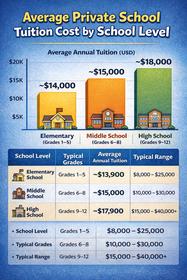

Choosing a private school is often one of the largest financial commitments a family will make outside of purchasing a home. While tuition is usually the first number parents focus on, the true cost of private education extends far beyond the published price listed on a school's website.
Many families begin the admissions process confident that they can afford tuition, only to discover later that additional fees, annual increases, extracurricular costs, and changing family circumstances place unexpected pressure on their finances. A school that feels affordable during the enrollment process may become far more difficult to sustain several years later.
Before signing an enrollment contract, parents should take time to stress-test their private school budget. Doing so helps determine whether the investment remains manageable under a variety of real-world circumstances, not just under ideal conditions.
Looking Beyond the Tuition Number
The first mistake many families make is treating tuition as the total cost of attendance.
In reality, tuition often represents only one component of the overall expense. Depending on the school, families may also encounter registration fees, technology fees, activity fees, transportation costs, uniforms, books, field trips, athletic participation expenses, and fundraising expectations.
Private School Review's guide to paying for private school highlights why understanding the full financial picture is essential before making a commitment.
When evaluating schools, parents should request a comprehensive list of all anticipated expenses for the upcoming year rather than relying solely on advertised tuition rates.
Assume Tuition Will Increase
One of the most common budgeting mistakes is assuming tuition will remain relatively stable.
Most private schools raise tuition annually to account for inflation, faculty compensation, facility improvements, and operational costs. While annual increases vary, even modest adjustments can significantly affect long-term affordability.
A family enrolling a child in kindergarten may be committing to more than a decade of tuition payments. Small yearly increases can compound into a substantial financial obligation over time.
Rather than budgeting based on current tuition alone, families should ask schools about historical tuition increases and build future projections into their planning.
Consider What Happens if Income Changes
A budget may work comfortably today but become strained if family circumstances change.
Parents should evaluate how private school costs would affect their finances if they experienced:
- A job loss
- Reduced bonus income
- A business downturn
- Medical expenses
- Increased housing costs
- Additional childcare expenses
The purpose of stress-testing is not to predict hardship but to understand how resilient the family budget remains if conditions become less favorable.
Financial planners often encourage families to evaluate major commitments under multiple scenarios rather than assuming current income levels will remain unchanged indefinitely.
Financial Aid Is Not Always Guaranteed
Many families receive financial aid during the admissions process and assume that support will continue indefinitely.
However, aid awards are often reassessed annually. Changes in family income, school resources, application volume, or institutional priorities can affect future awards.
Private School Review's guide to financial aid for private schools explains why families should understand renewal requirements and avoid relying on aid assumptions alone.
A helpful budgeting exercise is calculating whether attendance would remain feasible if aid levels decreased in future years.
Account for Multiple Children
Private school affordability often changes when additional children reach school age.
A tuition bill that feels manageable for one child may become significantly more challenging when multiplied across two or three students. Even schools that offer sibling discounts may not reduce costs enough to offset the increased expense.
Parents should project educational costs across all children rather than evaluating each enrollment decision independently.
This broader perspective often provides a more accurate picture of long-term affordability.
Think About Opportunity Costs
Private school tuition affects more than a family's education budget. It can also influence other financial goals.
Questions worth considering include:
- Will tuition reduce retirement contributions?
- Will college savings be affected?
- Will family travel plans change?
- Could emergency savings be reduced?
- Will future homeownership plans be delayed?
These tradeoffs do not necessarily mean private school is the wrong choice. However, understanding the opportunity costs helps families make decisions that align with their overall priorities.
Evaluate the Total Educational Value
Cost alone should not determine whether a school is a good fit.
Parents should evaluate what the school provides in return for its tuition. Smaller class sizes, specialized programs, strong college counseling, academic support services, extracurricular opportunities, and community culture all contribute to value.
Families comparing educational options may find Private School Review's guide on private school versus public school helpful when assessing the benefits and costs of different educational environments.
The key question is not simply whether a school is affordable today but whether the educational experience justifies the investment over the long term.
Build a Multi-Year Budget Projection
A useful stress-testing exercise involves projecting expenses over several years.
Instead of examining only the first year's tuition, families should estimate:
- Tuition: Potential annual increases
- Fees: Technology, registration, and activity costs
- Transportation: Fuel, bus service, or commuting expenses
- Athletics & Activities: Participation and travel costs
- Uniforms & Supplies: Replacement and growth-related expenses
- Financial Aid: Potential changes in future awards
Viewing costs across multiple years often reveals trends that are not obvious when examining a single enrollment cycle.
Research Broader Private School Trends
Understanding broader private school trends can also help families evaluate long-term financial decisions.
The National Center for Education Statistics provides data on private school enrollment, staffing, and educational trends. Families interested in how school choice policies may affect future affordability can review information from the National Conference of State Legislatures, which tracks voucher programs and other educational choice initiatives across the country.
The National Association of Independent Schools also offers research and resources that help families understand how independent schools operate and allocate resources.
These broader perspectives can help parents place individual tuition decisions within the larger educational landscape.
Questions to Ask Before Signing an Enrollment Contract
Before making a final decision, families should ask:
- What additional costs exist beyond tuition?
- How much has tuition increased over the past five years?
- How is financial aid renewed?
- What expenses are likely to grow as students advance through grade levels?
- What happens if family financial circumstances change?
- How would paying tuition affect other long-term financial goals?
The answers often reveal whether a budget is truly sustainable.
A School Should Fit the Family Financially and Academically
Private school can be a valuable investment in a child's education, but the strongest enrollment decisions balance educational aspirations with financial reality.
Stress-testing a private school budget does not mean looking for reasons to say no. Instead, it means identifying potential risks before they become problems. Families who understand the full cost of attendance, prepare for tuition increases, account for changing circumstances, and evaluate long-term affordability are better positioned to make confident decisions.
The best private school choice is one that supports a student's growth while remaining financially sustainable throughout the educational journey.